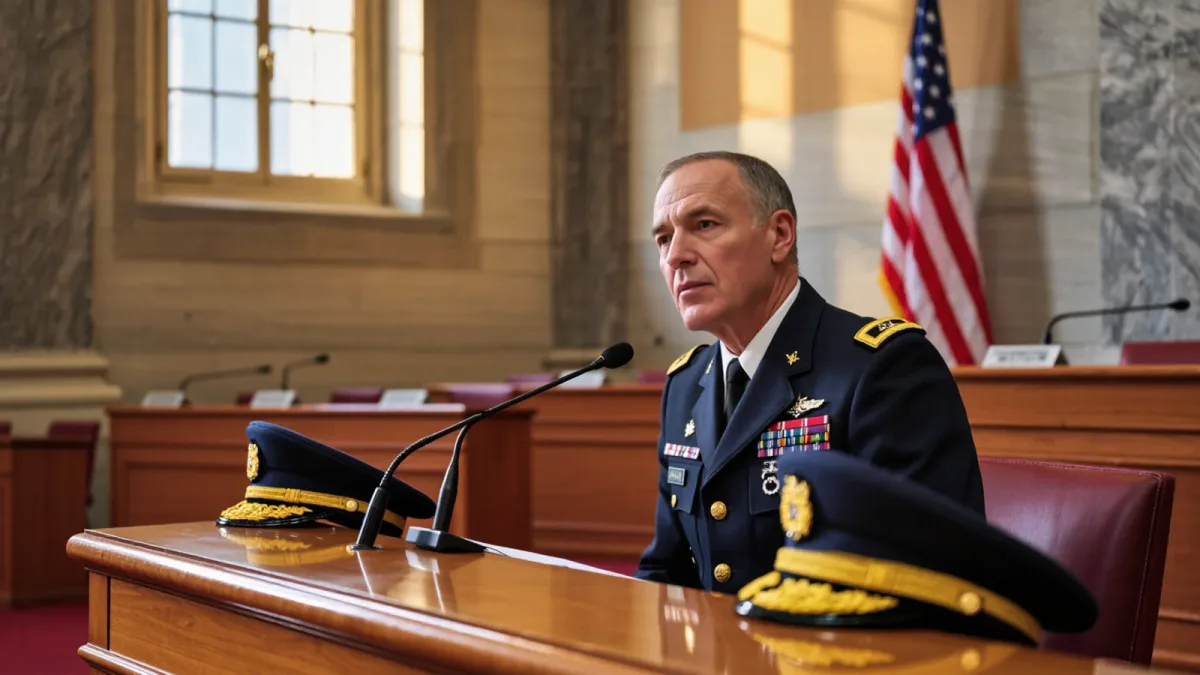
Congressional oversight of the Pentagon is the set of tools Congress uses to supervise how the Department of Defense spends money and runs programs. It works through three main channels: hearings where officials testify under oath, written reports that agencies must file, and the power of the purse, which lets Congress fund, delay, or cancel what the Pentagon wants to do. No single tool is decisive on its own; oversight works when these channels are used together.
The power is structural, not ceremonial. The Constitution gives Congress the authority to raise and support the armed forces, and every defense dollar flows through an appropriation bill that both chambers must pass. That funding leverage is what gives hearings and reports their weight. An official who stonewalls a committee this year can face tighter language, smaller accounts, or stricter reporting conditions in next year's bill.
This explainer walks through the main oversight mechanisms in the order they matter most: the authorization process, the appropriations process, hearings and testimony, mandated reporting, and the investigative bodies that back all of it. Readers who want the budget side in detail can follow the coverage of the FY2027 defense budget request and the annual fight over the September 30 funding deadline.
What is congressional oversight, in plain terms?
Oversight is Congress checking the executive branch's work. In the defense context, that means reviewing whether programs meet their stated goals, whether money is spent as Congress directed, and whether laws the legislature wrote are being carried out. The Government Accountability Office, Congress's own audit arm, describes the function as examining how federal dollars are spent and whether programs deliver what was promised.
Three motivations drive it. The first is fiscal: defense is one of the largest single slices of federal spending, so errors are expensive. The second is legal: Congress writes conditions into law, and oversight verifies compliance. The third is accountability to the public, since constituents ultimately judge their members on how federal institutions perform. All three run through the same small set of procedures described below.
How does the authorization process shape defense programs?
Each year, the House and Senate Armed Services Committees produce a National Defense Authorization Act, usually shortened to NDAA. The NDAA sets policy for the Department of Defense: it authorizes programs, sets end-strength levels for the military services, directs studies, and attaches conditions to how money may be used. An authorization permits activity; it does not by itself fund it. That distinction confuses many readers, and it matters.
The NDAA moves through a predictable cycle. The committees hold hearings, draft and mark up (committee debate and amendment of a bill's text) the legislation, and report it to the floor. Both chambers pass their own versions, a conference committee reconciles them, and the final bill goes to the president. For a look at how that drafting stage works in practice, see the coverage of committees beginning to write the FY2027 NDAA and the floor fight captured in the House race to pass the FY2027 NDAA.
Authorization is also where Congress embeds its longer-term judgment. Provisions can require a program to hit a milestone before receiving the next tranche of money, cap a procurement quantity, or block a closure the Pentagon wants. Those conditions are the quiet workhorses of oversight; they bind without requiring a hearing at all.
What role do appropriations play?
Appropriations are the legal authority to spend. The House and Senate Appropriations Committees, through their defense subcommittees, write the annual defense appropriations bills that turn authorized programs into funded ones. An agency cannot legally obligate money without an appropriation, which is why the appropriations committees hold the most direct control over the Pentagon's day-to-day operations.
When Congress and the president cannot agree on full-year funding, Congress often passes a continuing resolution (temporary funding that keeps agencies operating at existing levels). Continuing resolutions delay new starts and force agencies to plan around uncertainty. The pattern has become routine enough that it shapes program offices' calendars; the coverage of the Pentagon running into a second continuing resolution deadline shows how that plays out in a single fiscal year. Readers following this should also see The Pentagon Runs Into a Second Continuing Resolution Deadline.
Appropriators also use detailed report language, the explanatory documents that accompany each bill. Those reports direct agencies to justify specific line items, submit reprogramming requests (moving money between accounts) for approval, and answer questions in writing. The report language is not law, but agencies treat it as binding instruction because ignoring it invites consequences in the next bill.
How do hearings and testimony hold programs accountable?
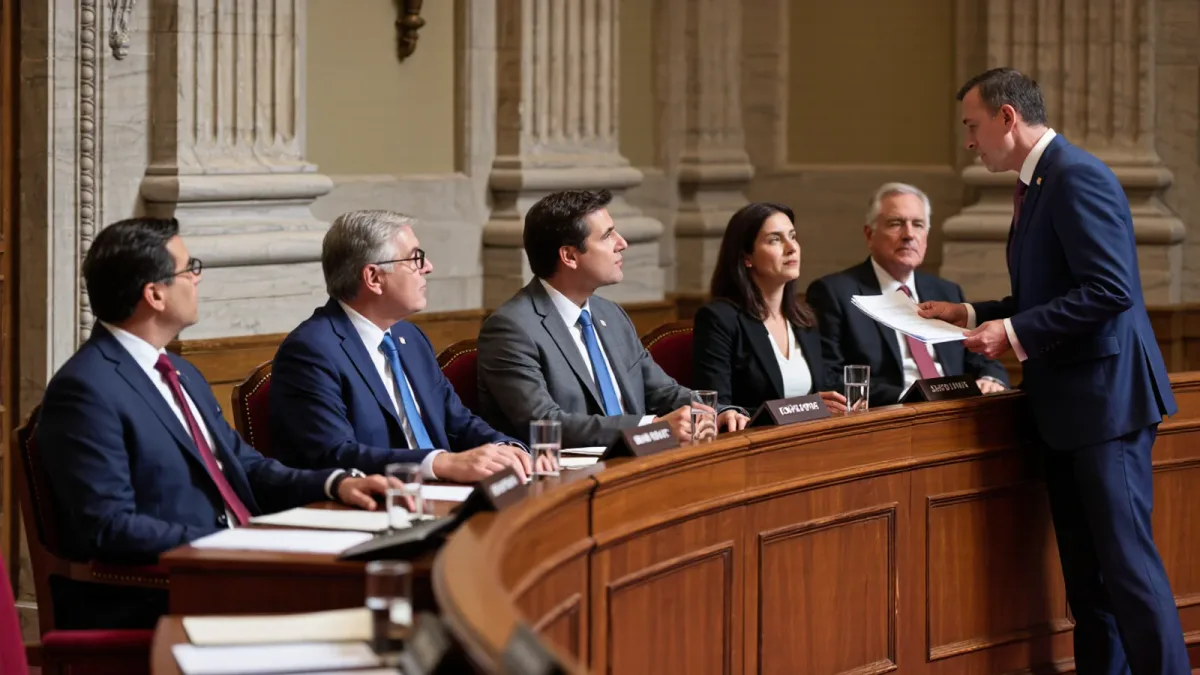
Hearings are the most visible oversight tool. Two types dominate the defense calendar. Authorization hearings, including the annual posture hearings where service secretaries and chiefs testify, examine strategy, readiness, and program health. Appropriations hearings examine the budget request line by line. Both put officials on the record, under oath where the committee chooses, and both generate transcripts that become part of the public record.
Testimony is prepared as much as it is spontaneous. Witnesses submit written statements in advance, and much of the exchange happens for the record rather than for headlines. The value to oversight comes from what the transcript captures: commitments made under questioning, admissions about schedule or cost, and answers that later reports can be checked against. A program office that tells one committee one thing and another committee something else creates a paper trail that investigators can follow.
Hearings also serve a signaling function. The mere scheduling of a hearing on a troubled program tells the Pentagon that members are watching, which often produces briefings, documents, or staffing changes before the witness ever sits down. Coverage of the posture hearings that open the FY2027 budget season illustrates how the calendar itself is an oversight instrument.
What do mandated reports require the Pentagon to disclose?
Congress cannot attend every program review, so it requires the Department of Defense to report in writing. Statutes and committee reports mandate hundreds of reports each year: quarterly progress updates on specific programs, annual assessments of acquisition reform, certifications before certain actions can proceed, and notifications when a program's cost or schedule breaches a threshold. A certification is a formal signed statement that a legal condition has been met; without it, the underlying action cannot go forward.
These reports matter because they are checkable. A mandated report with dates, quantities, and dollar figures can be compared against the next one, and against what a witness said under oath. Members and their staffs, who are the real engine of day-to-day oversight, use the reports to build the questions they ask at the next hearing. The cycle of report, question, hearing, and follow-up report is the ordinary rhythm of accountability.
What the reports do not resolve is equally part of the record. When an agency files late, omits a requested figure, or answers that information is unavailable, that gap is itself a finding members can act on, typically through stricter language in the next authorization or appropriations bill.
Who investigates when something goes wrong?
Several bodies back up the committees. The Government Accountability Office audits programs at Congress's request and publishes findings on cost growth, schedule slips, and management weaknesses. The Department of Defense Office of Inspector General audits and investigates within the department itself at Congress's direction. GAO bid protests, decisions on whether an award followed procurement law, give losing offerors a formal route to challenge contracting decisions.
Committee staff do much of the detailed work that never reaches a hearing room. Professional staff members on the Armed Services and Appropriations Committees review budget justification books (the detailed documents the Pentagon submits with each request), track program milestones, and prepare members for exchanges with witnesses. Their questions, in writing and on the record, are where most program-level scrutiny actually happens.
What can individual citizens do?
Oversight responds to public attention, and members of Congress weigh constituent contact heavily. The House maintains a Find Your Representative service that matches a ZIP code to the correct congressional district and links to the member's website and contact page. According to the House's own guidance, the service reflects the current Congress, which ends on January 2, 2027, and recently redrawn district boundaries do not change who represents a voter until the new Congress begins in January 2027. The House also notes that if online contact forms fail, the Clerk of the House maintains addresses and phone numbers for all members, and the U.S. House switchboard can be reached at (202) 224-3121.
Contact works best when it is specific. A constituent who cites a program, a budget line, or a report gives the member's staff something concrete to raise with the relevant committee. That is how public input enters the oversight machinery: not directly, but through the questions members choose to ask.
What this means: the limits and the leverage
The evidence of how oversight works points to a system built on leverage rather than command. Congress does not run programs, and it cannot replace a failed program office the way an executive can. What it can do is condition, delay, audit, and publicize, and those tools have real force when applied consistently. The NDAA sets the rules, the appropriations bill supplies the money, the hearings create the record, and the mandated reports make the record checkable.
What remains unknown in any given case is whether the tools will be used. Oversight intensity varies with committee leadership, political conditions, and the salience of the issues involved. The procedures are stable; the will to apply them is not, and that distinction is the honest answer to how well congressional oversight of the Pentagon works.