A federal emergency declaration is the formal step that lets the federal government spend money and move resources inside a state or territory at the governor's request. The legal basis is the Robert T. Stafford Disaster Relief and Emergency Assistance Act, the statute that governs how Washington responds when local and state capacity is overwhelmed. A declaration is not a proclamation of crisis in the rhetorical sense. It is a document with a defined legal effect.
The word itself is plain: Cambridge's dictionary defines "federal" as relating to a national government with power shared among its constituent states, and that division of authority is exactly what an emergency declaration navigates. The federal government does not, under the Stafford Act, take over a state's response. It supplements it, and only after the state asks.
That structure is the heart of the federal emergency declaration explained question: who triggers it, what paperwork it requires, and what powers and dollars it actually releases. The same framework also matters in national-security contexts, where declarations and defense authorities intersect with the budget and oversight machinery covered in How Congressional Oversight of the Pentagon Actually Works.
What is a federal emergency declaration?
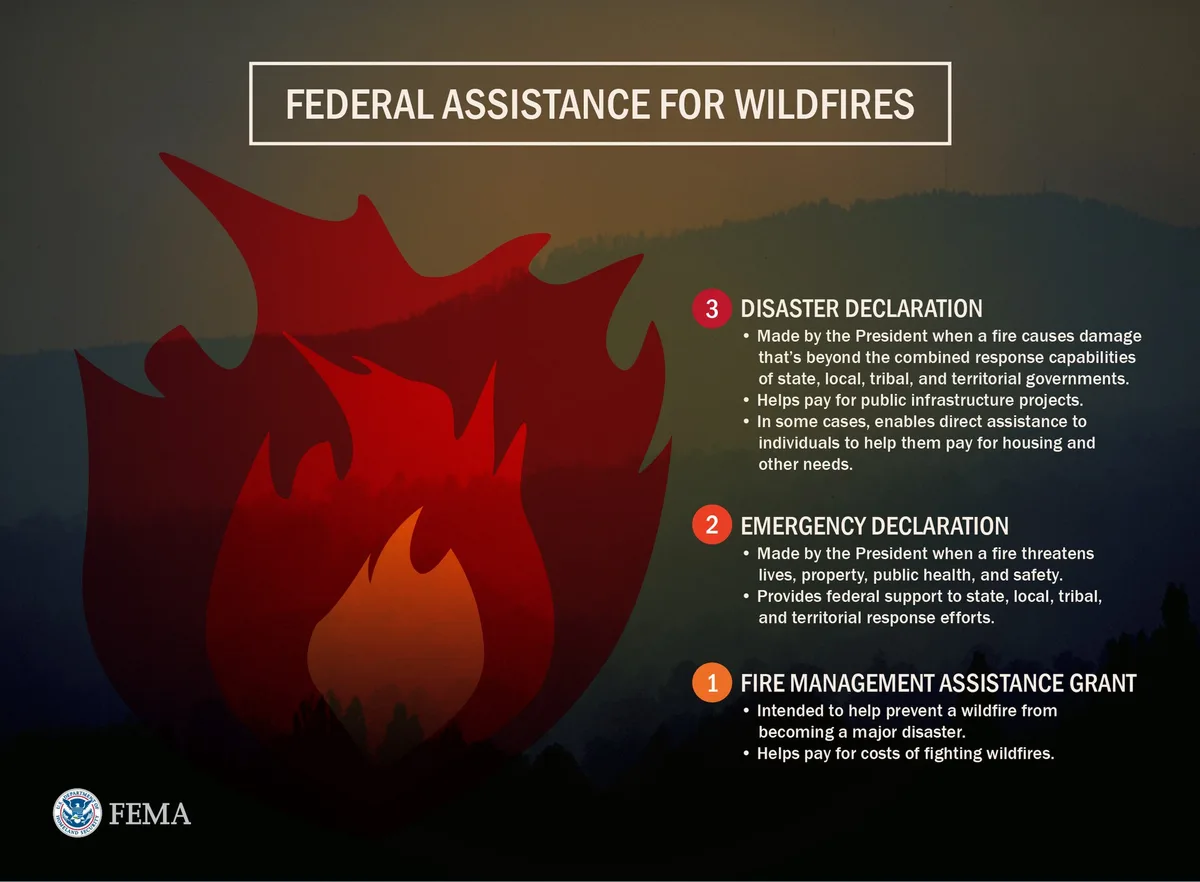
A federal emergency declaration is a formal determination, made by the President, that an event has caused damage or hardship beyond what a state or tribal government can handle on its own. The Stafford Act recognizes two main types of declaration: a major disaster declaration and an emergency declaration. The distinction matters because the two unlock different programs and different cost-sharing terms.
A major disaster declaration is the broader instrument. It typically follows severe natural events and opens long-term recovery programs, including public assistance to repair infrastructure and individual assistance to households. An emergency declaration is the narrower tool. It is designed to save lives, protect property, and lessen the immediate threat, and it can be issued before an event arrives rather than after the damage is assessed.
In both cases, the declaration is specific. It names the affected area, the event, and the categories of assistance the federal government will provide. It is not a blanket grant of authority, and it does not suspend ordinary law.
Who can request a declaration, and what does the process require?
The process begins at the state or tribal level, not in Washington. Under the Stafford Act, the governor of a state — or the chief executive of a tribal government — must request a federal declaration. The request follows a defined sequence.
- The state activates its own emergency plan and responds with its own resources.
- State and local officials assess the damage and estimate the cost of response and recovery.
- The governor submits a formal request to the President, usually accompanied by a preliminary damage assessment coordinated with federal emergency-management officials.
- The President decides whether to declare an emergency or a major disaster, in whole or in part.
The requirement that the state act first is deliberate. It reflects the division of authority that the word "federal" describes: the national government responds to a request from a constituent government, rather than acting on its own initiative. The governor's certification that state resources are insufficient is the legal hinge of the entire process.
There is a limited exception worth noting. The Stafford Act allows the President to declare an emergency without a governor's request when the event occurs on federal property, or in areas where the federal government has exclusive responsibility. Outside those narrow circumstances, the request requirement holds.
What does a declaration actually unlock?
The practical effect of a declaration is threefold: money, manpower, and legal authorities for coordination.
Money is the most visible. A major disaster declaration opens federal cost-sharing for debris removal, emergency protective measures, and repair of public facilities. It can also open individual assistance programs for affected households. An emergency declaration funds immediate protective measures, generally on a smaller scale. In both cases, federal assistance is a supplement, typically on a shared-cost basis with the state, and the exact terms are set in the declaration and the governing regulations.
Manpower and resources follow. A declaration activates federal agencies to provide equipment, personnel, and logistical support requested by the state. It also triggers coordination structures that pull federal departments into a unified response under a designated federal coordinating official.
Legal authorities are the least visible but often the most consequential. A declaration can support measures such as easing regulatory requirements for emergency operations and, in defined circumstances, mobilizing certain defense-related resources to support civil authorities. Those defense-support mechanisms sit inside a wider legal framework — the same framework that governs how the military's domestic-support role is defined, distinct from the procurement and budgeting authorities covered in How the Pentagon Uses Other Transaction Agreements to Skip the FAR.
What a declaration does not do is equally important. It does not federalize the state's response, does not override the governor's command authority, and does not impose martial law. Those are common misconceptions, and they are wrong as a matter of statute.
How does an emergency declaration differ from other federal powers?
An emergency declaration under the Stafford Act is one of several legal instruments the federal government can use in a crisis, and they are frequently confused.
- National emergency declarations under the National Emergencies Act are a separate tool. They relate to broad national-security or economic authorities and are not tied to a governor's request or a damage assessment.
- Public health emergency declarations unlock health-specific authorities held by the Department of Health and Human Services. They do not, by themselves, release Stafford Act disaster funding.
- Disaster declarations by other agencies — for example, agricultural disaster designations — carry their own program-specific effects.
The Stafford instrument is distinguished by its trigger: a state request, a damage assessment, and a determination that local capacity is insufficient. Its funding flows through the disaster-relief apparatus rather than through a department's general authorities. Readers tracking how these instruments interact with defense planning should note that military support to civil authorities is generally a supporting role, activated by separate statutory authorities and funded through the defense budget, which is a separate appropriations story — one covered in The FY2027 Defense Budget Asks $1.5 Trillion.
What role does Congress play after a declaration?
Congress's role is structural rather than case-by-case. It wrote the Stafford Act, it appropriates the disaster-relief funds that declarations draw on, and it conducts oversight of how the emergency-management agencies administer the programs.
In practice, that means the annual appropriations cycle matters to disaster response even when no disaster is in the news. Relief funds are appropriated in advance, and their availability is subject to the same funding mechanics as the rest of the federal budget — including the deadlines and stopgap measures that shape agency planning, as described in The Pentagon Runs Into a Second Continuing Resolution Deadline. Committees also review declaration decisions and program performance through hearings and reporting requirements.
What Congress does not routinely do is approve individual declarations. The President's determination is the operative legal act, and judicial review of it is limited. Disputes over whether a declaration should have been granted are generally political and administrative questions, not litigation over the emergency itself.
What this means: the limits of the declaration
The declaration is best understood as a funding and coordination switch, not a switch to federal control. Its design reflects the federal system: states lead, the national government supplements, and the request requirement keeps the trigger in the governor's hands. The statute defines what can be unlocked, the declaration defines where and for what, and the appropriations process defines how much is available.
What remains genuinely variable is the pace and the terms. The statute sets the framework, but the administrative details — assessment timelines, cost-sharing percentages for specific categories, program eligibility rules — live in regulations and agency guidance that change over time. Anyone needing the current terms for a specific program should consult the governing regulations and the administering agency's current guidance rather than relying on any summary, including this one.
For readers following the wider budget and policy machinery that sits around emergency authorities, the policy section tracks the legislative side, and government-news coverage follows the appropriations and oversight cycle that funds it.