A carrier strike group is a naval formation built around one aircraft carrier and the warships that protect and supply it. It is the largest self-contained fighting unit a navy sails with. The exact mix of ships changes from deployment to deployment, and the Navy does not always publish the full lineup in advance.
The formation matters because a carrier alone is a target. Alone, a huge flight deck with a small crew of escorts cannot watch every direction at once. The strike group spreads that work across cruisers, destroyers, and support ships, each with its own job. Understanding the anatomy of the group explains how naval power actually reaches a crisis zone, and how it connects back to shipyards, suppliers, and the towns that build and crew these ships.
What ships make up a carrier strike group?
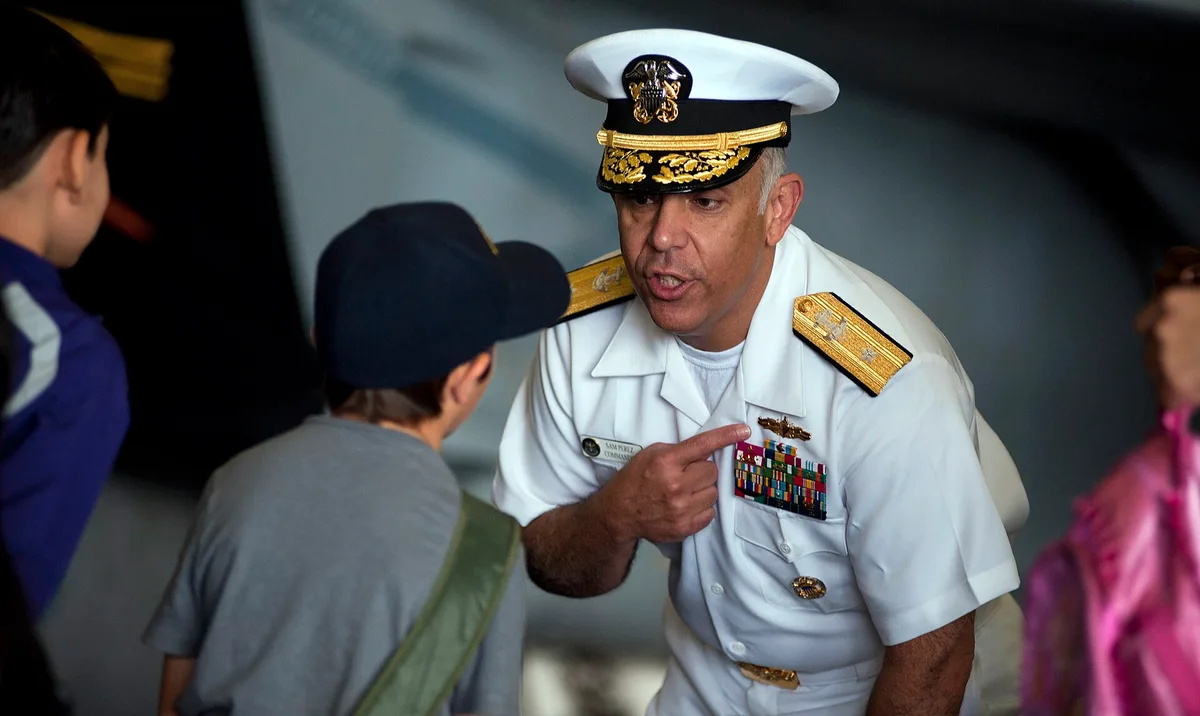
The core is the carrier itself. It carries the air wing: the squadrons of strike fighters, early-warning aircraft, electronic-warfare jets, helicopters, and cargo planes that give the group its reach. The carrier is commanded by a Navy captain, but the strike group as a whole is led by a senior admiral, who directs the whole formation and its air wing.
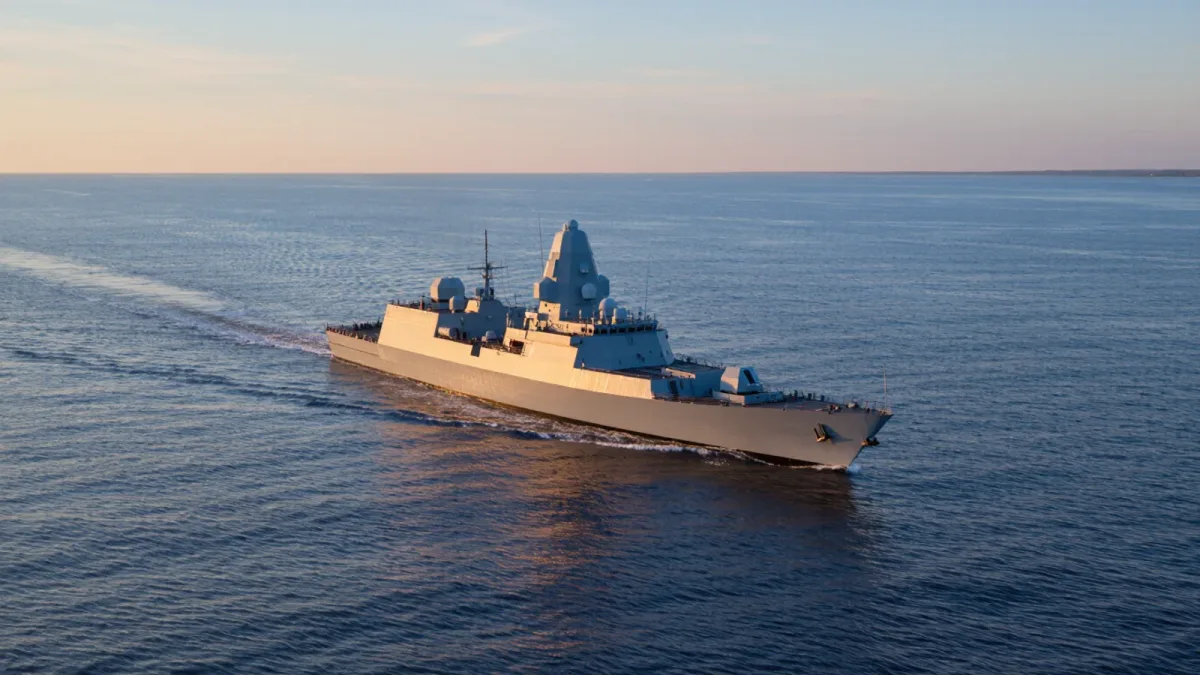
Around the carrier sail the escorts. Guided-missile cruisers and destroyers provide air defense, anti-submarine cover, and offensive strike capability with their own missiles. A supply ship, often called a fast combat support ship, carries fuel, food, and spare parts so the group can stay at sea for long stretches without returning to port. Depending on the mission and the threat, a submarine may also be assigned, though the Navy rarely confirms submarine assignments publicly.
There is a related formation worth distinguishing: the expeditionary strike group. That formation is built around an amphibious assault ship carrying Marines and their landing craft and helicopters, rather than a full-size carrier with a fixed-wing air wing. The two formations get confused in coverage because both center on a big-deck ship, but their missions differ. One projects air power from the sea; the other puts Marines ashore.
Why does a carrier need so many escorts?
Modern threats come from many directions at once. A hostile submarine hunts below the surface. Anti-ship missiles can arrive from aircraft, ships, or shore batteries. Small boats and mines complicate coastal passages. No single ship can counter all of those at the same time, and a carrier is too valuable to leave exposed.
So the group divides the problem. Some escorts specialize in air defense, scanning for aircraft and missiles at long range and shooting down what gets close. Others focus on the underwater fight, towing sonar arrays and flying helicopters that dip sensors into the water. The supply ship solves a quieter but equally serious problem: keeping the group fueled. A carrier burns enormous quantities of fuel moving and launching aircraft, and the whole formation must replenish at sea, often while under way.
The formation also gives the admiral options. Escorts can be detached to escort other ships, screen a amphibious group, or handle a separate tasking, then rejoin. That flexibility is a large part of why the strike group, rather than the lone carrier, is the unit that gets deployed.
How does a strike group get built and deployed?
The process starts years earlier with maintenance. A carrier cycles through long dockyard periods for overhaul and refueling, and its escorts rotate through their own maintenance windows. When a carrier finishes that work and its crew trains back up, the Navy can form a group around it. Squadrons of the air wing come from different bases and join the ship in the months before deployment.
Then comes the workup. The group trains together as a formation, first in smaller exercises and later in a large joint exercise that tests the whole package. Only after that certification does the group deploy, typically for months at a time. Where it goes depends on world events; the Navy positions groups where commanders want presence, deterrence, or the option to strike.
That training rhythm is the same logic explored in How Military Exercises Send Signals Without Firing a Shot: a certified group in a visible place is itself a message. The group's departure and arrival are tracked closely by allies and adversaries alike, which is part of the point.
What does a strike group mean for the shipyard and the hometown?
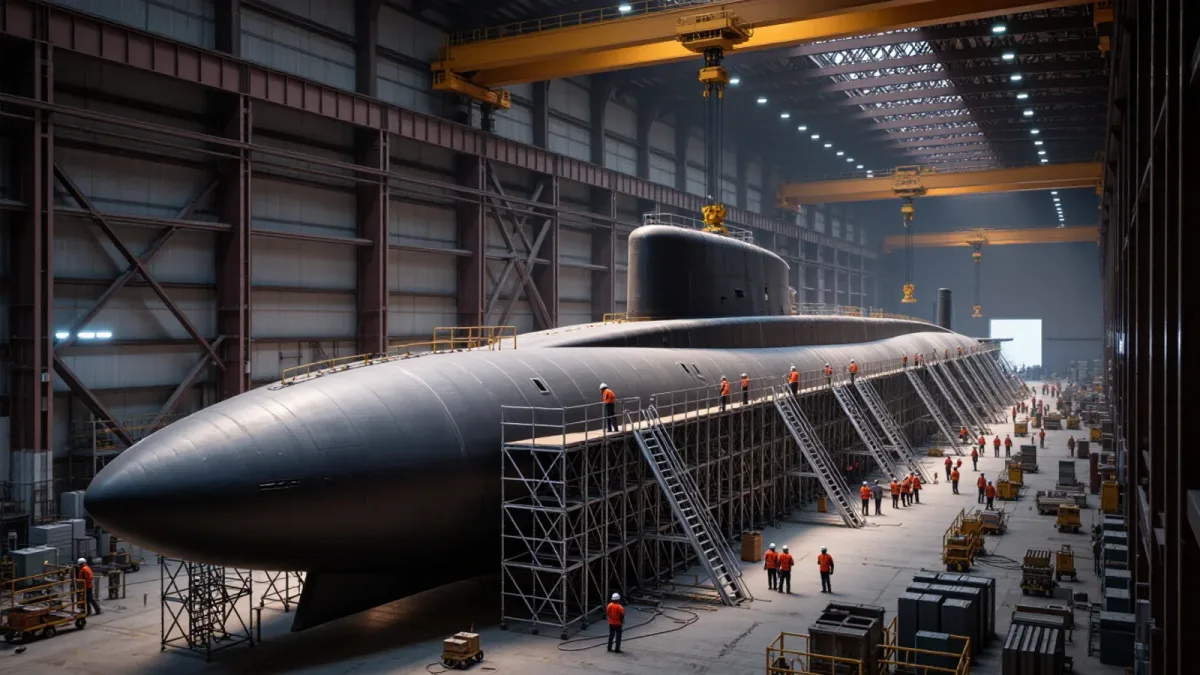
Each ship in the group is a long industrial story. Carriers are built and overhauled in a small number of shipyards, and their escorts, the cruisers and destroyers, come from a separate set of yards. The recent delivery of the Navy's final Flight IIA destroyer, covered in The Navy's Final Flight IIA Destroyer Has Been Delivered, shows how these escort hulls arrive one at a time, each the product of years of work by a yard and its supplier network.
The supply chain runs deep into the economy. A destroyer carries thousands of parts: steel plate, propulsion components, radar arrays, weapons systems, and electronics. Suppliers sit in many states, and the yard's payroll supports local businesses, from machine shops to restaurants. When a ship enters a long overhaul, that money flows through the port city instead; when it deploys, the crew's pay continues home to their families.
Crewing follows the same pattern. A strike group's sailors live in port towns between deployments, and their families move with the ships' homeports. Base expansions, homeport changes, and ship decommissionings are local economic events as much as Navy decisions. That is the route by which a deployment order in Washington reaches a household or a local employer.
What are the limits of a carrier strike group?
The formation has well-known constraints. Its location is public enough to be tracked, which is part of its signaling value but also part of its vulnerability. Long-range precision missiles have raised questions among analysts about how close a large carrier can operate in a major conflict. The Navy's answer has been to invest in the escorts' defenses, the air wing's range, and distributed alternatives, rather than to abandon the formation.
Cost and schedule are the other limits. Carriers take years to build and overhaul, and escort production rates matter: the Navy has publicly discussed shortfalls in submarine delivery tempo, as covered in CNO: Virginia-Class Deliveries Run Five Boats Behind the Two-a-Year Plan. When undersea escort production slips, the strike group's anti-submarine cover depends more heavily on the ships and aircraft already in the force. The industrial base, in other words, is part of the combat equation, not a background detail.
Our analysis: the group is a system, not a ship
The clearest takeaway from the anatomy is that the carrier strike group works only as a system. The carrier provides the air power, but the escorts buy the survivability, the supply ship buys the endurance, and the shipyards and suppliers buy the existence of the whole package. Judging any single hull in isolation misses the point.
What remains genuinely unknown in open sources, for any given deployment, is the exact composition and the submarine assignments, which the Navy keeps quiet for operational reasons. What is known is the pattern: one carrier, a screen of escorts, a logistics tail, and an air wing, trained together before sailing. That pattern has held for decades, and it is the right frame for reading every future strike-group headline.