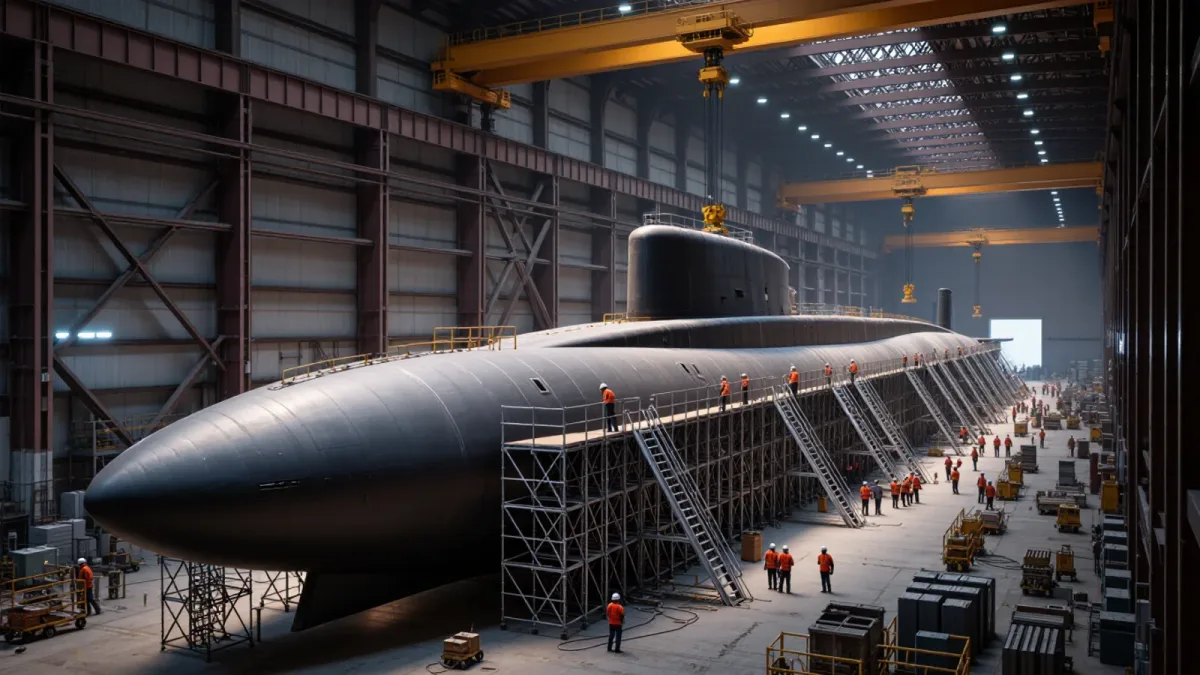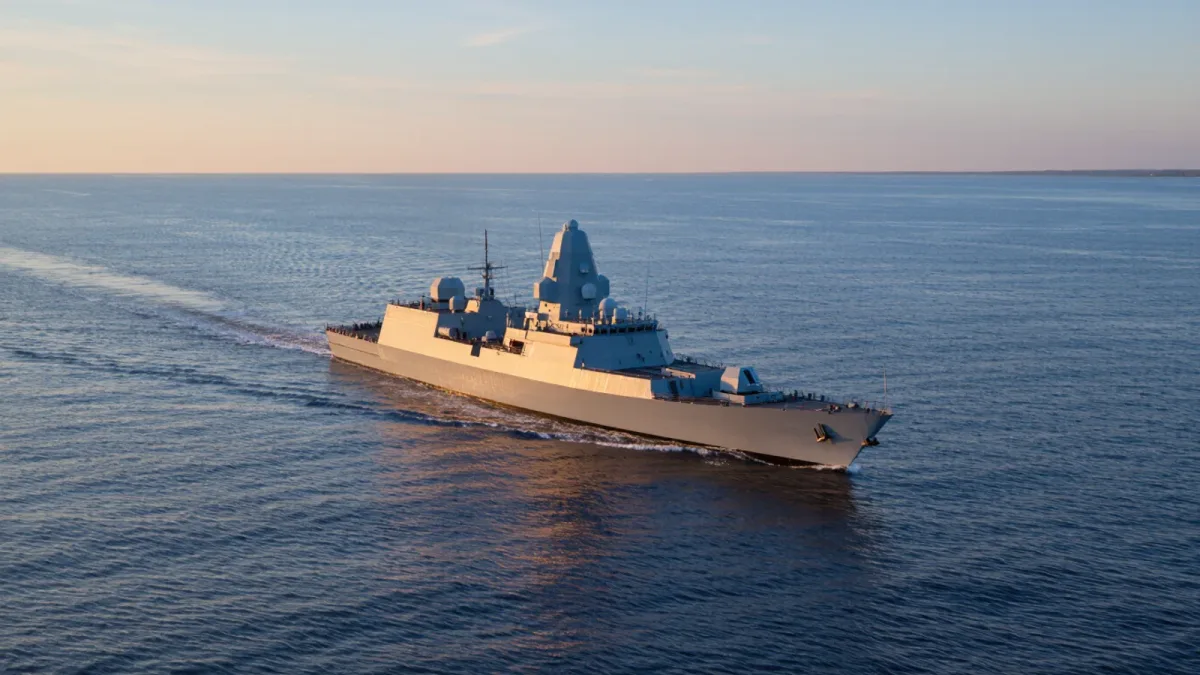
The Navy took delivery of USS Patrick Gallagher, DDG 127, in June 2026, with Bath Iron Works turning over the final Arleigh Burke-class Flight IIA destroyer, per the shipbuilder and Navy announcements. The delivery ends a sub-class run that has anchored the surface fleet for more than two decades and confirms the production line's complete shift to the radar-heavy Flight III configuration.
Who was Patrick Gallagher?
The ship honors Sergeant Patrick Gallagher, a Marine from Ireland who served with US forces in Vietnam and received the Medal of Honor for actions in 1966, when he threw himself on a grenade to shield fellow Marines, surviving that incident before being killed in action in 1967. His story, marked by a family connection spanning Ireland and the United States, made the naming unusual: he is among the few foreign-born service members so honored in the modern fleet, per Navy naming announcements.
The naming carries weight in a program defined by continuity. DDG 127 was laid down years ago and its delivery was stretched by yard workload and the pandemic-era production disruptions that slowed Bath Iron Works output across the class, per Navy reporting.
What ends with Flight IIA?
The Flight IIA configuration, introduced with DDG 79, added hangars for two helicopters and became the workhorse of the surface fleet, with more than 40 hulls delivered. Flight IIA ships carry the Aegis combat system and form the backbone of carrier strike group and amphibious readiness group escort missions, ballistic missile defense queues, and independent deployments worldwide.
The class now transitions fully to Flight III, which replaces the SPY-1D radar with the SPY-6(V)1 Air and Missile Defense Radar, an active electronically scanned array with dramatically greater sensitivity. Flight III hulls, beginning with USS Jack H. Lucas, are built around the power and cooling that radar requires, trading interior volume for the capacity to drive integrated air and missile defense at a scale the IIA ships approach but do not match.
Where does the class stand overall?
With DDG 127's delivery, 74 Arleigh Burke-class destroyers have been delivered to the Navy, per Navy fact files, making the class one of the longest continuous production runs in modern naval history. Construction continues at both Bath Iron Works in Maine and Huntington Ingalls Ingalls Shipbuilding in Mississippi, with Flight III hulls in various stages and additional boats under multiyear contracts.
The next public milestone in the destroyer community is the commissioning of USS Ted Stevens, DDG 128, scheduled for October 2026 in Whittier, Alaska, per the Navy, an unusual northern venue reflecting the late senator's Alaska legacy and the state's strategic significance.
What does the end of Flight IIA mean?
The transition matters for maintenance planning and training pipelines, since Flight III ships bring new radar, electrical, and combat system signatures into the fleet. It also marks the runway toward the DDG(X) next-generation destroyer, which will build on Flight III's lessons while the Burke line, still producing, remains the fleet's surface combatant workhorse into the 2050s. DDG 127's June 2026 delivery, per Bath Iron Works, is the closing entry in the Flight IIA ledger.
For crews and maintainers, the IIA fleet remains the center of gravity for years to come, with modernization continuing across the class regardless of which flight is on the line. The final delivery simply fixes the fleet's shape: a large IIA core, a growing Flight III fringe, and DDG(X) waiting behind them.