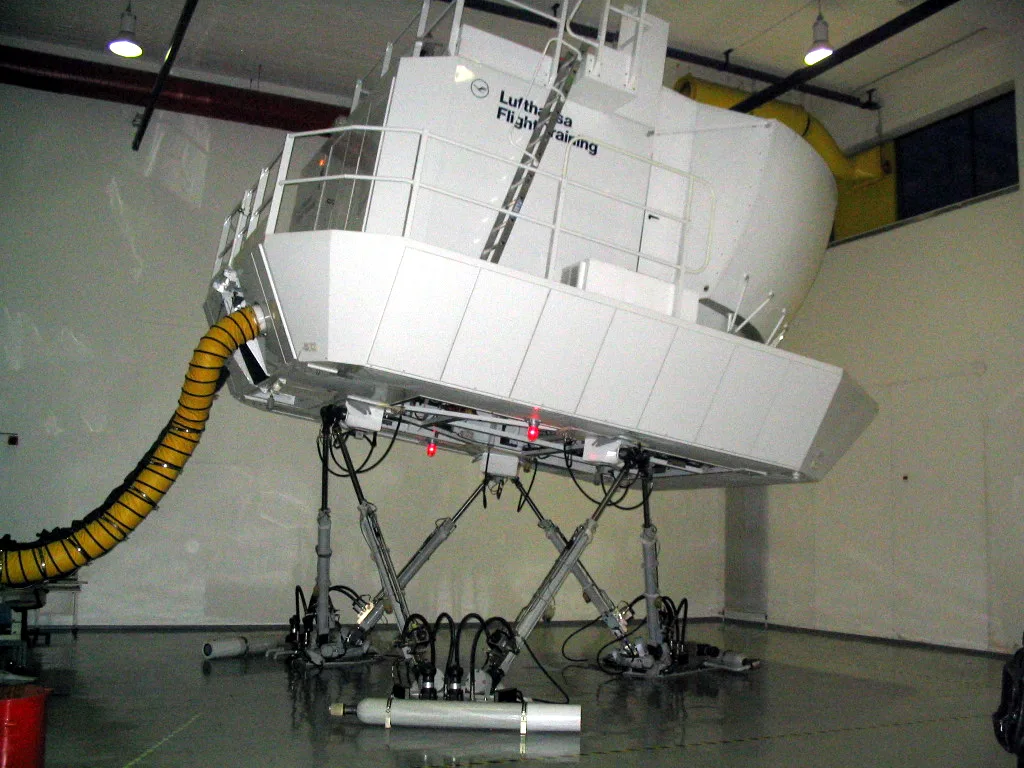
A flight simulator is a device that re-creates aircraft flight and the flying environment for training, design, or other purposes, per the reference record. It copies how an aircraft flies. It copies how it reacts to controls. And it mimics outside factors such as turbulence, wind shear, and precipitation. The trainee can crash a thousand times before the first real takeoff. That is the whole point.
This guide explains how simulator fidelity works, what the devices cost to run, and why simulator hours increasingly count toward real certifications.
What Does a Simulator Replicate?
The definition runs deep, per the reference record. A simulator replicates the equations that govern flight. It copies the reactions to control inputs and the effects of other systems on board. And it mimics the outside world: air density, turbulence, wind shear, cloud, and precipitation.
That scope turns a simulator into a flying laboratory. Every failure mode, weather challenge, and airport approach can be replayed on demand, which no training flight can match at any price.
How Did the Technology Start?
The lineage is old. The best-known early device was the Link Trainer, per the reference record. Edwin Link built it in Binghamton, New York, starting in 1927. He patented the design. The trainers went on to teach a generation of pilots.
Modern simulation arrived later. New devices added visuals, sound, and movement to the earlier models. The record marks those as the first of today's modern flight simulators for commercial aircraft. Readers following this should also see Electric Aircraft Technology — Battery Breakthroughs and Electric Aircraft Dreams: The Energy-Density Math.
What Are the Fidelity Levels?
The industry sorts devices into classes. The generic term flight simulation training device (FSTD) covers the range. Fidelity rises in steps. At the top sits the full flight simulator (FFS). It matches the aircraft closely enough for credited training.
- Lower classes: simpler devices, where instruments that would move in a real aircraft may be shown on displays.
- Higher classes: more advanced displays, cockpit representation, and motion systems.
- Full flight simulators: the top class, where the level of certification decides how much training credit the device earns.
The certification ladder is what makes the economics work. Each rung lets a school replace real flight hours with simulator hours, per the record. The savings compound every year.
Why Do Simulator Hours Count?
The reason is qualification. A device that proves compliance with the rules goes to the FAA for review, per the reference record. The paperwork is what earns the credit. Once the document, called a Qualification Approval Guide (QAG), is approved, all future devices built to that guide are automatically approved.
That chain turns engineering fidelity into training credit. The regulator certifies the device. The device then earns hours that count toward real qualifications. The airline saves the cost of burning fuel to teach procedures. Some simulators are so detailed that it can be cost-effective to use the real part certified to fly rather than build a replica, per the record.
How Big Is the Business?
The market is measured in thousands of devices. In one recent count, 1,270 commercial airline simulators were in service, up 50 over a year, per the reference record. Of those, 85 percent were full flight simulators and 15 percent flight training devices. CAE supplied 56 percent of that installed base, L3 CTS 20 percent, and FlightSafety International 10 percent. North America holds 38 percent of the world's training devices, and Asia-Pacific 25 percent. This connects to our earlier piece, Counter-Drone Base Defense: How the Layers of a C-UAS Shield Fit Together.
Conclusion: The Ground Became the Safest Place to Fly
Flight simulation moved training from the sky to the ground, and the ground turned out to be the better teacher for most of the syllabus. The fidelity ladder, the certification process, and the credited hours together explain why a modern airline pilot can qualify for a new aircraft type with barely a touch of the real one. As of 2026, the simulator is no longer preparation for the cockpit. It is the first cockpit.