How air traffic control works, in one sentence: controllers divide the sky into zones of responsibility, and every aircraft is handed off from one zone to the next like a relay baton, from the tower at the departure airport to regional centers at cruise altitude and back down to a tower at arrival. Each controller sees only a slice of the route. The handoffs are what make the whole route safe.
The system exists for one reason: aircraft move fast in three dimensions, and pilots cannot see far enough to separate themselves from traffic on their own, especially in cloud. Controllers supply that separation. Merriam-Webster's dictionary entry for air lists "aviation" as a plain sense of the word, and that is the sense that matters here — the organized movement of aircraft through shared airspace, not the gases they fly through.
This article follows one imaginary airline flight from gate to gate. The structure it passes through is real and the same everywhere in the world, in broad outline, even though each country runs its own version.
Who is in charge of a flight before it leaves the gate?
Nobody in the control tower yet. Before pushback, the flight plan is filed and entered into the system: route, cruise altitude, aircraft type, equipment. The airline's dispatchers and the airport's ground operations handle most of what happens at the stand. Only when the aircraft is ready to move does the crew call for clearance, and only then does the air traffic side of the day begin.
At many airports the first voice a crew hears is clearance delivery, a controller position that reads back the route and the assigned altitude and issues the transponder code — the four-digit squawk that lets radar systems identify the aircraft. From there the aircraft moves to ground control, which owns the taxiways. Ground decides the order of taxi, resolves conflicts between aircraft and vehicles on the pavement, and hands the aircraft to the tower only when it reaches the runway holding point.
What does the tower actually control?
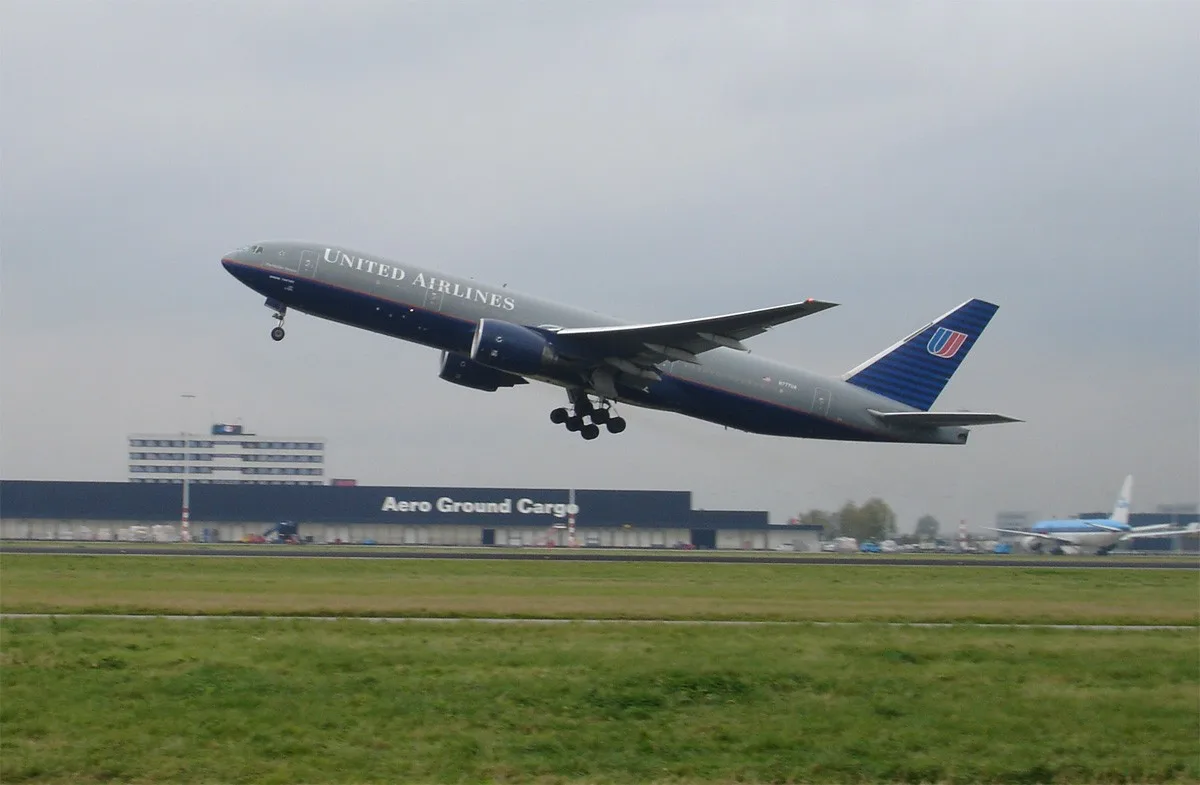
The tower controls the runway environment and the airspace immediately around the airport. Its authority is short in distance but absolute in consequence: nothing uses the runway without the tower's permission. The local controller sequences departures and arrivals onto the same strips of concrete, spacing them by wake-turbulence categories — a heavy airliner stirs up air that can flip a light aircraft, so the smaller one waits or takes a different path.
Once the aircraft is airborne and clear of the runway, the tower's job with that flight is nearly done. The crew is told to contact departure control, and the first handoff happens. From here on, the tower never sees the flight again until the return trip, possibly hours later.
How do departure and approach control work?
Departure and approach control are usually the same facility working different sectors — radar rooms that manage the busy middle altitude bands around airports. Departure control takes climbing aircraft, gives them headings, altitude steps and speed adjustments, and threads them through the traffic around one or more airports. Approach control does the mirror image: it takes inbound aircraft, sequences them onto a line for the runway, and descends them in an orderly stream.
The tool here is radar separation. Controllers keep aircraft apart by minimum distances that depend on altitude and airspace class, and they vector — steer — aircraft to build that spacing. A pilot on an instrument approach is following instructions the whole way down; even in clear weather, the sequencing continues. When an aircraft leaves the terminal area, climbing through the last assigned altitude into the en-route structure, departure control hands it to the next authority: the air route traffic control center.
What happens at cruise altitude?
En-route control is where most of a long flight is spent, and where the least seems to happen. The country is divided into large sectors, each staffed by controllers watching radar scopes for that slice of airspace. A flight crossing several sectors will be handed off several times, often in a single hour. Each handoff is a short radio exchange: the new controller's frequency, a readback, and the aircraft appears on the next scope.
En-route controllers manage altitude assignments, approve route changes for weather, and keep traffic streams separated over hundreds of miles. In oceanic airspace beyond radar coverage, separation is managed procedurally — by position reports, time and altitude rules rather than continuous radar contact. Crews fly much of cruise on their own navigation, but the sector controller still owns the altitude and the route.
How does the flight come back down in one piece?
Descent reverses the whole chain. The en-route controller hands the aircraft to approach control, which vectors it out of the cruise stream and into the arrival sequence. Speed is reduced, altitude is stepped down, and the aircraft joins a line of arrivals that may stretch far from the airport. The crew is then transferred to the tower for the landing clearance, and after touchdown to ground control for taxi to the gate. Four or more facilities have now handled the same flight, each for a few minutes.
The handoff discipline is the quiet achievement of the system. Every transfer includes the aircraft's identity, altitude and any instructions standing, so the receiving controller never has to guess. When it works, passengers notice nothing. When it degrades — staffing shortfalls, equipment outages, weather — the visible symptom is holding and delays, because the spacing rules do not bend to save time.
What this means for anyone watching the system
Our analysis of how air traffic control works reduces to three practical points. First, the controller who talks to a crew is never the same person for long; the system is a relay, and its reliability comes from the handoff script, not from any single scope. Second, separation is the product being delivered — everything else, including efficiency, is negotiated around it. Third, the system's capacity is fixed by runway throughput and controller workload, which is why delays concentrate at busy hubs in bad weather rather than distributing evenly.
For readers who want to go deeper on the aviation side of this site, the same discipline of staged, verified steps shows up elsewhere: in how IFF interrogation keeps friendlies apart in combat, a military cousin of civil identification and separation; in why supersonic flight over land is banned in America, an airspace-use restriction with a similar logic of protecting those on the ground; and in the broader Aviation section, which follows airframes and the systems around them from first flight through daily operations.
The evidence for how well the relay works is statistical and lives with the authorities that run it — the FAA in the United States and ICAO member states internationally. What this article establishes structurally is simpler: every flight, everywhere, is a sequence of short, scripted transfers of responsibility, and the organization of the skies is exactly that sequence, repeated thousands of times a day.