Federal Aviation Regulation 14 CFR 91.817 bars civil aircraft from exceeding Mach 1 over the United States unless they have special authorization, a prohibition in place since 1973 and built on one fact: sonic booms from overland Concorde-style flight drew unacceptable public complaint. The rule is now under active review pressure, because NASA's X-59 demonstrator is designed to cut boom noise to a soft thump and Boom Supersonic's XB-1 broke the sound barrier over California in January 2025 with, the company says, no audible boom on the ground.
What exactly does the rule prohibit?
The regulation prohibits civil supersonic flight over the US and its territorial waters without FAA authorization, and it applies regardless of how quiet the aircraft is. Military and specifically authorized flights operate outside the civil restriction, which is why thunder from Air Force jets near restricted ranges does not breach the rule. The ban is about the sonic boom footprint crossing communities, not about speed itself.
The FAA adopted the prohibition in 1973 after earlier civil supersonic testing and public response made clear that routine overland booms were politically untenable, per FAA historical accounts. The Concorde, certified that same era, was effectively confined to oceanic supersonic segments, a pattern that shaped airline economics until its retirement in 2003.
Why is a sonic boom such a problem?
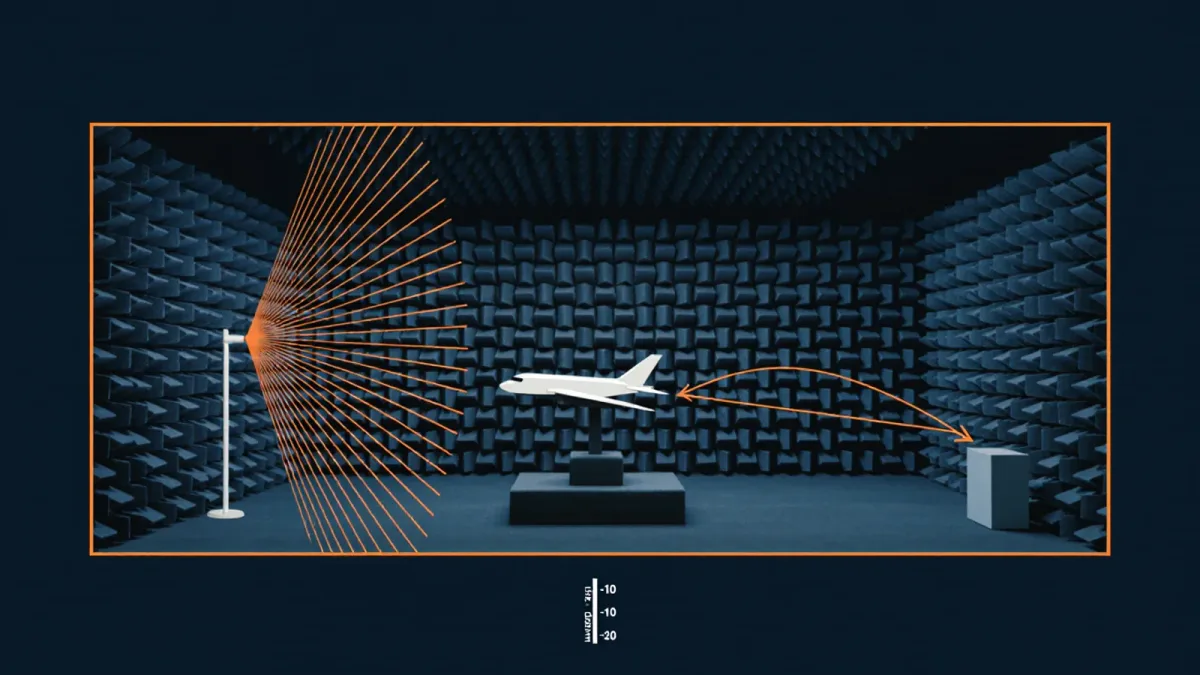
A supersonic aircraft drives a cone of pressure change through the atmosphere, and observers on the ground hear it as a double bang, typically measured in the range of well over 100 perceived decibels for large transports like Concorde, per NASA data. Structures rattle, windows flex and, at scale, communities revolt. Boom noise is also inescapable: the carpet follows the aircraft along its whole track.
That totality is what killed overland Concorde routes and shaped US law. Any relaxation therefore hinges not on engineering elegance but on measured human response, which is the exact problem the X-59 was built to quantify.
The X-59's job
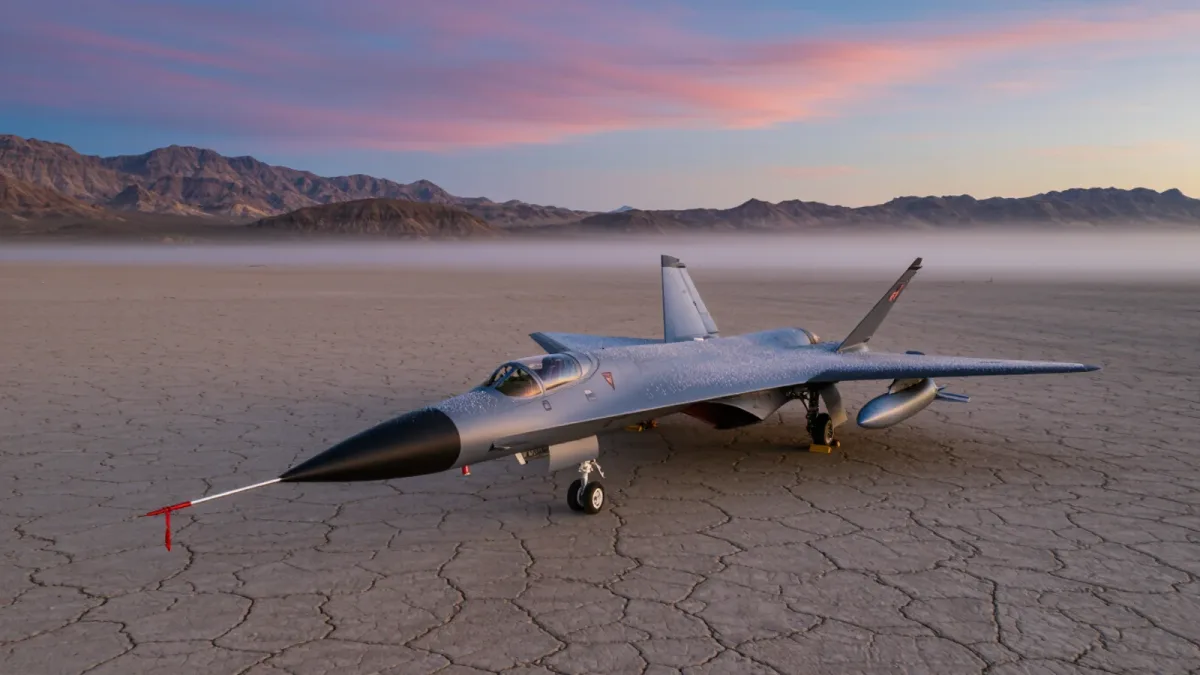
NASA's X-59 Quesst, built by Lockheed Martin's Skunk Works, rolled out in January 2024 with a long, slender shape engineered to spread and soften its shock signature, targeting roughly 75 perceived level decibels, which NASA describes as comparable to a distant car door closing. The research plan is to fly the aircraft over selected US communities, survey residents, and hand the resulting annoyance data to regulators. As of 2025, the program was progressing toward flight and community-overflight phases, per NASA.
What did the XB-1 demonstrate?
Boom Supersonic's XB-1 demonstrator exceeded Mach 1 on January 28, 2025, over the Mojave Desert, per the company, the first civil-built supersonic jet to do so in US skies under the applicable authorization framework. The company reported that during its supersonic test flights, ground microphone stations detected no audible sonic boom at the measurement points, which Boom presented as evidence its Mach-cutoff-shaped design could fly supersonic without a disturbing signature reaching the ground.
The XB-1 result is company data, not a regulatory finding, but it points at a specific regulatory avenue: Mach cutoff effects, where shock waves refract and dissipate before reaching the surface under certain atmospheric and speed conditions, could allow supersonic segments without perceptible booms. Standards work on such concepts has been proceeding in international civil aviation forums, per FAA statements.
Could the rule actually change?
The pathway is procedural. Any relaxation requires FAA rulemaking, supported by validated noise data and an environmental review, and likely a new certification category for low-boom aircraft rather than a blanket repeal of 14 CFR 91.817. NASA's community-response dataset is explicitly intended to give the FAA the evidence base that the 1973 rule never had, per the agency.
- Phase 1: X-59 flight test, validating the predicted low-boom signature in the air.
- Phase 2: community overflights, measuring public response across representative towns.
- Phase 3: standards-setting, translating annoyance data into certification rules, a largely international process.
What industry is watching
Supersonic startups, Boom chief among them, are planning overland-capable airliners contingent on that standards work. The distinction matters commercially: transatlantic supersonic markets are limited, while transcontinental routes over land are where the traffic density lies, which is why the fate of 91.817 effectively sets the size of the market.
What would an overland supersonic future look like?
Most plausibly, not a return to Concorde-style bangs but a carve-out: aircraft certified to a quantified low-boom standard, initially above certain areas or altitudes, expanding as fleet data accumulates. The 1973 rule was written when boom physics was seen as binary; the X-59 and XB-1 programs exist to replace that assumption with measurement. The FAA holds the pen, and its timeline, not any airframe's, now paces the return of overland supersonic flight.
How would a low-boom rule actually work?
Regulators would most likely write a certification standard rather than repeal the ban: an aircraft demonstrating a boom signature below a defined threshold, over representative communities, would be cleared for overland supersonic in specified regimes. Analogies exist in noise law, where aircraft are certificated against measured stage levels rather than prohibited by type, and the FAA's 1973 rule anticipated exactly this by attaching the prohibition to boom acceptability rather than to Mach number alone.
International coordination matters because airliners cross borders. Standards work has been proceeding through international civil aviation forums on sonic boom acceptability and Mach cutoff concepts, per FAA statements, since a US-only rule would strand transoceanic certification. The X-59 dataset is designed to feed both processes.
What the 1973 experience teaches
The original ban followed public testing and complaint data, and it held for five decades because no one could produce evidence that overland booms would be tolerated. That asymmetry, a rule written on complaint and a repeal requiring demonstrated public acceptance, is why measurement programs precede any legal change. Communities, not physics, hold the deciding vote.
What does this mean for airline economics?
Route economics change sharply with the overland question. Transatlantic supersonic segments serve a wealthy but narrow market, while transcontinental US routes concentrate the business traffic that justified Concorde's route planning, and Boom has described its airliner concepts as contingent on overland standards, per company statements. A rule change would therefore expand the addressable market from a corridor to a continent.
Airport noise, emissions and fuel burn remain independent constraints regardless of boom rules, and certification of any new supersonic transport must clear them alongside the new low-boom standard. The regulatory package, in other words, is larger than 14 CFR 91.817, but that paragraph gates everything behind it.
How soon could rules move?
The critical path runs through X-59 flight test, then community response campaigns, then standards adoption, then rulemaking, each stage with its own public comment and review cycle. NASA has described the program's data as targeted at informing regulatory decisions in the latter half of the 2020s, per agency materials, with industry rule change optimism running ahead of that schedule. Readers should treat FAA publications, not company announcements, as the clock.
The underlying physics has not changed since 1973; what has changed is the evidence base. NASA's community-response research and Boom's ground measurements give regulators, for the first time, quantified data on what people actually hear from shaped supersonic aircraft. Whether that data convinces the FAA's rulemakers, and then the public, is the remaining experiment.