Few words unsettle nervous flyers like turbulence. The bumping is uncomfortable, but it is also ordinary. Every day, aircraft cross oceans and continents through air that never sits still.
This guide explains what turbulence is, where it hides, and why airplanes are built to shrug it off. No physics degree is required, and the reality is less scary than the word sounds.
What Turbulence Really Is
In fluid dynamics, turbulence or turbulent flow is fluid motion with chaotic changes in pressure and flow velocity. Air is a fluid, so the definition fits the sky perfectly. The calm opposite is laminar flow, where air moves in smooth parallel layers.
Turbulence starts when kinetic energy in part of a flow overwhelms the damping effect of viscosity. Unsteady vortices of many sizes then appear and interact with each other. Physicist Richard Feynman famously described turbulence as the most important unsolved problem in classical physics.
In plain terms, the air stops flowing smoothly and starts churning. The bumps you feel are the aircraft crossing these small, restless currents.
Clear-Air Turbulence: The Invisible Kind
The most troublesome form is clear-air turbulence. In meteorology, it is the turbulent movement of air masses with no visual clues such as clouds. It appears when bodies of air moving at widely different speeds meet.
CAT is most frequent high in the troposphere, near the tropopause. The zone around 7,000 to 12,000 meters, or 23,000 to 39,000 feet, is especially prone. Jet stream regions see the most of it, and near mountain ranges it can also form lower down. Thin cirrus clouds can even hint that it is present. We covered a connected angle in Measuring Radar Cross Section: Chambers, Ranges and dBSm.
Because it hits long-range aircraft near the tropopause, CAT has been studied closely. The jet stream meanders as it flows, and those winding paths stir the air around them. A strong spinning vortex high in the atmosphere can also set it off.
Why It Is Hard to See Coming
Clear-air turbulence cannot be detected with the naked eye. Conventional radar struggles with it too, which makes it difficult for pilots to spot and avoid.
Researchers can detect it from a distance with optical instruments such as scintillometers and Doppler LIDARs. Airlines lean on forecasts, and on reports from crews flying the route ahead, to steer around known rough air.
The jet stream deserves special mention. One review noted that, as of 1965, 64 percent of non-light turbulence events were observed within 150 nautical miles of a jet stream core. The stream's edges create wind shear, which is a speed difference between neighboring air masses. When that shear is strong enough, the air begins to move in chaotic vortices. Readers following this should also see How Air Traffic Control Works — How Air Traffic Control Keeps the Skies Organized: One Flight, Four Handoffs.
Why Aircraft Can Handle It
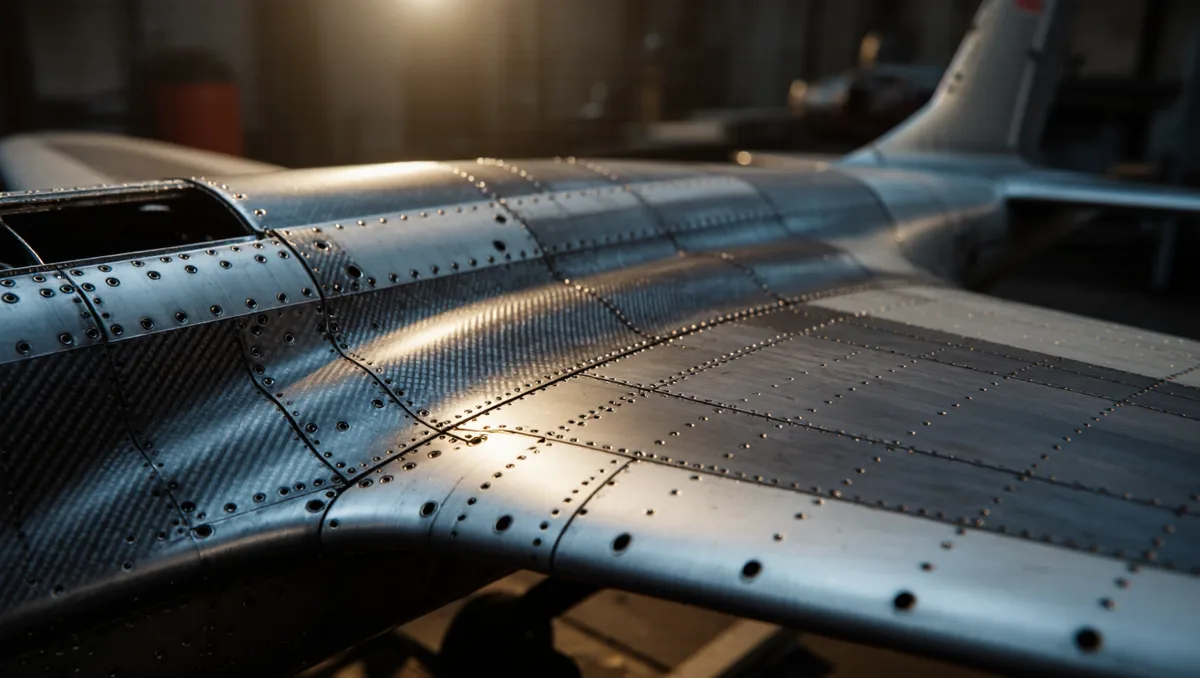
Airliners are engineered to flex. Wings bend to absorb gusts instead of passing every jolt straight to the cabin. Structures are built with margins far beyond the loads that ordinary flight produces.
Pilots also manage the encounter. They slow to the recommended speed for rough air, which limits stress on the airframe. They climb, descend, or detour around reported turbulence when they can. Controllers and dispatchers help by passing along fresh reports from other crews.
That margin is why a rough patch feels worse than it is. The plane is doing exactly what it was designed to do. The motion is uncomfortable, but the wing is simply absorbing the gust.
Your part is simple. Keep your seatbelt fastened whenever you are seated. Rough air can arrive without warning, and the belt is the cheapest protection ever invented.
Conclusion
Turbulence is chaotic air, not a broken airplane. It comes from shifting air masses, jet stream edges, and mountains, and the invisible kind is the reason pilots preach seatbelts. Aircraft are built to flex, and crews have the tools to dodge the worst of it. Treat turbulence as a comfort problem rather than a safety crisis, and the same flight feels completely different.