France has started a new defense-industry pact dedicated to counter-drone systems, adding an offensive-defense dimension to the drone pact it launched in June 2024. The new pact will run to the end of summer 2027, according to Defense News, and aims to cut procurement red tape while connecting firms directly with military end users.
The timing is not subtle. France's junior minister for the armed forces, Alice Rufo, called the wars in Ukraine and the Middle East a "quite brutal reality check" and said French forces urgently need counter-drone capability. She also said France has already faced problems from having too little of it, without giving details. That admission, from a serving minister, is the real news here: the capability gap is now acknowledged at political level, not just inside procurement circles.
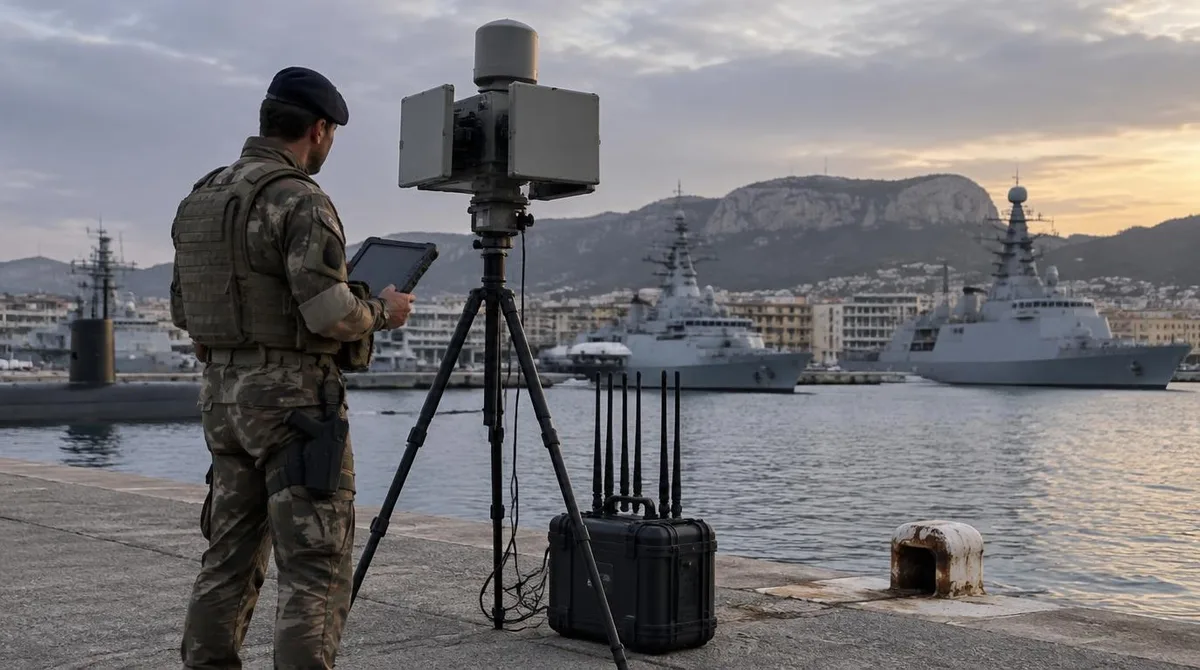
The incidents behind that urgency are specific. Drones have overflown the Île Longue nuclear submarine base in December 2025 and the Toulon naval base in October this year. French media have also reported drones over a Eurenco explosives plant in Bergerac and a freight train carrying Leclerc main battle tanks near Mulhouse in November 2025. For a country that keeps its nuclear deterrent submarines at Île Longue, repeated overflights of that site are the kind of detail that moves budgets.
What exactly is a "pact" in French defense procurement?
A pact, in the French usage, is a standing framework that brings companies and military end users together, trims procurement steps and focuses on fast contract delivery. The original drone pact was led by the Directorate General for Armament (DGA, France's equivalent of a defense acquisition agency) together with Gicat, the defense-industry association chaired by Arquus CEO Emmanuel Levacher. The DGA uses it as a framework for informal calls for ideas, and it has doubled as a meeting place where companies find project partners and share feedback from Ukraine. For related coverage, see How the Pentagon Uses Other Transaction Agreements to Skip the FAR.
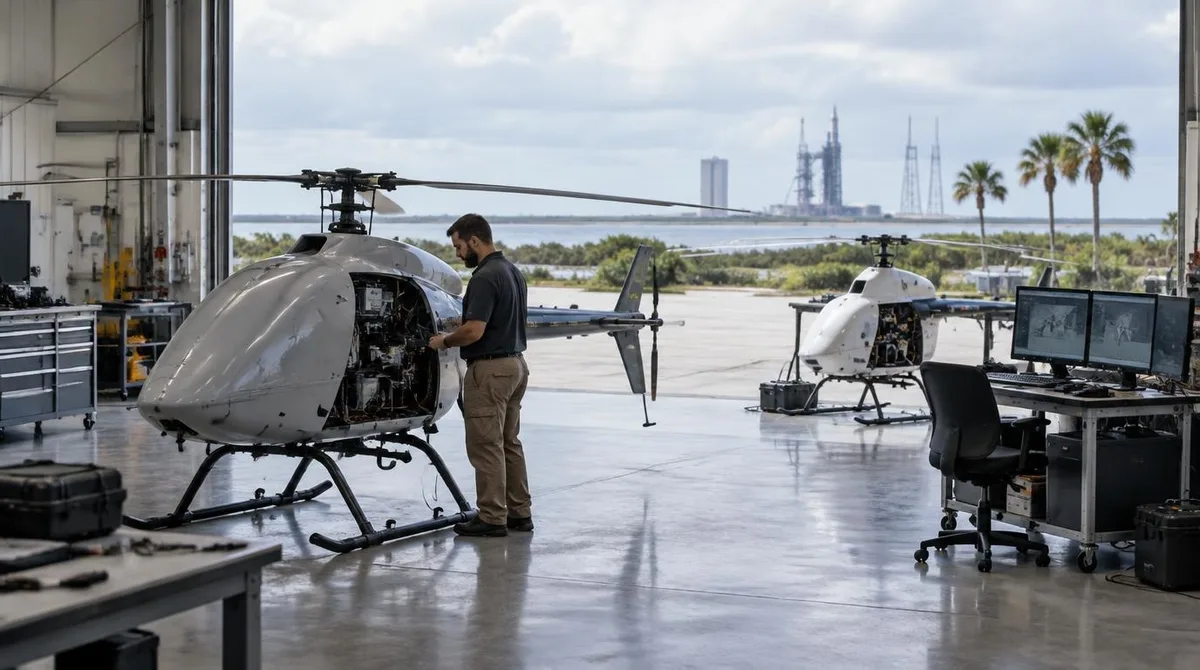
The model has produced at least one concrete order. Within the drone pact framework, startup Harmattan AI won a contract in June 2025 to supply the French Army with 1,000 low-cost drones, delivered in January ahead of the Orion exercise. That is the track record the counter-drone pact is building on: a small company, a fast award, and delivery inside roughly seven months — an attempt to buy at commercial speed inside a system built for slower contracts.
Why does the counter-drone pact cover more than drones?
Because the threat does. Levacher said the pact covers systems to counter unmanned aerial vehicles but also maritime and ground drones. That scope matters for two reasons. First, it acknowledges that the drone problem is not only an air-defense problem; a port, a base perimeter or a convoy faces different kinematics than a fighter squadron does. Second, it keeps the pact aligned with the naval drone pact France announced in November at the Euronaval trade show, following what Levacher described as the success of the original drone pact.
Levacher expects most or all of the 200 partners in the drone pact to join the counter-drone initiative. He also framed the goal plainly: get in real contact with the armed forces to understand requirements, and work with the DGA to ease testing, validation and orders. "This pact is a way of saying that this is an area that does still need to structure and organize itself a little," he said. That is a candid read — the counter-drone sector in France is fragmented, and the pact is as much an organizing tool as a procurement one. We covered a connected angle in Federal Emergency Declaration Explained: How Federal Emergency Declarations Actually Work.
What does this mean for the wider defense industry?
Three implications sit inside the sourced facts. One: France is institutionalizing a dual-track drone ecosystem, where drone and counter-drone capabilities are developed together. Levacher said he hopes the pact will be renewed while incorporating both, "the idea being that one does not go without the other." That pairing logic — you cannot field one side seriously without the other — is likely to shape how the DGA structures future calls and orders.
Two: the ecosystem is export-facing. While the demand and connections are primarily French, Levacher said the pact firms also pursue export opportunities. For a European defense industry trying to scale production, a French government order that doubles as a reference sale is a familiar and effective pattern.
Three: the pact model itself is the export. Not of hardware, but of process. If the drone pact keeps converting informal idea calls into fast awards, expect other procurement bureaucracies to study whether a standing industry-end-user forum can be replicated. The open question, which the sources do not answer, is whether speed survives scale: one 1,000-drone startup award is a proof of concept, not yet a steady production pipeline. The service has not said what follow-on orders, if any, the counter-drone pact is expected to produce before summer 2027.
For now, the milestone to watch is renewal. If the combined drone and counter-drone pact is extended past summer 2027 as Levacher hopes, France will have turned an emergency response into a standing procurement lane. If it is not, the whole exercise reads as a two-year sprint. The evidence so far — a minister acknowledging a gap, a documented series of base overflights, and one fast delivered contract — suggests the political will is there. Whether the pipeline holds is what the next two years will test.