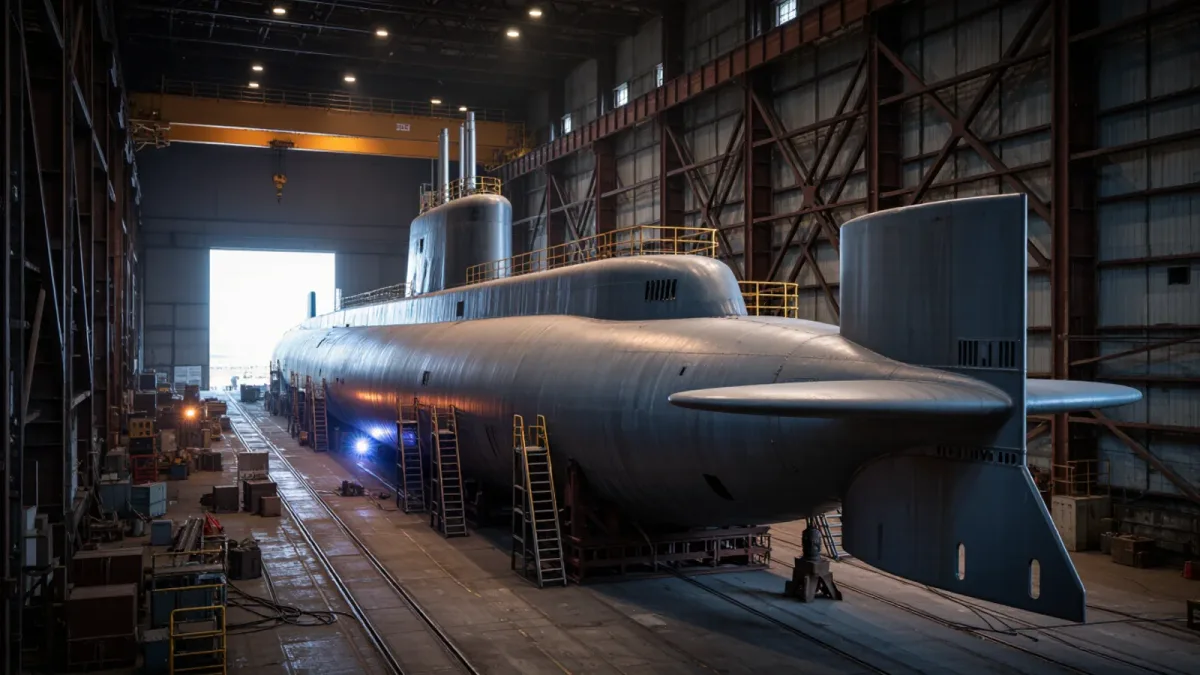
The US nuclear shipbuilding base consists of six public yards — Huntington Ingalls' Newport News and Ingalls operations and General Dynamics' Electric Boat, Bath Iron Works, and NASSCO yards — and per the Navy's own shipbuilding-plan submissions, the fleet size targets of the 2020s required those yards to deliver attack submarines and carriers faster than they have sustained in any year of the past two decades. Columbia-class boats, Virginia-class production, carrier overhauls, and flight-I and -II deliveries all queue through the same dry docks and the same supplier tier, and per GAO reviews of construction schedules, delivery delays of one to three years have been the norm on new-construction submarine classes since the late 2010s.
How is capacity actually constrained?
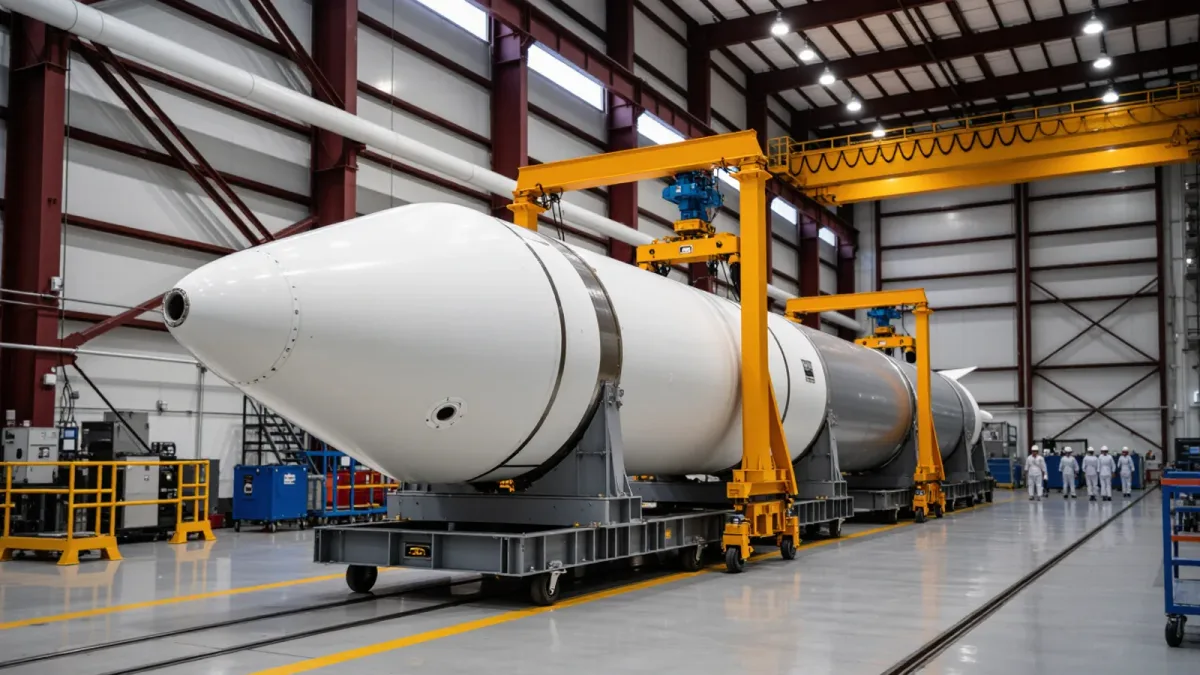
Physical capacity binds in specific, countable places. Columbia-class construction runs through Electric Boat's Quonset Point and Groton facilities and Newport News' dry docks, and per the Navy's testimony on the shipbuilding plan, submarine industrial base funding grew to multi-billion annual levels precisely to add dry-dock capacity, building ways, and outfitted workshop space. A nuclear carrier refueling occupies one Newport News dock for years; a two-carrier refueling and construction overlap is a scheduling problem with no elastic solution, which is why the Navy's own testimony has described carrier availability windows as fixed a decade out. Per company disclosures, HII and General Dynamics together spend heavily each year on capital projects whose return depends on sustained multi-decade order books — the reason shipbuilding capacity tracks the budget cycle so closely.
Why is the supplier tier the real bottleneck?
Below the yards, the supplier base is thinner than at any point in the nuclear era's peak. Per the Pentagon's shipbuilding industrial-base assessments, the nuclear component tier — large forgings, valve and pump manufacturers, nuclear-certified suppliers — counts its critical vendors in the dozens, with sole-source positions common. CVN-class main turbine generators, submarine reactor components, and propulsion-shaft forgings each trace to one or two qualified sources. Navy investments since 2018 — the submarine industrial base task force and successor funding lines — have funneled billions into supplier expansion, per the department's budget documents, precisely because adding one qualified nuclear supplier takes years of certification. When a supplier slips, the yards cannot substitute: nuclear qualification is class-specific and unforgiving.
What does the workforce picture look like?
Shipyards are hiring at rates the trade has not seen in decades and still report shortfalls. Per company statements, the two shipbuilding groups together employ well over 40,000 workers and have hired tens of thousands since 2018, with Electric Boat alone projecting tens of thousands more hires across the Columbia production decade. The constraint is not recruiting alone but the experience curve: submarine construction quality depends on tradesmen with nuclear-qualified certifications that take years to earn, and per GAO workforce reviews, attrition among newly hired workers has exceeded what ramp schedules assumed. Wage competition from commercial ship repair, offshore wind, and general manufacturing raises the cost of holding trained trades, and per the Navy's workforce reports, turnover remains the leading lag indicator for schedule recovery on late hulls.
How do delays compound across the fleet?
Delays interact through shared resources. A Virginia-class boat delivered late occupies a commissioning crew and pier space; a Columbia slip pushes the strategic-seaforce transition that the Navy's own submissions treat as its highest priority; carrier maintenance windows moved at Newport News ripple through deployment schedules fleet-wide. Per GAO's annual assessments, late deliveries and growing maintenance backlogs feed each other: ships awaiting repair clog the same public yards that build new hulls, and per the Navy's aviation-adjacent testimony on maintenance backlogs, the pattern generalizes across the naval enterprise. The math the department has published is blunt — the stated fleet-goal ambitions of the 2020s assumed delivery rates the yards had never achieved, and per successive shipbuilding plans, fleet targets have been trimmed toward what industry can actually deliver.
What is being done, and is it working?
How does public-yard dependence shape the whole market?
Nuclear work cannot go anywhere else: per statute, nuclear-powered vessel construction and overhaul run through the public yards owned by the two groups, and per GAO reviews, that legal concentration removes the price and schedule pressure a competitive market would apply. Non-nuclear construction has seen more competition — commercial yards bid some auxiliary and support craft, and per Navy contract announcements, foreign-built commercial derivatives occasionally anchor cost comparisons — but the combatant fleet is captive to the six. The department's response has been contractual rather than structural: incentive fees tied to schedule, multi-year buys that reward throughput, and per recent budget submissions, direct investment in the yards' capital equipment because the market will not fund decade-payback infrastructure on its own. Every shipbuilding-plan debate on Capitol Hill is thus also an industrial-policy debate, whether framed that way or not.
What numbers should watchers track?
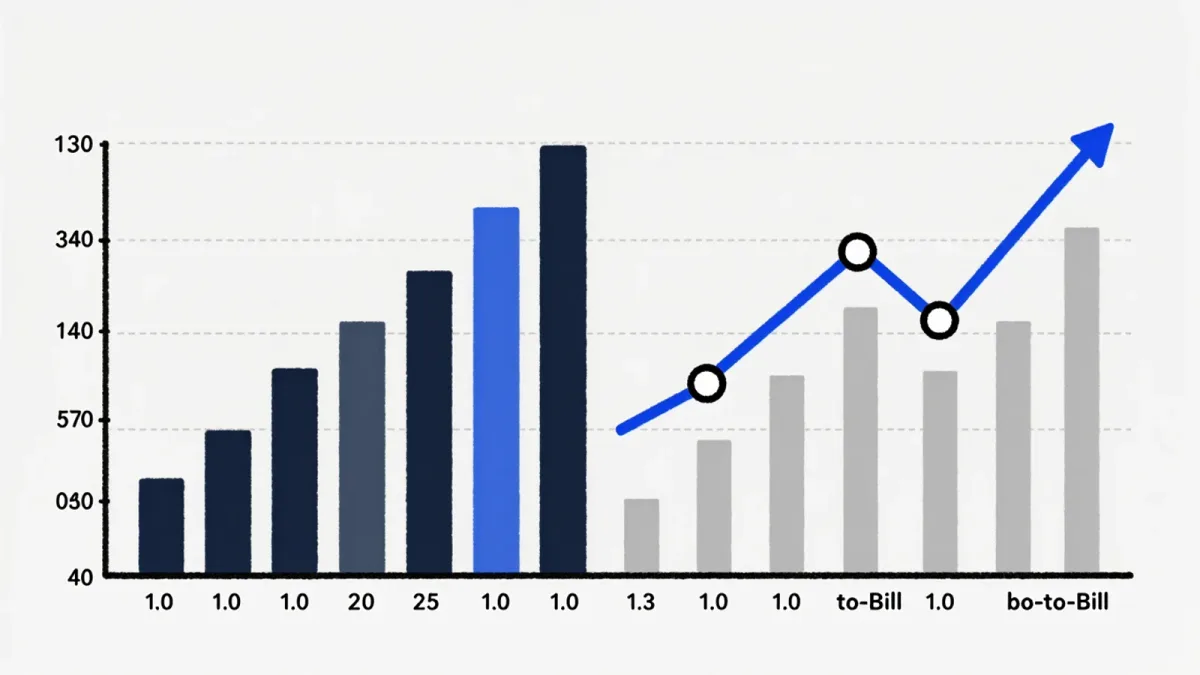
Four indicators compress the base's health into trackable series. Delivery-versus-contract date variance per class, published in GAO's annual evaluations, is the output metric. Submarine industrial-base funding levels in the Navy budget documents measure the input side. Workforce counts reported by the two shipbuilding groups in their earnings disclosures — and attrition among new hires — indicate whether the labor constraint is easing. And supplier metrics from the Navy's industrial-base task force reporting, such as expanded forging capacity and the count of certified critical suppliers, show whether the deepest tier is widening. Per the department's own framing in recent budget testimony, the first and last of these are the pair that matters: deliveries prove the yards, certified-supplier counts prove the base can sustain the rate beyond the first hull of each class.
What would a realistic recovery timeline look like?
The base's own history supplies the template: capacity was built over decades and eroded over decades, and the recovery period now underway is measured in the same units. Dry-dock projects and supplier certifications in progress will mature across the current production decade; workforce experience compounds as hires accumulate years on qualified work; and per the multi-year submarine procurement terms announced in recent years, the Navy has traded near-term cost certainty for the production stability that lets suppliers invest. Per GAO's assessments, the honest expectation is gradual schedule improvement rather than a step change: delivery variance narrows before it closes, and the strategic-seaforce transition stays protected by shifting pressure to other classes. A fleet-size ambition has been rebaselined once already, per successive shipbuilding plans, and further alignment of goals with demonstrated delivery rates remains the likeliest direction of travel.
The interventions are real and measurable: multi-billion supplier investments, workforce pipelines with community colleges, dry-dock expansion, and per recent DoD announcements, multi-year procurement of submarines intended to stabilize the production line and let suppliers invest against firm demand. Per GAO's most recent reviews, schedule performance has not yet turned — new-construction deliveries continue to slip from contract dates — but supplier-base health metrics cited in Navy industrial-base reports, such as expanded forging capacity and certified-supplier counts, have improved. The honest read of the department's own documents: the industrial base is growing from a decades-low baseline, fleet ambitions have been rebaselined to match, and the path from billions of investment to on-time delivery runs through a decade of workforce and supplier maturation that no single budget line can compress.