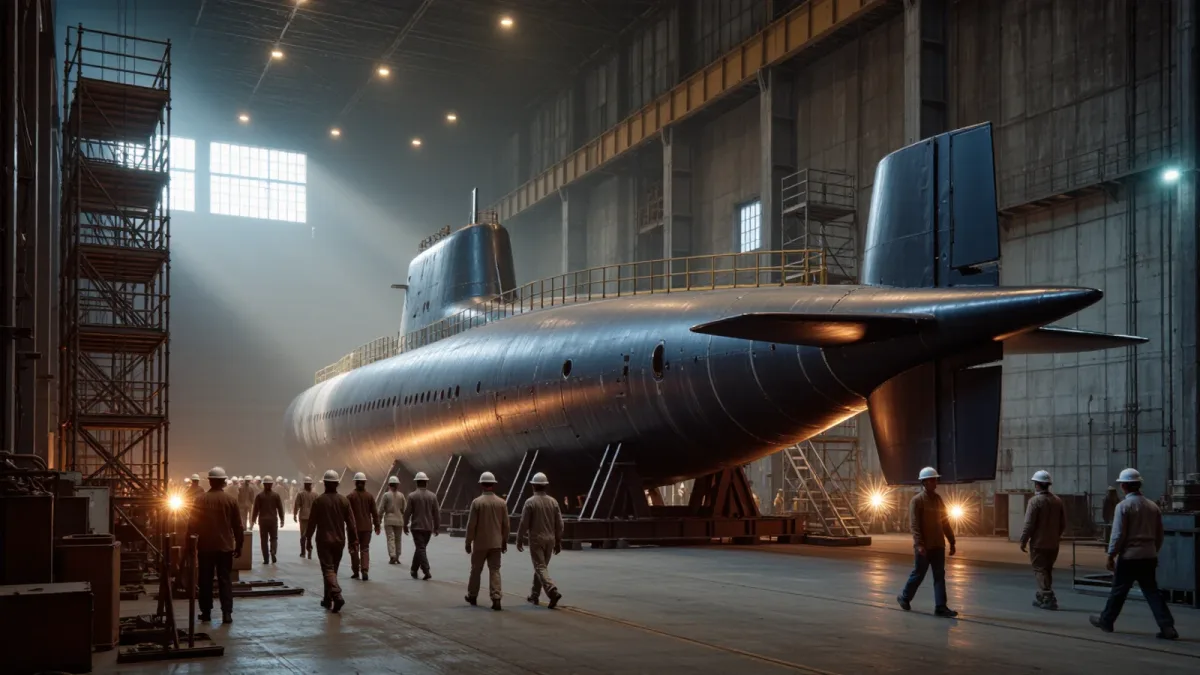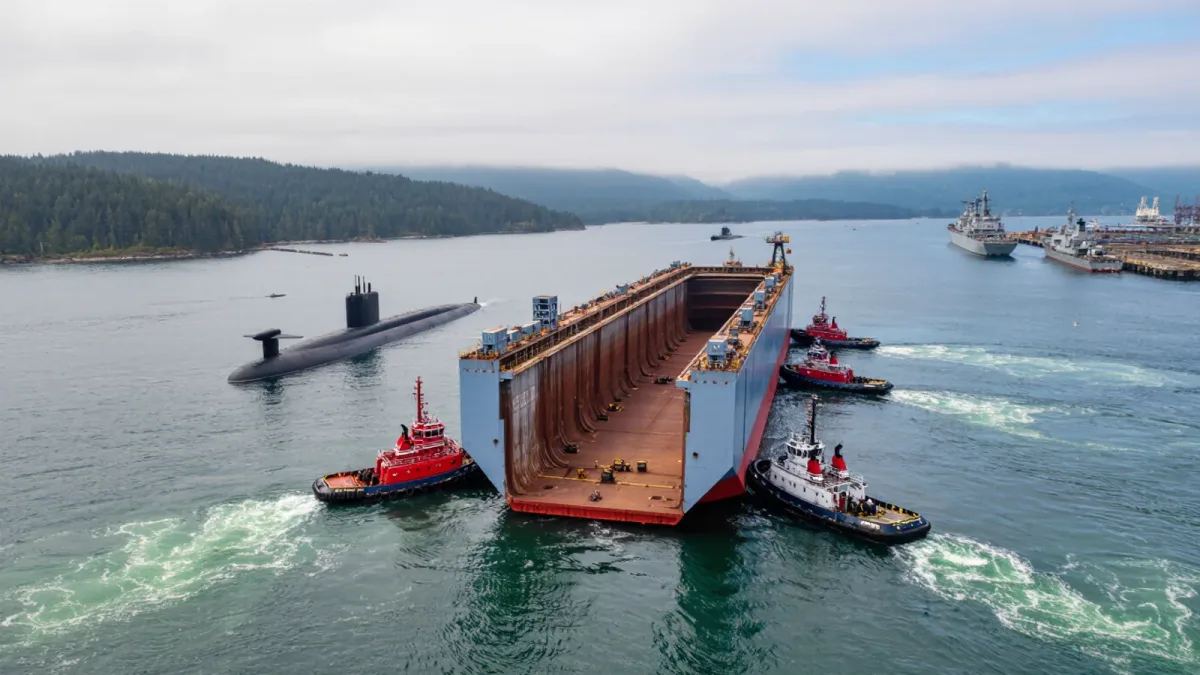
A new floating dry dock named Atlas arrived at Naval Submarine Base Kings Bay, Georgia, in January 2026, per Naval News. The facility is part of the infrastructure build-out for the Columbia-class ballistic missile submarine, the Navy's replacement for the Ohio class, whose East Coast maintenance burden will increasingly fall on Kings Bay as the Columbia fleet grows through the 2030s and beyond.
Why does Kings Bay need a new dry dock?
Kings Bay is one of two US bases supporting strategic missile submarines, handling the East Coast Ohio-class boats that carry roughly half of the nation's deployed sea-based nuclear deterrent. Ohio-class submarines require periodic dockings for maintenance, modernization, and repairs, and the base's existing infrastructure was sized for the boats it has serviced for four decades.
The Columbia class will eventually make up the strategic submarine force, and its boats will be larger than the Ohio class they replace. Maintaining them, including docked availability periods at Kings Bay, requires new infrastructure with the lift capacity and dimensions to handle the bigger hulls. The Atlas floating dry dock provides that capability without waiting for new graving docks to be excavated and built ashore, per Naval News reporting on the January 2026 arrival.
Where does the Columbia program stand?
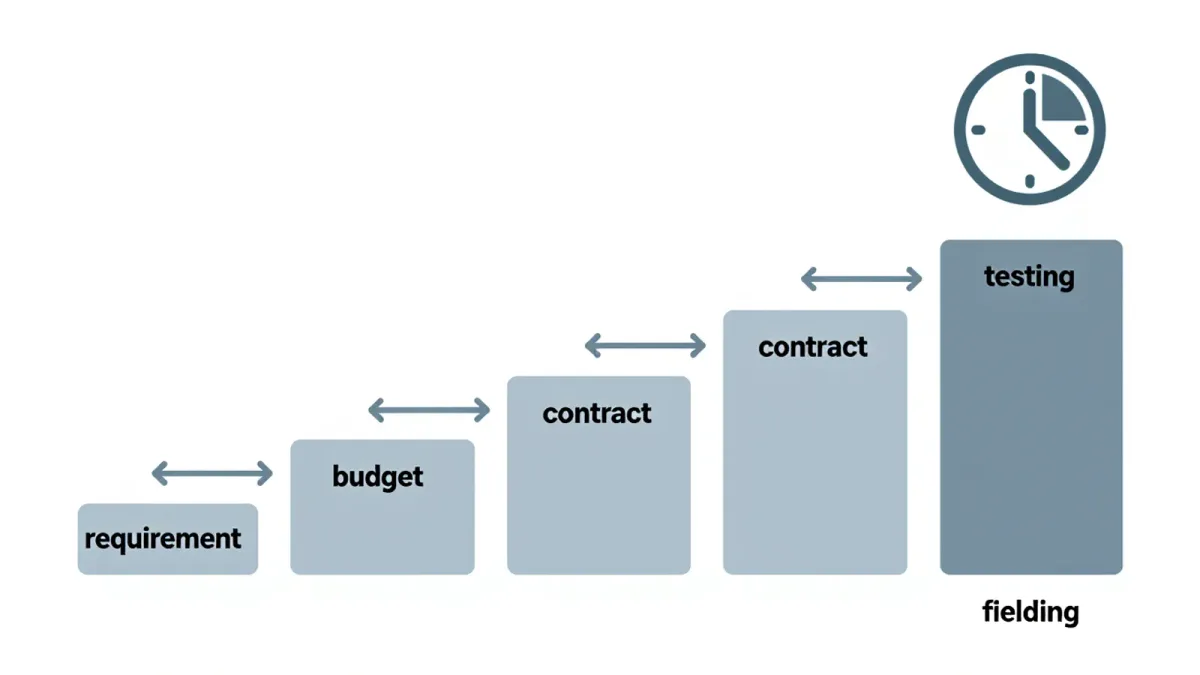
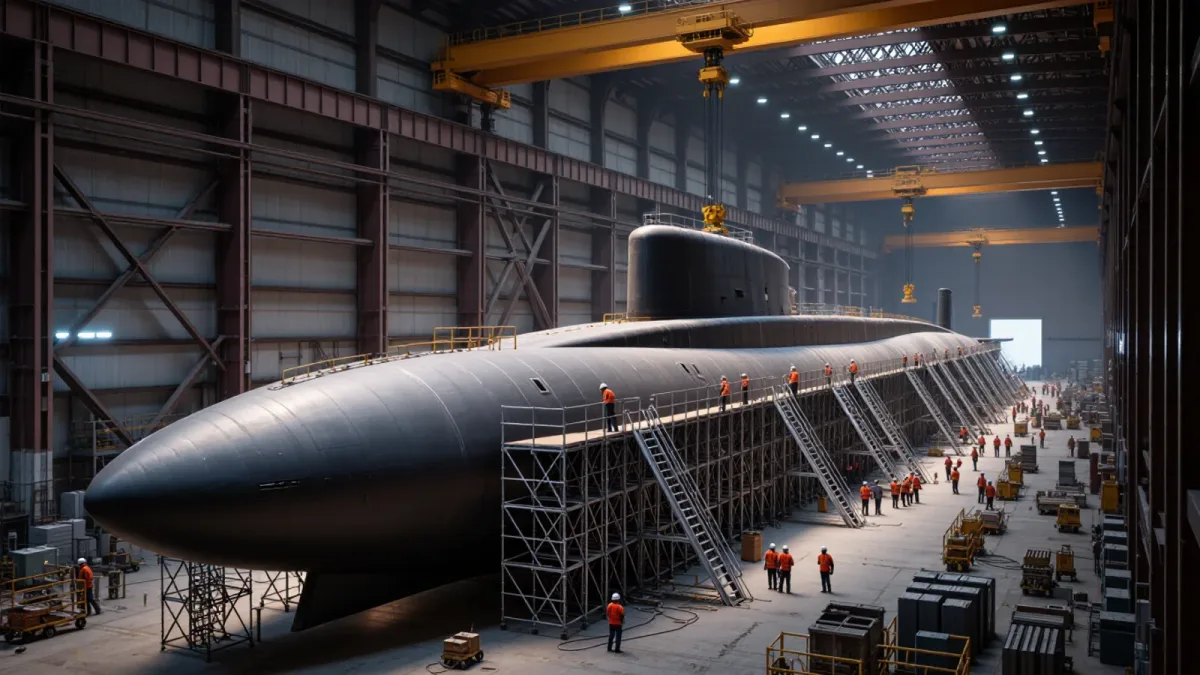
The lead boat, USS District of Columbia, is roughly 65 percent complete as of February 2026, per General Dynamics Electric Boat statements, with delivery targeted for 2028. Program leadership has described the build as a «wicked heavy lift», per General Dynamics in April 2026, a candid acknowledgment that constructing 12 new strategic submarines on schedule is one of the most demanding industrial programs the country has attempted.
Construction is split between Electric Boat in Connecticut and Rhode Island and Huntington Ingalls' Newport News Shipbuilding in Virginia, with module deliveries flowing between the yards. The schedule pressure is compounded by the Navy's simultaneous need to keep Virginia-class attack submarine production at two boats per year, a competition for skilled labor, suppliers, and yard space that has strained both programs.
What does a floating dry dock actually do?
A floating dry dock is a submersible platform that can sink by flooding ballast tanks, allowing a submarine to be moved over the deck, then pumped dry to lift the vessel clear of the water. That exposes the hull for maintenance, inspection, and repair work that cannot be done pierside. Floating docks can also be relocated, which gives a base flexibility that fixed graving docks lack.
For Kings Bay, Atlas means the base can conduct docked maintenance periods for strategic submarines without sending boats to other yards, preserving strategic deterrent patrol continuity. Every day a ballistic missile submarine spends in maintenance instead of on patrol is a day of reduced at-sea deterrent presence, so infrastructure that shortens or de-risks maintenance availabilities has direct strategic value, per Naval News.
What comes next?
Atlas will be fitted out and tested at Kings Bay before entering service supporting the boats transitioning between the Ohio and Columbia eras. The wider watch items remain the Columbia build schedule toward the 2028 delivery of the lead ship and the industrial base investments, in yards and in infrastructure like this dry dock, that the nuclear sea-based deterrent requires. The January 2026 arrival, per Naval News, is one of the quieter but structurally important steps in that transition.