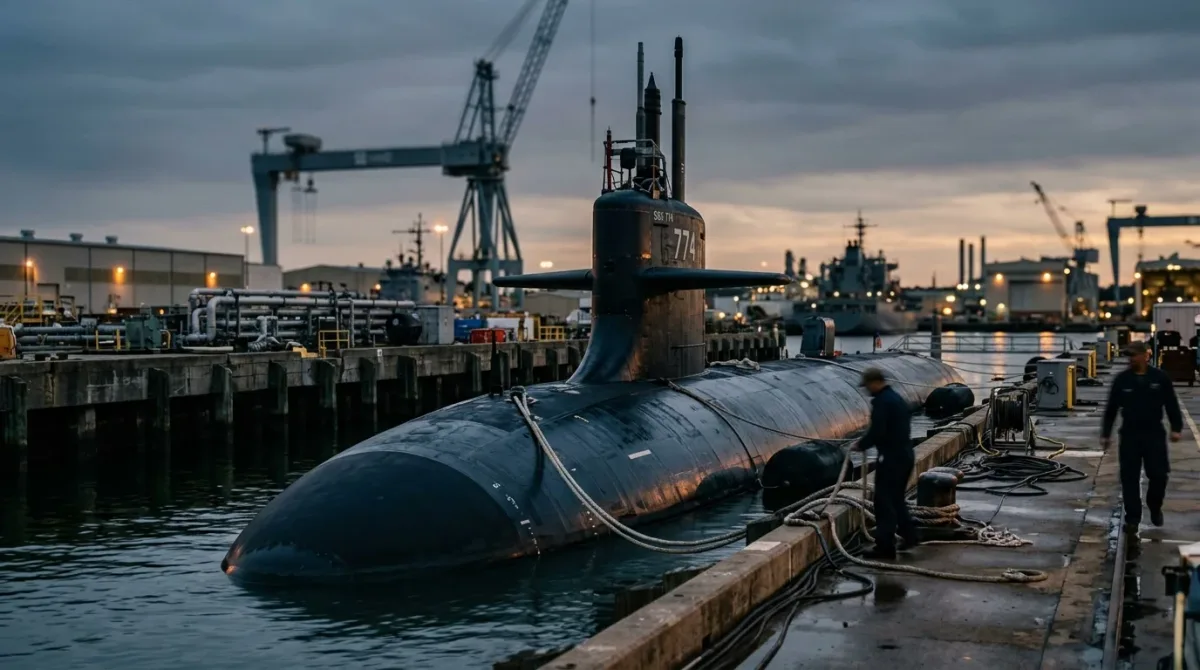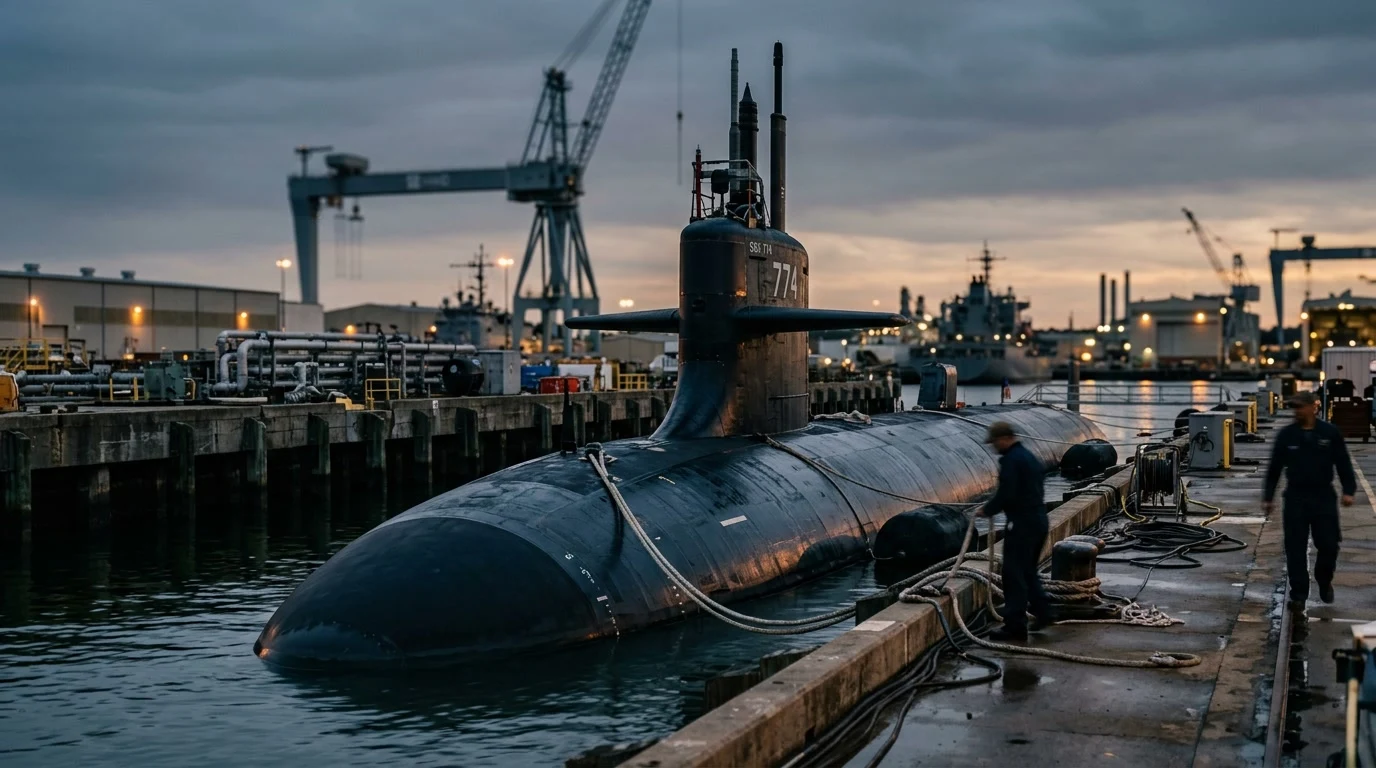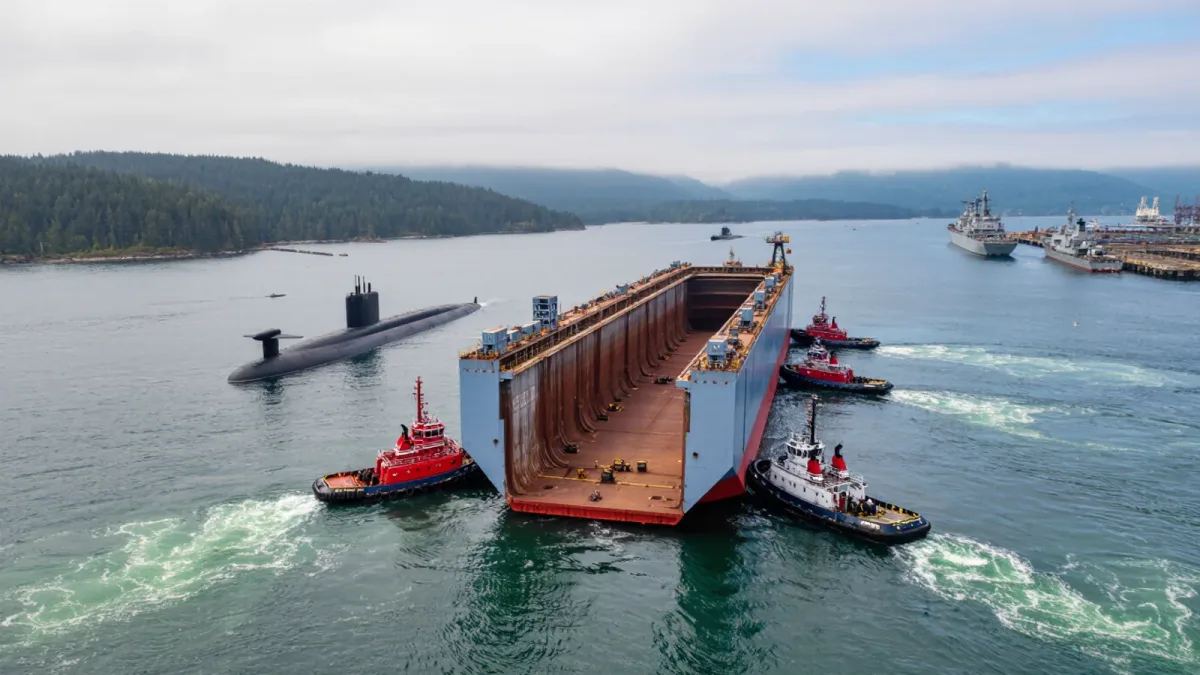
The Navy is receiving Virginia-class attack submarines at roughly 1.3 boats per year against a requirement of two, and the shortfall has accumulated to about five submarines behind the planned build rate, per Chief of Naval Operations Adm. James Caudle, as reported by USNI News on May 12, 2026. The gap matters because attack submarines are the fleet's scarcest high-demand asset, and the two-a-year standard is itself tied to replacing Los Angeles-class boats retiring on schedule.
What did the CNO say?
Adm. Caudle's figure, per USNI News on May 12, 2026, put current Virginia-class output around 1.3 boats annually, with the two-per-year rate now expected to arrive in the 2030s. Framing the deficit in cumulative boats, five hulls, rather than annual percentages, was notable: each missing submarine represents capability the combatant commanders did not receive, and it cannot be recovered by delivering slightly more per year later without sustained above-plan output.
The CNO's public accounting reflects growing frustration at the top of the Navy with undersea force growth. Attack submarines are heavily tasked for intelligence gathering, strike, anti-submarine warfare, and escort of high-value units, and fleet commanders consistently request more boats than exist.
Why is production behind?
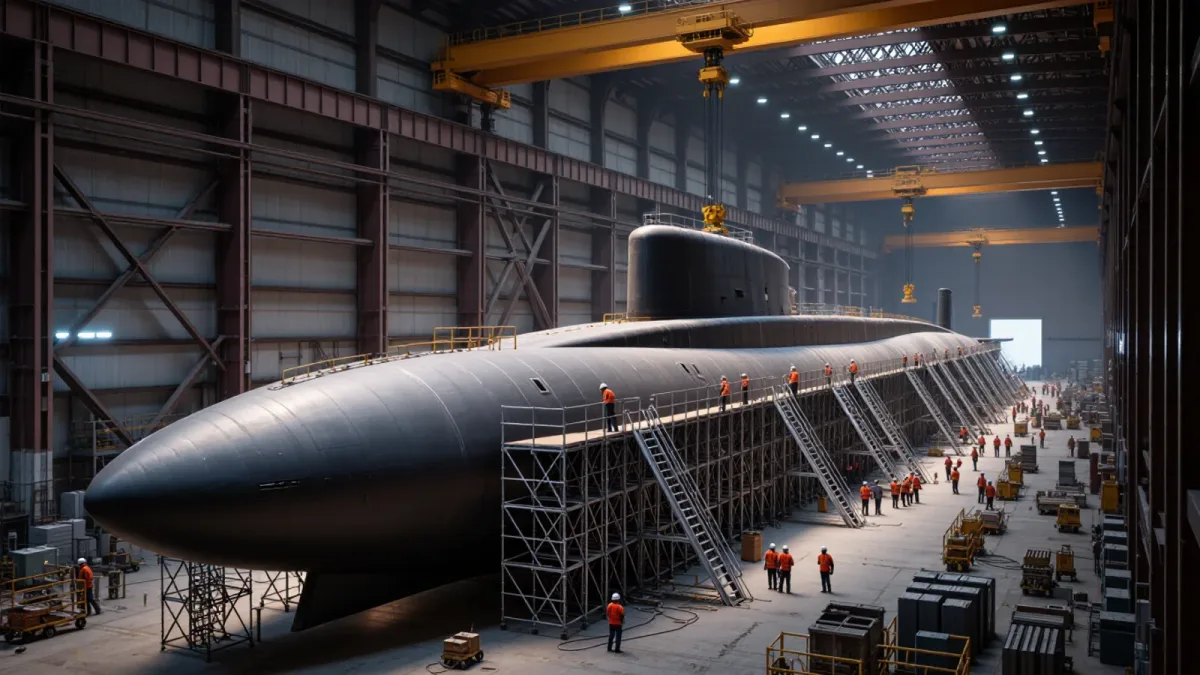
The causes are industrial, per Government Accountability Office analyses: shipyard capacity, supplier performance, and workforce. The two public yards building Virginia-class boats, General Dynamics Electric Boat and Huntington Ingalls' Newport News Shipbuilding, are also carrying the Columbia-class ballistic missile program, which the Navy has designated its top priority. Sharing skilled welders, engineers, and key suppliers across both programs means Virginia-class schedule absorbs the strain.
Suppliers are the tighter constraint. Major components, including nuclear reactor equipment, propulsion shafting, and combat system hardware, come from a narrow vendor base that has struggled to hire and retain workers. The GAO has repeatedly found that suppliers deliver late and that late components, not hull assembly, often set a boat's delivery date. Workforce attrition during and after the pandemic years deepened the problem at both yards and their supplier network.
What is being done about it?
The Navy's principal tool is money and certainty. Multiyear procurement contracts for Virginia-class boats give the yards and their suppliers a stable order book, allowing investment in facilities and hiring against guaranteed future work. Congress has supplemented with supplemental appropriations for shipyard capital equipment and supplier support, and the Navy has shifted some work scope between the two yards to balance load.
The tension is that the same measures serve Columbia. Investments in supplier capacity and workforce are shared across both programs, which is deliberate: the Navy decided the strategic submarine program takes precedence, and attack submarine growth rides on the same industrial base expanding overall rather than on Virginia-specific fixes alone.
What should watchers expect?
The honest forecast, per the CNO's May 2026 remarks, is that two-per-year Virginia-class deliveries arrive only in the 2030s, and the five-boat deficit will take years beyond that to claw back. Metrics that matter: supplier on-time delivery rates reported by the GAO, yard hiring numbers, and whether annual budget requests fund submarine industrial base expansion at the levels program leaders say are needed. Attack submarine availability is the fleet's structural constraint for the rest of the decade.
The timing compounds: each year below two boats adds to the five-hull deficit the CNO described on May 12, 2026, and Los Angeles-class retirements continue regardless. Fleet officials have said the growth in attack submarine availability, not just count, is what combatant commanders actually feel in their tasking queues.