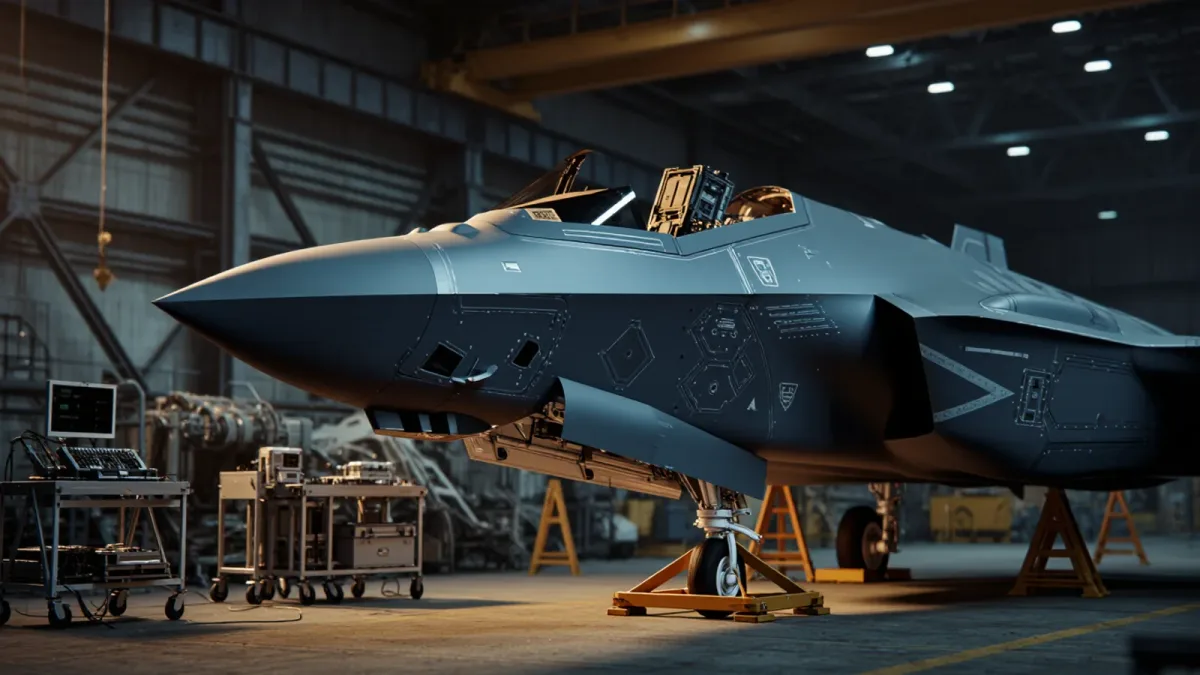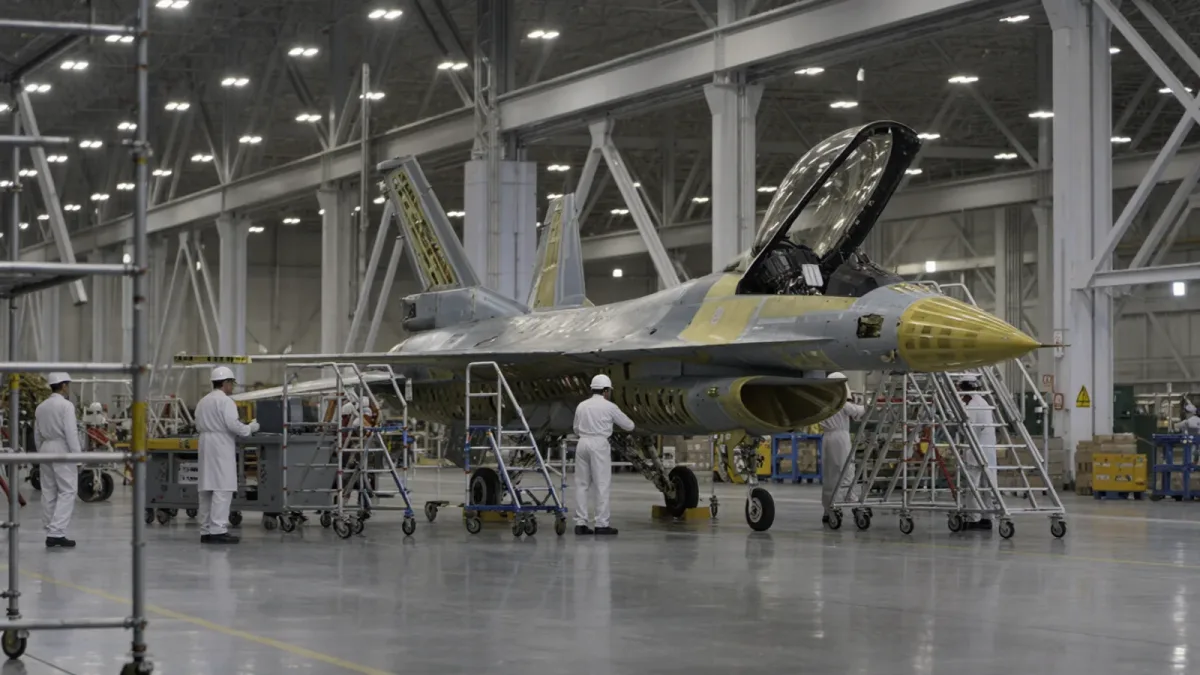
Boeing has started building F-47 test aircraft, and the company and the Air Force are working toward a first flight in 2028, per Defense News on July 30, 2026. The report marks a shift for the sixth-generation fighter program from design activity into physical production less than a year and a half after the Air Force awarded Boeing the engineering and manufacturing development contract in March 2025.
How fast did the F-47 move from award to production?
The Air Force awarded Boeing the EMD contract on March 21, 2025, following a competitive phase that the service kept quiet for years. Before the award, both competing teams had flown classified prototype aircraft, per Air Force statements at the time of the announcement, giving the service flight-test data on demonstrator designs before committing to a winner. That prototype experience is one reason officials have expressed confidence in an aggressive schedule.
Production of test aircraft beginning in 2026 means the program is cutting metal and assembling structures while system development continues, a concurrency pattern the Air Force says it is managing deliberately after lessons learned from earlier fighter programs. The FY2026 budget allots roughly $2.58 billion for F-47 system development and demonstration, per the Congressional Research Service, funding the test fleet build-up, ground infrastructure, and continued maturation of subsystems.
What is the unit cost target?
One of the most consequential requirements Air Force officials have attached to the F-47 is affordability. The service has stated a goal of fielding the fighter at a unit cost below that of the F-22 Raptor when adjusted for inflation, per Air Force acquisition briefings. The F-22 ended production in 2011 after 187 operational aircraft, with flyaway costs that helped convince Pentagon leadership to cap the fleet far below original plans.
Keeping the F-47 affordable is tied to the program's broader concept: the fighter is not meant to fight alone. It is designed as a command node for collaborative combat aircraft, the uncrewed drone companions under the Air Force's CCA effort, which are intended to add magazine depth, sensing, and attritable mass around each crewed jet. Officials argue that spreading capability across crewed and uncrewed platforms is what lets the fighter itself stay within a sustainable price band, per Air Force statements.
Why does the 2028 first flight matter?
A first flight in 2028, roughly three years after contract award, would be fast by modern fighter standards. The F-35 flew its first flight about five years after its contract award, and recent programs have routinely stretched longer. Air Force leaders have framed the F-47 schedule as evidence that classified prototyping plus digital engineering can compress development cycles, per service statements.
The schedule still carries risk. Test aircraft built during development often change before operational jets are produced, and the program must clear ground tests, engine runs, and taxi trials before the 2028 target. But entering production now means Boeing's St. Louis line is already staffed and tooling up, and any schedule pressure will surface early rather than after years of paper-only development, per Defense News.
What happens next for the program?
Through 2026 and 2027, expect the first test airframes to take shape in St. Louis, with static test articles supporting structural clearance ahead of flight. The Air Force has kept most F-47 details classified, including specific stealth, range, and sensor claims, so public milestones will remain limited to budget documents and program announcements. The next hard checkpoint is the march to first flight, and whether 2028 holds will shape the entire next-generation air dominance fielding timeline, per Defense News on July 30, 2026.