Radar cross section, or RCS, is the measure of how visible an object is to radar, expressed in square meters or, more usefully, in dBSm: decibels relative to a one-square-meter reference. A target at 0 dBSm scatters energy like a one-square-meter plate; every minus 10 dBSm cuts that by a factor of ten. Low observable aircraft live in the negative tens, which is why the discipline is measured and guarded inside anechoic chambers and remote test ranges, and why the F-117's 1988 declassification marked the moment the field stepped into public view.
What is radar cross section?
RCS quantifies the power a target scatters back toward a radar, combining shape, materials and aspect angle into a single equivalent area. It is not physical size: a flat, well-shaped plate can return enormous energy, while a curved, treated surface of the same size may return almost none. RCS changes with frequency and viewing angle, so a single aircraft has effectively thousands of RCS values depending on how and where it is illuminated.
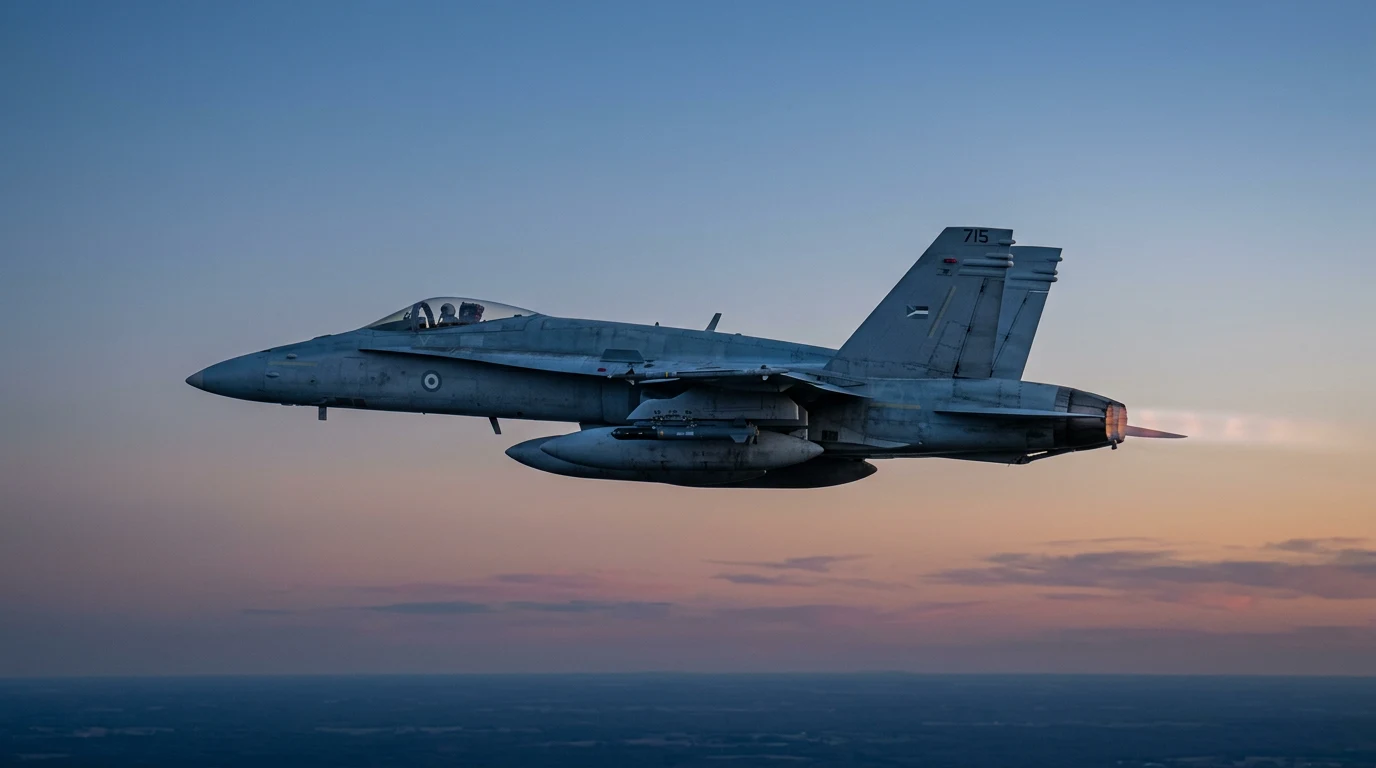
That variability is why detection claims come with asterisks. A stealth aircraft optimized against X-band fire-control radars from the front can be more visible from the side, from above, or to lower-frequency early-warning radars. Low observable does not mean invisible; it means the detection range shrinks enough for the geometry and tactics to work, per standard Air Force descriptions of the capability. aviation coverage.
How is RCS measured?
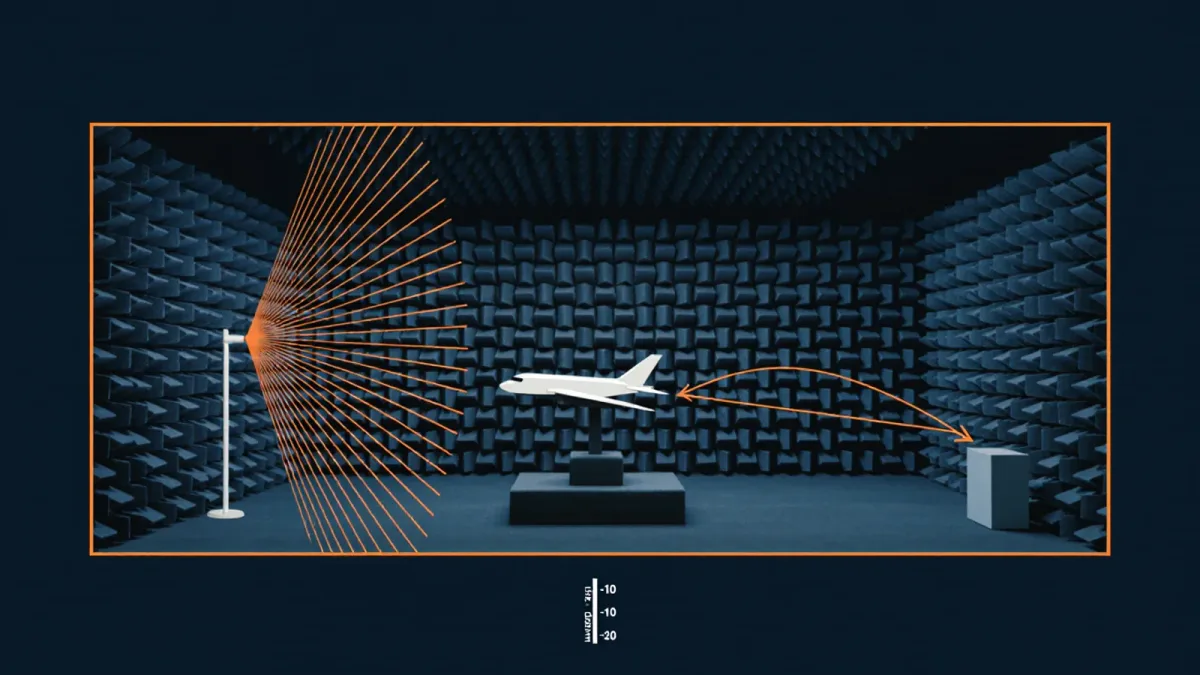
Two venues dominate. Anechoic chambers are indoor halls lined with pyramid-shaped radiation-absorbent material that swallow reflections, allowing a model or aircraft to be illuminated by controlled test radars from defined angles with no weather, no clutter and no prying satellites. Outdoor ranges, often rail-mounted model tracks or instrumented far-field sites in remote terrain, replicate the geometry at scale.
- Scale models: smaller airframes measured and extrapolated to full size, budget-friendly for early design trades.
- Full-scale static measurement: the real aircraft on a pylon, rotated through aspects at multiple frequencies.
- Dynamic range measurement: live aircraft flying instrumented courses, capturing in-flight configuration effects.
Manufacturers treat the resulting data as among the most classified material a program holds, because it reveals exactly where the aircraft is detectable. Shaping trades are made in these facilities: faceting, edge alignment and inlet design all trace to chamber iterations.
Materials and maintenance
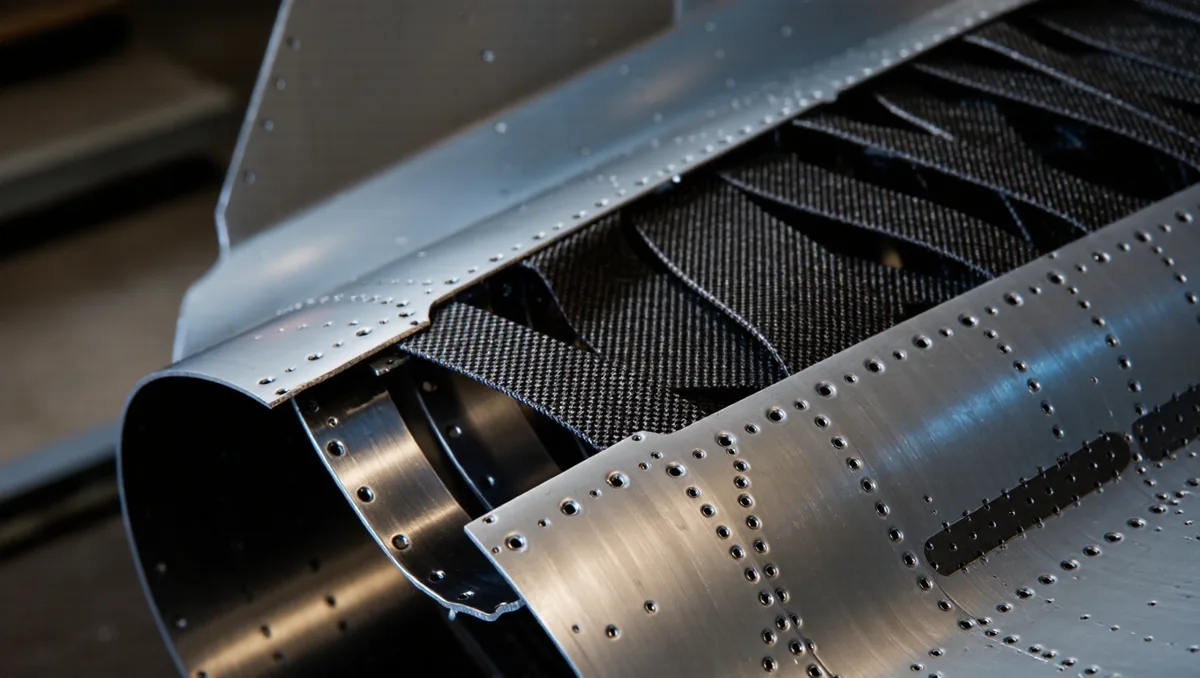
Radiation-absorbent coatings and edge treatments contribute alongside shaping, and their condition drives maintainability. Radar-absorbent material requires inspection and repair to hold the certified signature, which is a nontrivial share of low-observable fleet maintenance workload, per Air Force sustainment discussions.
What does dBSm mean in practice?
The decibel scale compresses enormous ranges into workable numbers. A conventional fighter is commonly described in the single-digit square-meter class, a large bomber in the tens to hundreds, and low observable aircraft are described in terms of reducing detection ranges by orders of magnitude rather than a single published figure, since actual values remain classified. What is public is the arithmetic: minus 20 dBSm means a hundredth of a square meter equivalent.
Radar engineers care because detection range scales with the fourth root of RCS for the same radar. Cut the signature by a factor of ten thousand and detection range falls by a factor of ten, which converts a 200-kilometer threat into a 20-kilometer one and reshapes the entire engagement.
What did the F-117 declassification reveal?
The program's public reveal in November 1988, followed by the F-117's combat debut in Panama in 1989 and the Gulf War in 1991, established low observability as a working operational capability rather than laboratory theory, per Air Force historical accounts. The Nighthawk's faceted shape, driven by the computing limits of its era, first flew in 1981, and its combat record against integrated air defenses rewrote procurement across the world.
The F-117 retired in 2008, per the Air Force, but its legacy is institutional: every major air power now designs, measures and protects signature data, and the test infrastructure described here grew directly from that first program's lessons.
Why measurement infrastructure matters
Chambers and ranges are the bottleneck resource of stealth. Design iterations, fleet audits and threat-representation testing all queue for the same facilities, and signature measurement capability is itself a closely held national asset. A low-observable program without chamber time is a program that cannot prove its claims, which is why test infrastructure investment follows every new stealth program, per service budget materials.
The dBSm number, the anechoic hall and the remote range are, together, the entire evidence base of stealth. Everything else is shaping claims until the measurement says otherwise.
How does shaping actually reduce a signature?
Shaping works by steering reflections away from the radar that sent them. Flat or smoothly curved facets return energy in predictable directions away from the source, edges are aligned so scattered energy concentrates along a few controlled spikes, and inlets, cavities and canopy are treated because internal structures and cockpit interiors are strong reflectors.
The discipline is iterative. Designers propose a shape, the chamber measures it, and the returns feed back into surface alignment and material placement until the signature meets the specification. Computing advanced from the F-117 era's faceted approximations to full physics-based prediction, but the chamber still arbitrates, because prediction without measurement is a claim, not a capability.
Frequencies change the picture
A signature is frequency-dependent, and defenders exploit it. Low-frequency early-warning radars see larger apparent returns and can cue fire-control radars that work at frequencies the aircraft was optimized against, while multistate and passive radar concepts attack the assumption that returns must travel back along the illumination path. Low observable design therefore includes tactics and geometry, not just airframe treatment, and measurement programs test across the threat spectrum rather than at a single band.
Why is signature data so tightly held?
Measured RCS data is effectively a targeting map for electronic warfare and radar developers, showing precisely where and at what frequencies an aircraft is vulnerable. Disclosure would let adversaries tune radars, wavelengths and aspect tactics against the exact weaknesses, which is why chamber results are classified at the program's highest levels and why measurement facilities themselves are controlled.
The secrecy extends to fleet operations. Signature maintenance, coating repair quality and configuration control are audited because a degraded edge treatment or a misplaced access panel measurably raises the return, per Air Force low-observable maintenance practices. The number on the chart is protected because the fleet's survival arguments rest on it.
What comes next in measurement?
Modeling is closing the gap with measurement: full-aircraft physics simulation now predicts signatures well enough to shape early design before any model is built, letting chambers concentrate on verification and fleet audit. Digital signature models, like digital engineering generally, promise faster iteration, per program office descriptions.
The constant is that detection is a moving target. As adversary radar bands diversify and counter-stealth concepts mature, measurement programs expand accordingly, and the infrastructure question returns: chamber time, range capacity and model fidelity now pace stealth as much as any airframe design does. The decibel chart, not the shape alone, is the battlefield.
For the reader, the durable takeaway is the measurement discipline itself. Stealth claims are not advertising; they are chamber results, range data and decibel arithmetic, protected as tightly as weapons design. Every generation of aircraft since the F-117 has been judged by that evidence, and the facilities that produce it remain as strategically valuable as the aircraft they measure.