The Missile Defense Agency has scored FTX-40, a major flight test executed in early April 2026, as a success, per US Space Command. Days later, on April 3, 2026, the agency described a shift in its industrial posture as moving to "Industrial Warp Speed," a production-first framing meant to convert flight test performance into fielded interceptor capacity at a faster clip.
What happened in FTX-40?
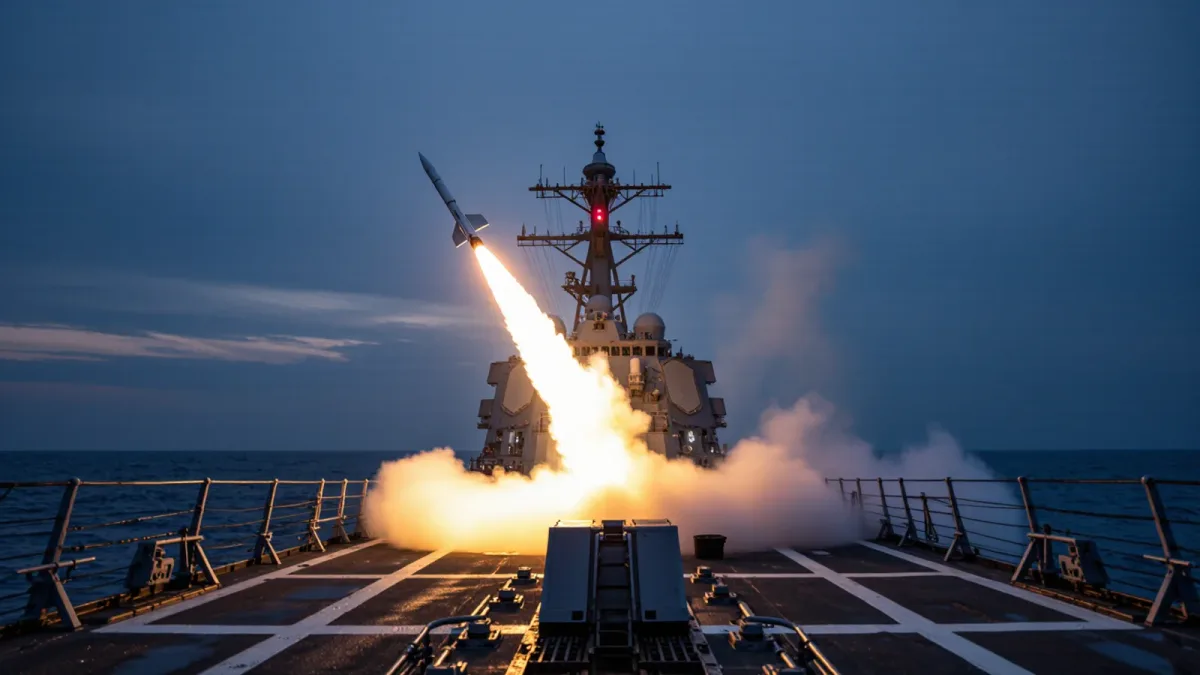
FTX-40 was conducted in early April 2026 and evaluated by US Space Command as successful, per that command's assessment. Flight tests of this class typically pair a threat-representative ballistic target with operational interceptors and the command-and-control chain that would connect them in a real engagement, exercising not just the kill vehicle but the sensors, fire control, and crew procedures around it.
The result matters because missile defense credibility rests on demonstrated intercepts under realistic conditions, not on specifications. Each successful test adds data on reliability, and it feeds the operational community's confidence in declaring coverage. The agency has emphasized that recent tests have been increasingly complex, adding range, countermeasures, and multi-object engagements to the picture.
What does 'Industrial Warp Speed' mean?
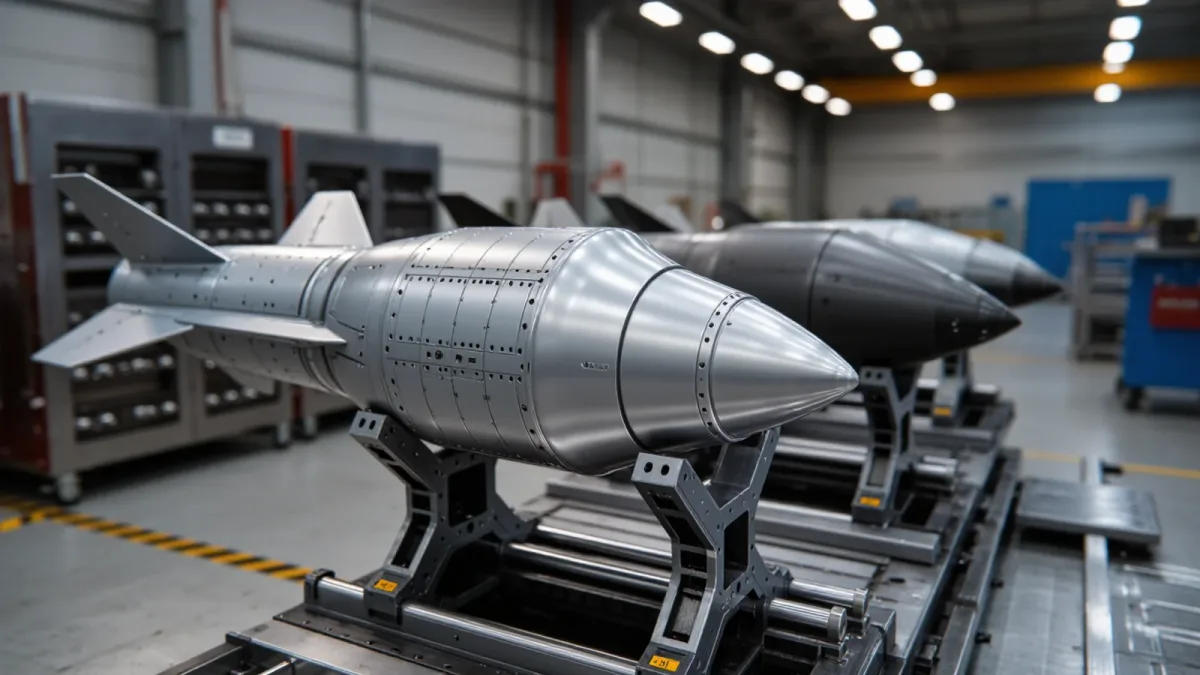
The April 3, 2026 declaration of "Industrial Warp Speed," per MDA, is a production-acceleration campaign aimed at shortening the time between orders and delivered interceptors. It signals a shift from a testing-and-development posture toward manufacturing throughput: expanding supplier output, reducing unit delivery timelines, and building capacity ahead of demand rather than reacting to it.
The interceptor record provides the backdrop. The SM-3 family has recorded roughly 40 intercepts in about 50 attempts, per the Arms Control Association in August 2024, one of the better demonstrated success rates among complex weapon systems. Turning that demonstrated performance into inventory depth is the point of the production push, especially as demand signals from Europe, the Middle East, and the Indo-Pacific all compete for the same magazines.
How much money is behind the push?
Funding is scaling in step. Missile defense and related funding is set to rise from $43.3 billion to $85.8 billion in the FY2027 cycle, per budget materials, nearly doubling the resources available across interceptors, sensors, and the space-based layers now under development. That level of growth is unprecedented in the agency's post-Cold War history and reflects policy direction toward layered homeland and theater defense.
Money alone does not guarantee output, however. Interceptor production depends on solid rocket motors, kill vehicle components, and specialized suppliers that have historically constrained other programs. The Industrial Warp Speed campaign is in part an attempt to address those choke points directly, by funding second sources, tooling, and workforce growth ahead of need, per MDA statements.
What should observers watch next?
The near-term indicators are concrete: delivery rates for SM-3 and SM-6 interceptors, follow-on flight tests continuing the FTX series, and how quickly new sensor and interceptor programs move from contract award to first production units. The pairing of a successful FTX-40, per US Space Command in early April 2026, with a doubling budget and a declared production surge gives the agency its strongest political tailwind in years; converting that into fielded capability is now the measurable test.
The political dimension is also notable. A test assessed as successful by US Space Command in early April 2026 gives the agency evidence to cite when Congress weighs where the enlarged FY2027 appropriation should land, and MDA officials have used exactly that record in recent hearings to argue that production, not development, is now the binding constraint.