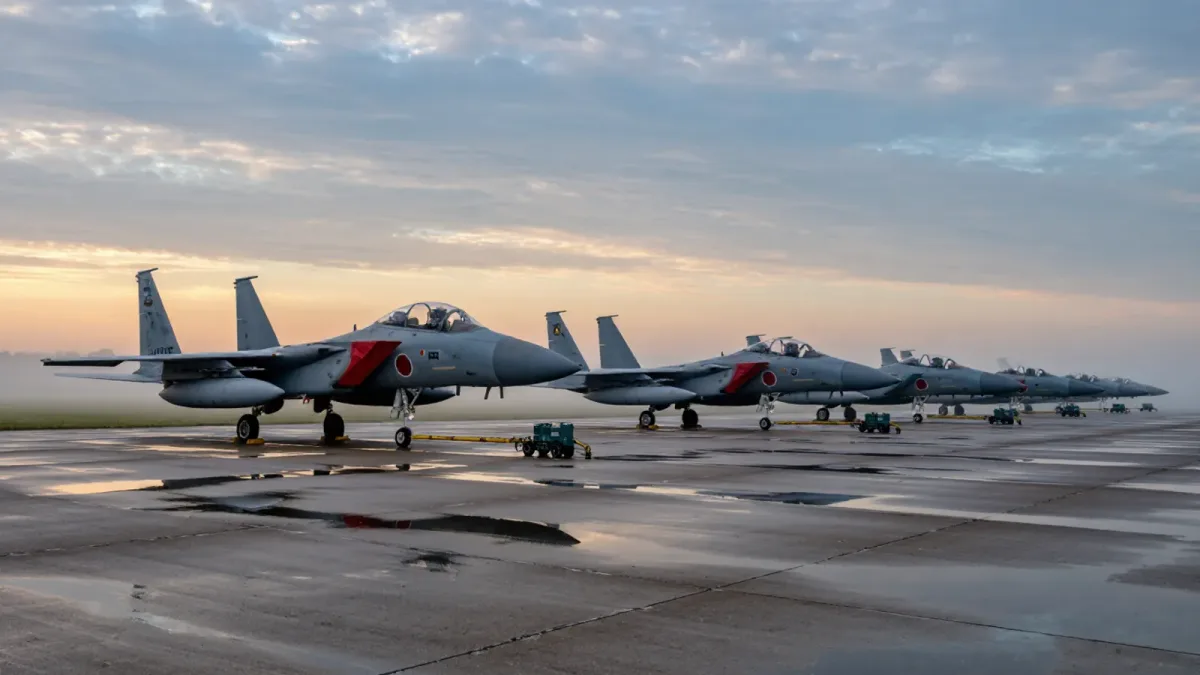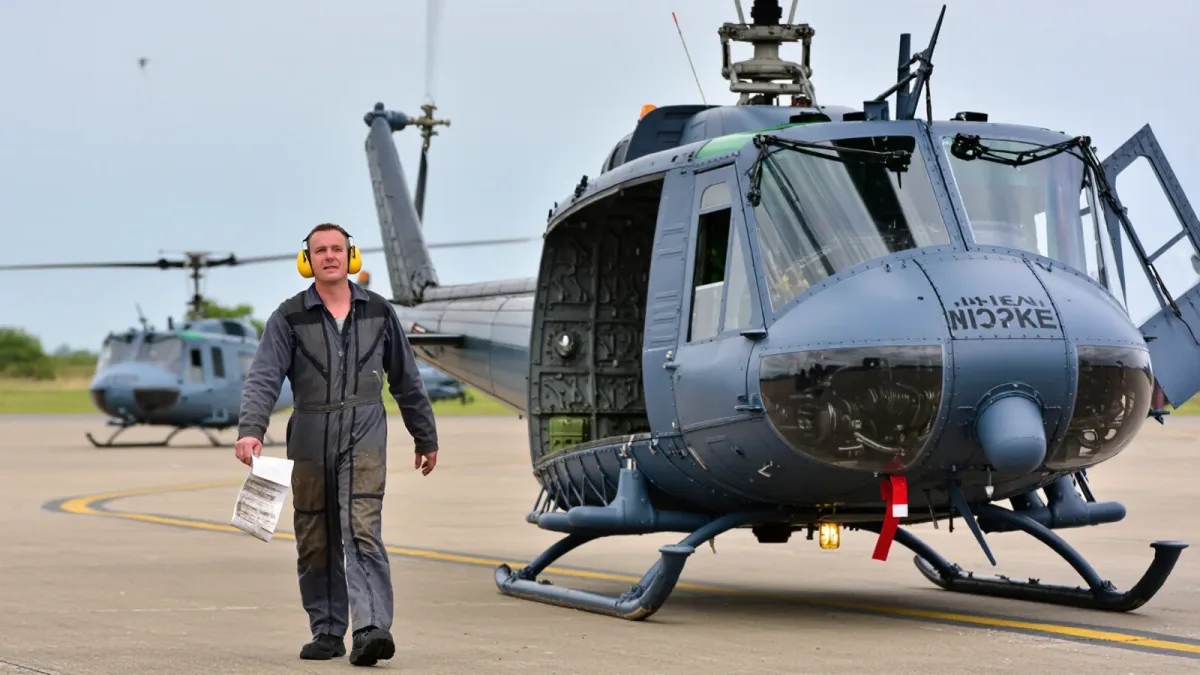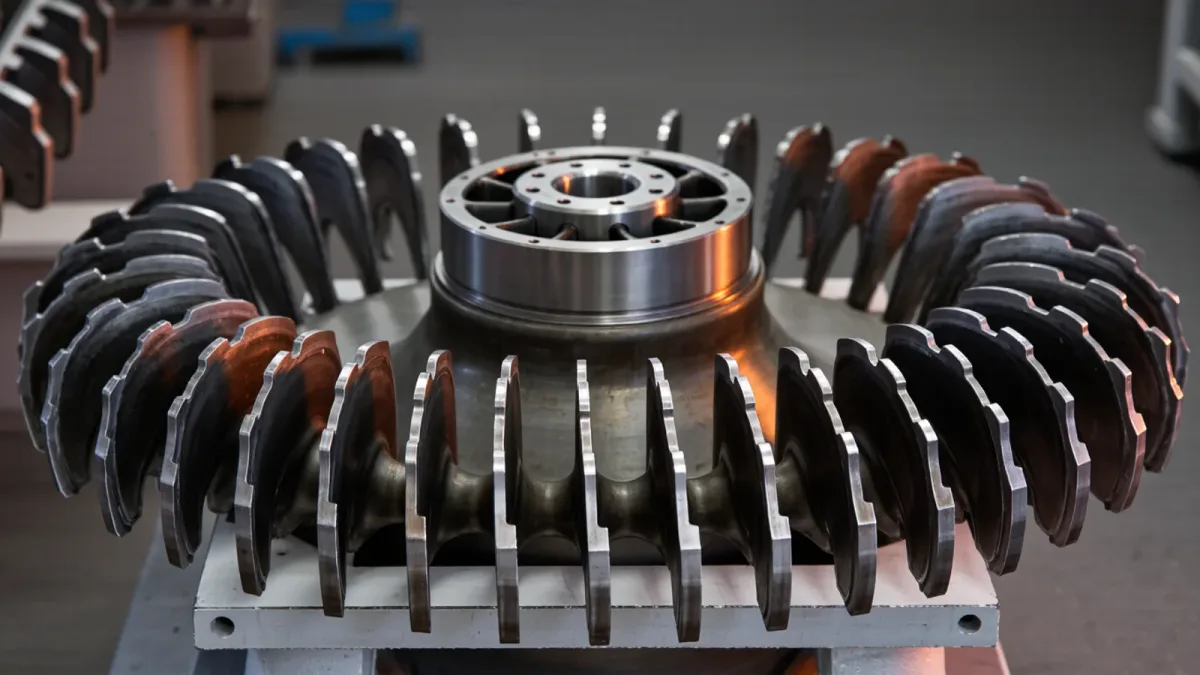
Military jet engines are spending longer in depot maintenance than standards allow, and the backlog shows up directly in fleet readiness. The Government Accountability Office reported in 2024 that engine problems were among the leading causes of F-35 downtime, with the fleet's mission capable rate averaging about 55 percent in fiscal 2023 against a 65 percent goal, per GAO. The same pattern of long repair queues runs through fighter engine depots across the enterprise.
What is depot maintenance for an engine?
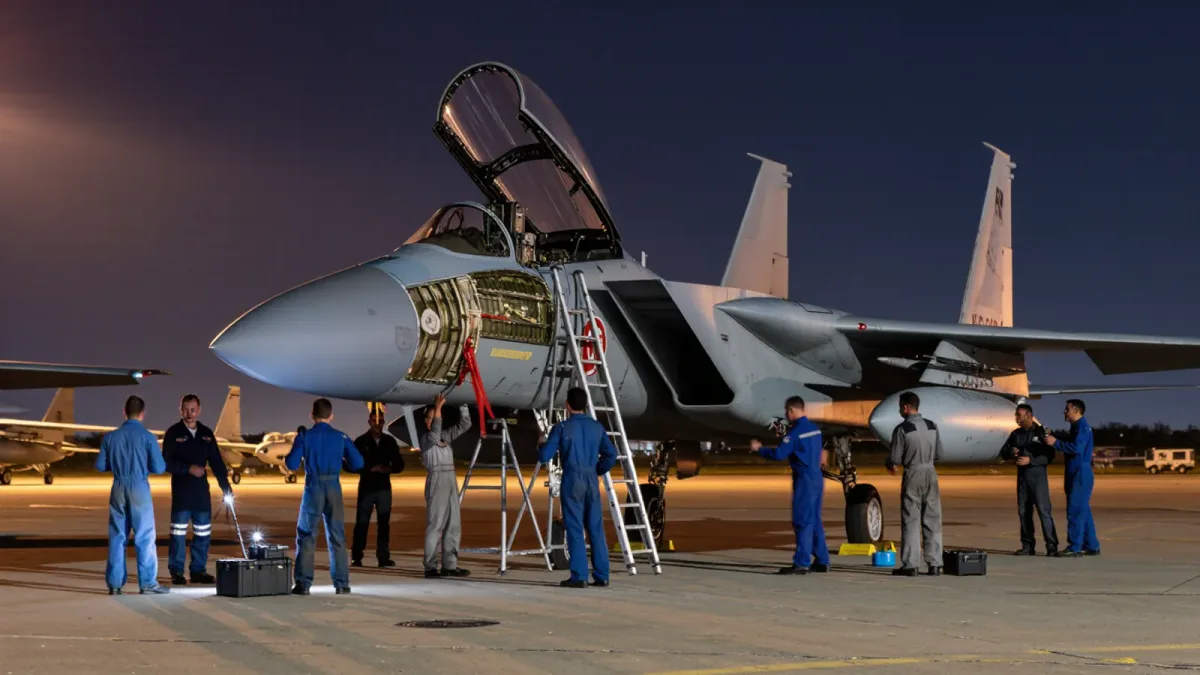
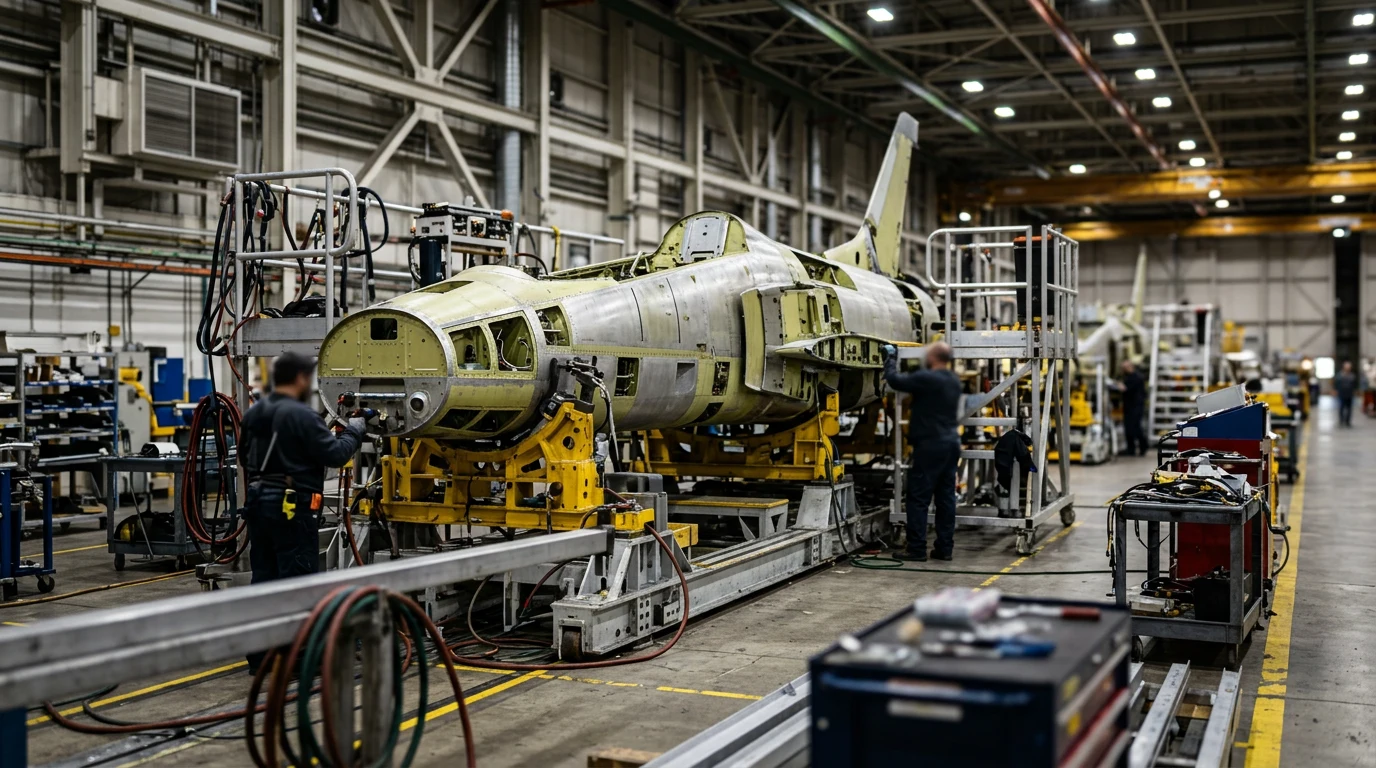
Depot-level maintenance strips a turbofan to its modules, inspects and repairs life-limited parts, and rebuilds it to zero-timed standards. For the F135 that work concentrates at the Oklahoma City Air Logistics Complex at Tinker Air Force Base, with private industry sharing the workload; the F110, which powers F-16s and F-15s, flows through similar public-private lines.
The interval between depot visits, and the time an engine spends inside the shop, are both governed by published standards. GAO reviews in recent years found the F135 depot process exceeding its standards, meaning engines sat in queue or on the shop floor longer than the sustainment plan assumed, tying up spare engines that squadrons needed on wing.
Public depots and the private half
By law the depots must retain the core of the workload, while contractors such as Pratt & Whitney and GE Aerospace perform significant shares of engine overhaul. The split is meant to preserve surge capacity, but both sides compete for the same machinists, test-cell time and parts, and when supply chains thin, both queues grow together.
Why is engine availability falling?
Three pressures stack. Demand is up: aircraft are flying harder, older and more operationally than planned, pulling forward the wear that drives depot inductions. Capacity is down: shortages of machinists and artisan skills at the air logistics centers have limited output, an issue the Air Force has flagged in budget testimony for several years running.
The third pressure is parts. GAO's 2024 F-35 reporting identified engine component shortages, alongside sustainment shortfalls, as a persistent driver of jets waiting on repairs. When a single casting or power assembly is late, an otherwise finished engine waits on the stand, and its tail number stays mission incapable.
- Repair cycle time: the clock from induction to induction-ready output, tracked against a published standard.
- Mean time between removals: how long an engine averages on wing before unscheduled pull, the metric depot output exists to protect.
- Spare engine ratio: engines stocked per flying aircraft; long depot times effectively shrink the pool.
How does the F135 illustrate the problem?
The F135 powers the entire F-35 fleet, so its depot health is fleet health. GAO reporting through 2024 described F-35 mission incapable time driven significantly by engine repairs and spare shortages, with sustainment costs rising while availability lagged the 65 percent target. Pratt & Whitney, the engine's maker, has announced reliability and cost-reduction work on the fleet, per company statements, but the depot pipeline remained the constraint.
The F110 side shows the age effect. GE Aerospace's F110 family has flown for decades on F-16s and F-15s, and as those airframes extend their service lives, engines cycle through depots on older metallurgy and harder-than-planned usage spectra. The Air Force has leaned on contractor-operated overhaul alongside depot lines to keep F110 output level, per budget documents.
What would fix the queue?
The services' remedies track the causes. Workforce: the Air Force is investing in depot hiring, training pipelines and retention incentives at the air logistics centers, per budget submissions. Workload smoothing: program offices try to level inductions so depots are not hit with surge demand after operational spikes. Parts: long-lead component buys and vendor management aim to keep finishing stands from starving on single parts.
Private-sector capacity is the fourth lever. Shifting more engine overhaul to contractor lines, where hiring is faster, trades the legal core-logistics requirement against throughput. GAO has repeatedly recommended better data and demand forecasting to make that trade deliberately rather than by default.
Metrics that matter
Watch three numbers: the depot process-time-versus-standard gap for F135 and F110 lines, the F-35 mission capable rate against its 65 percent goal, and the spare engine ratio reported in service budget materials. When those move together, availability follows.
Why engines gate everything
An airframe without an engine is a hangar queen, which is why engine depot health is the cleanest single predictor of fighter availability. GAO's multiyear reporting keeps drawing the same line from depot queues to grounded jets, and until process times return to standard, mission capable rates will carry the depot's schedule on their backs.
How do depot queues start in the first place?
Queues form when induction demand departs from the plan the depot was sized for. Combat operations, surge flying and early removals from harsh usage all push engines into the shop faster than scheduled, while the depot's hiring, machining and test-cell capacity were set years earlier against a calmer forecast.
Contract mismatches widen the gap. When repair-by-the-module contracts are priced against expected part condition and engines arrive worse than assumed, negotiations and re-estimates consume calendar time while engines wait. GAO reviews of depot performance have repeatedly pointed to imprecise workload estimates as a root cause of process-time growth, per its published findings.
The customer feels it last. A squadron plans sorties against an engine availability forecast built on standard process times, and when the actual clock runs long, the shortfall surfaces as grounded airframes, not as a visible queue inside the depot fence.
What is different about commercial engine practice?
Airlines fly their engines to tightly scheduled removals and swap whole modules through a global pool of rental spares, which keeps aircraft flying while repairs proceed off-aircraft. Military fleets work the same physics with different constraints: fewer spares, harder usage and depot capacity set by statute and budget rather than market demand.
Some convergence is underway. The Air Force has studied pooling arrangements and expanded contractor support to shorten the aircraft-out-of-service period, per budget documents, and power-by-the-hour style constructs have appeared on trainer and transport fleets. Turbofan overhaul, however, remains capital-intensive wherever it happens, and the military's core-logistics requirements guarantee that a substantial share stays inside government walls.
How should the risk be read?
Engine depot health recovers slowly because the inputs, skilled machinists, vendor parts and test infrastructure, take years to build. GAO's recommendations have pushed better demand forecasting, process-time data and workforce planning, per its reports, and the services have funded hiring and vendor development in recent budgets. The metric that will tell the story over the next few years is simple: how close F135 and F110 process times return to their published standards, and how quickly F-35 mission capable rates close the gap to goal.
For readers tracking the enterprise, the backlog is a leading indicator in both directions. When depot process times compress, spares pool out, availability recovers and squadrons regain schedule margin within a year. When they stretch, the damage shows up as grounded jets long before any headline names the queue, which is why GAO's sustainment series remains the most reliable public window into fleet health.
Language matters here too. Depot managers report process times, program offices report availability rates and squadrons report sorties flown, and the three vocabularies describe one pipeline. GAO's value has been translating between them, tying F135 removal rates to depot queue lengths to mission capable percentages in a single chain of evidence, per its F-35 reporting. When that chain is visible, accountability follows; when it is not, each organization blames the next.