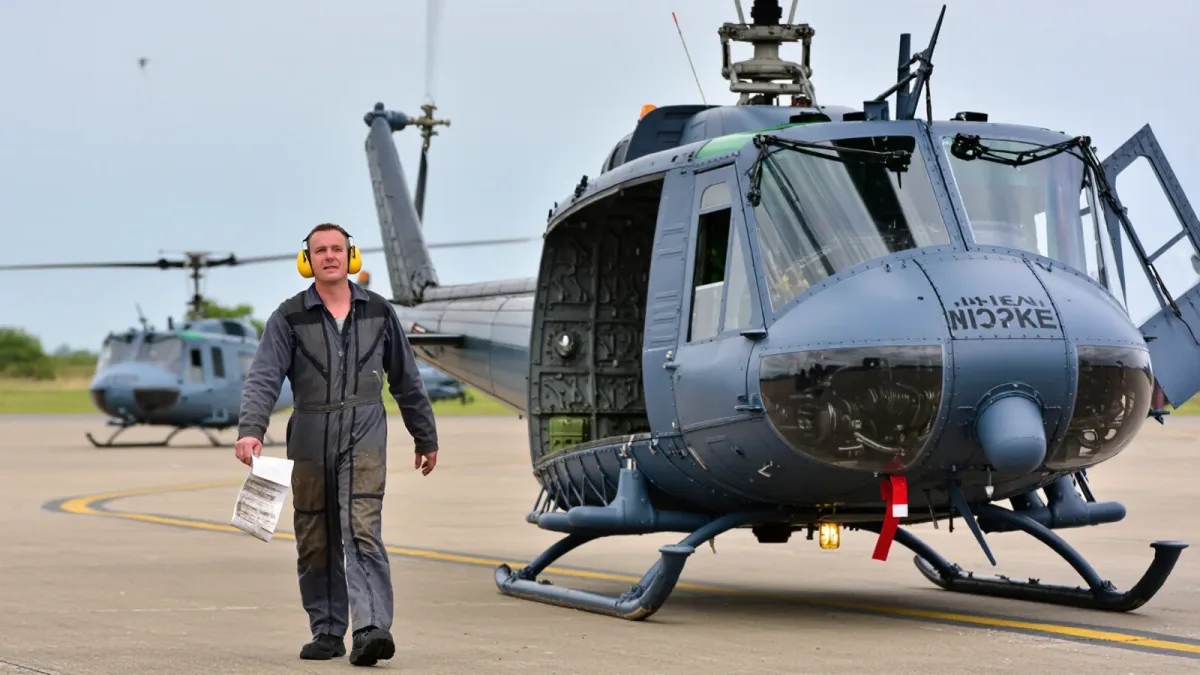
A helicopter's service life is measured against a fatigue spectrum, the accumulated damage from every hard landing, high-G pull and heavy lift recorded over thousands of flight hours, not against calendar age alone. Army fleets illustrate the stakes: the CH-47 Chinook first flew in the early 1960s, the UH-60 Black Hawk entered service in 1979, and both now fly on in large part through service life extension programs that re-qualify airframes component by component, per Army program documentation.
What is a fatigue spectrum?
Every flight loads the airframe differently: hover, cruise, nap-of-the-earth maneuvering and heavy slings each impose distinct stress cycles on the mast, rotor heads, transmissions and fuselage. Engineers aggregate those regimes into a fatigue spectrum, a statistical profile of how much damage an average mission hour inflicts on each structural element.
The spectrum matters because rotary-wing loading is harsher than fixed-wing. Rotor-driven vibration and maneuver loads hammer dynamic components continuously, which is why helicopters track life on many more parts than airplanes do. Masts, hubs, pitch links and transmissions carry hard life limits, retired on hours or cycles regardless of appearance, while the airframe itself is certified against the cumulative spectrum.
Do flight hours or calendar age matter more?
Both, in different columns. Flight hours drive fatigue damage and wear on dynamic components; calendar age drives corrosion, seal degradation and obsolescence, especially for aircraft parked in humid or maritime environments. An airframe with modest hours but decades of salt exposure can be less viable than a heavily flown but recently rebuilt one.
That split explains why the Army reports fleet health in both dimensions, per budget documents, and why usage monitoring has grown in value. Actual load histories vary wildly by unit, so fleets flown harder than the spectrum assumed age faster than their hour meters suggest.
The instrumentation answer
Modern fleets increasingly record individual usage through flight-data systems, letting maintainers compute real fatigue consumption per tail number rather than fleet averages. Condition-based maintenance programs extend this logic to dynamic components, replacing parts when measured condition warrants rather than on the most conservative schedule, an approach the Army has fielded across its aviation fleet under its condition-based maintenance plus initiatives, per Army documentation.
What is a SLEP?
A service life extension program inspects, tests and rebuilds an airframe to push its certified life beyond the original design limit. Typical work includes tearing down representative airframes for fatigue and corrosion findings, replacing or reinforcing life-expired structure, rewiring for obsolescence, and re-certifying the airframe against an extended fatigue spectrum.
- Structural refurbishment: spars, frames and fittings replaced or repaired against corrosion and cracking findings.
- Dynamic component management: transmissions and rotor heads overhauled or life-extended through test data.
- Mission equipment upgrades: avionics and systems refresh bundled in, since the airframe is already open.
The CH-47 example is instructive. Some Chinook airframes trace to the Vietnam era, and the Army has repeatedly invested in Chinook service life extension and the CH-47F configuration to keep the heavy-lift fleet viable into mid-century, per Army budget submissions. The UH-60 fleet followed a similar path, with A/L-model airframes upgraded or converted to newer configurations as part of fleet management.
How are life limits actually determined?
Through full-scale fatigue testing. Manufacturers and the Army test complete airframes on rigs, flying statistically representative mission spectra on them millions of cycles until critical structure cracks, then set certified life limits at a conservative fraction of demonstrated life. When fleets fly longer or harder than the test spectrum, re-analysis or a new test article is required to raise limits.
That testing backlog is the quiet constraint on extensions: rig time is scarce, and each new usage assumption, such as heavier aircraft or more aggressive maneuvers, can force fresh certification work. SLEPs therefore plan years ahead of the fleet's fatigue clock, per program office testimony.
Why keep old airframes at all?
Cost and capacity. A service life extension typically delivers decades more utility for a fraction of new-build price, and replacement programs for heavy-lift or utility helicopters span decades themselves. The Army's future vertical lift portfolio is intended to reset the fleets, but fielding timelines mean the CH-47 and UH-60 fleets must bridge the gap, which is precisely what SLEPs are for, per Army testimony.
The measure that matters, then, is neither the manufacture date nor the hour meter but documented remaining fatigue life against the certified spectrum. Fleets that track it well can fly safely and cheaply for half a century; fleets that do not, discover their airframe's real age only when a teardown finds it.
What happens at a fatigue teardown?
When a fleet reaches a decision point, engineers pull representative airframes and tear them down to structure, inspecting every spar, frame and fitting for cracks, corrosion and wear against the fatigue model's predictions. The findings either confirm the spectrum assumptions or force recalibration, and they drive the parts list that a subsequent extension program must fix.
Teardown data is why extensions are predictable rather than hopeful. The Army's experience across the CH-47 and UH-60 fleets shows the pattern: inspections find the damage the spectrum predicted in the places it predicted, plus a short list of surprises that become inspection requirements fleet-wide, per Army program documentation.
Corrosion changes the math
Usage monitoring solves fatigue but not chemistry. Aircraft in maritime or humid basing accumulate corrosion that no hour meter records, and corrosion findings frequently, not fatigue, set the practical limit on older airframes. Fleet managers therefore weight basing history and depot corrosion findings as heavily as flight hours when deciding which tail numbers justify extension investment.
How do budgets reflect remaining life?
Extension economics show up as a recurring line: SLEP funding, dynamic component overhaul and avionics refresh compete against new-start aircraft programs in every budget cycle. The Army's approach has been to bundle, extending airframes while installing mission equipment that would otherwise be a separate upgrade, extracting both life and capability from one depot visit, per budget submissions.
The alternative arithmetic is unforgiving. A clean-sheet helicopter program runs decades from requirements to fleet-wide fielding, so every year of extension buys time for successor programs that arrive late. That is the quiet justification for keeping 1960s-designed Chinooks and 1970s-designed Black Hawks in the plan: the fleet's fatigue clock is measured against the replacement program's calendar, not against nostalgia.
What should readers watch?
Three signals indicate where rotary fleet health is heading. The publication of updated life limits or spectrum revisions after major teardown campaigns, the funding levels of condition-based maintenance plus initiatives in Army budget materials, and the pace of future vertical lift fielding against the extension programs' coverage. Where those three lines cross, the measurement question becomes a replacement decision.
The discipline generalizes beyond helicopters. Any aircraft flown against a fatigue spectrum, transports included, now uses the same accounting: usage monitoring, teardown validation and extension economics. Rotary wing simply runs the harshest version of the problem, which is why the Army's measurement practices became the reference case for the rest of the fleet enterprise.
Pilots interact with the same accounting from the cockpit. Modern helicopter monitors display fatigue-relevant parameters such as torque and vertical acceleration, and crews are trained that a hard pull or a firm landing is not a free event but a recorded entry in the airframe's damage ledger. That cultural shift, from flying on feel toward flying on documented consumption, is as much a part of service life management as any rig test or teardown inspection.