The Air Force began flying 3D-printed metal structural parts on the B-1B bomber in 2019 and has since installed additive components on the C-5, including printed replacement parts for items whose original castings no longer exist, per Air Force announcements. The limiting factor is never the printer. It is qualification: proving that a printed part matches the drawings, the material properties and the airworthiness evidence the fleet's certification rests on. The United States has thousands of aircraft older than their supply chains, and additive manufacturing is the fastest way to close that gap once a part is qualified.
This explainer walks through what depot-level qualification actually involves, who owns it, and where the process breaks down.
Why do depots print parts at all?
Legacy fleets outlive their industrial bases. Castings for 1960s-era aircraft were often produced by suppliers that no longer exist, tooling was scrapped, and minimum order quantities make hard-to-find parts ruinous to buy. A C-5 hygiene assembly, one of the most cited examples from 2020 reporting, illustrates the extreme: an obsolete, expensive legacy part replaced with a printed version at a small fraction of the cost, per Air Force statements at the time.
The Air Force stood up the Rapid Sustainment Office in 2018 to industrialize exactly this: scanning parts, building a digital repository, and printing qualified replacements at depots including the Oklahoma City Air Logistics Complex. The Air Force Sustainment Center runs the depot-side pipeline. For supply-chain audiences, the value proposition is lead time on a diminishing source, not unit cost on a healthy one.
What does qualification of a printed part involve?
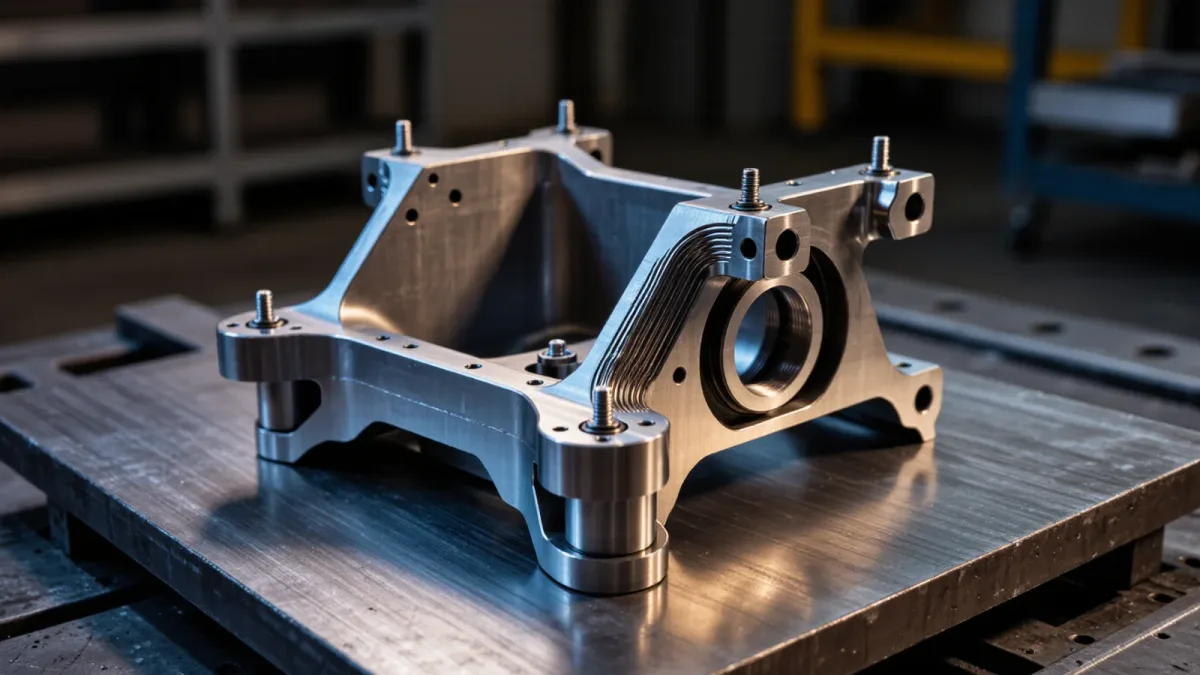
Qualification answers three questions: is the material right, is the geometry right, and is the process repeatable? Material qualification means the printed alloy meets the specification for strength, fatigue and fracture behavior in the build direction, which for laser powder bed fusion can differ from wrought stock. Geometry verification uses metrology and, for critical parts, computed tomography to find porosity and lack-of-fusion defects inside the part, not just on the surface. Process qualification means the machine, the powder lot and the parameters are locked and documented so part number 1,000 behaves like part number 1.
Structural parts on flight-critical load paths carry the heaviest evidence burden, typically per-service airworthiness authority review, and can take months or years. Non-structural brackets, housings, ducting and ground support equipment move much faster. That tiering is deliberate: the depot pipeline feeds the low-risk classes first while standards bodies mature the structural case.
What standards govern the process?
The technical foundation is a stack of industry and government standards: ASTM and ISO additive manufacturing standards for process and material categories, plus service-specific airworthiness and acceptance criteria. NIST has run measurement and standards research in metals additive manufacturing since the mid-2010s, publishing reference data and test methods that both services draw on. The department-level framing came with the DoD Additive Manufacturing Strategy announced in January 2021, which called for common qualification pathways and shared digital part data across services.
The practical consequence for vendors: a part qualified for one service is not automatically qualified for another. Airworthiness authority, platform engineering authority and the depot's own acceptance process each hold a signature, and the paperwork trail, the digital thread of parameters and inspection results, is itself the deliverable.
Which platforms have flown printed parts?
The B-1B is the flagship example: in 2019 the Air Force announced its first 3D-printed metal flight part on the bomber, produced to address a diminishing source after the original manufacturer exited. The C-5 followed with printed replacement parts for cabin and other non-flight-critical hardware, publicized in 2020. Depot reporting since then has described printed parts entering service on additional Air Force platforms, and the Rapid Sustainment Office has published a growing catalog of scanned and print-ready legacy parts.
Across programs, the pattern holds: printed parts reach flight first where loads are moderate and legacy drawings exist to verify against. Engine hot-section parts and primary structure remain the long pole, with engine OEMs further along than the depots because they control their own specifications.
What breaks, and what is improving?
Three bottlenecks recur in depot reporting. First, legacy drawings without digital models: reverse engineering adds time and introduces its own inspection burden. Second, qualification cost per part: when a printed bracket needs full material allowables, the economics fail for anything but a high-demand item. Third, machine-to-machine variation: a process qualified on one printer does not automatically transfer to another, which fragments the industrial base.
Improvement is coming through shared material databases, machine qualification approaches that decouple the process from a specific serial number, and digital twins of builds that let inspectors verify parameters in data instead of by witness coupons alone. The depots' own trajectory, from one flight part in 2019 to an institutional pipeline as of late 2025, is the best evidence that the process is scaling.
How does a scanned part move from data to flight?
The depot workflow runs in stages that mirror qualification logic. A legacy part is laser-scanned or reconstructed from drawings into a digital model; engineers verify the model against the physical part and the platform's load data; a print is produced with parameters locked in the machine record; and the finished component passes dimensional inspection and, for critical items, computed tomography before airworthiness review. Each stage produces evidence, and the evidence file, not the component, is the deliverable the authority signs.
Reporting from the Air Force Sustainment Center describes the pipeline as deliberately conservative: first articles are tested destructively where fleet demand allows, powder lots are certified against specification, and reprints draw on the stored digital record years after the original scan. For suppliers, the lesson is that entry into this market runs through data quality and process documentation. A printer without locked parameters is a lab curiosity; a printer with a qualified process and an auditable record is a depot asset.
Frequently Asked Questions
Are 3D-printed parts airworthy?
Qualified ones are. A printed part installed on an Air Force aircraft has passed the same airworthiness review as a conventional replacement, with added evidence on material properties and internal defects. The process gates, not the printing itself, determine airworthiness, which is why unqualified printed parts never reach flight hardware.
How long does it take to qualify a printed part?
It depends on criticality. Non-structural and cabin-class parts can move in weeks to months once drawings and material data exist. Flight-critical structural parts can take a year or more per part because they need material allowables, non-destructive inspection and airworthiness authority sign-off. Depots sequence the portfolio accordingly, per Air Force reporting.
Which Air Force depots print parts?
The Oklahoma City Air Logistics Complex hosts a major metals additive manufacturing operation, and the Rapid Sustainment Office coordinates scanning and printing across the depot enterprise. The Air Force Sustainment Center manages the pipeline that turns a scanned legacy part into a qualified, repeatable print, with digital data stored for reprints decades out.
What was the first 3D-printed part flown on a US bomber?
The Air Force announced in 2019 that a 3D-printed metal part had entered flight service on the B-1B, replacing a component whose original supplier had exited the market. The part is widely cited as the proof case for the depot additive program, demonstrating that qualification evidence, not print time, was the gate to flight.