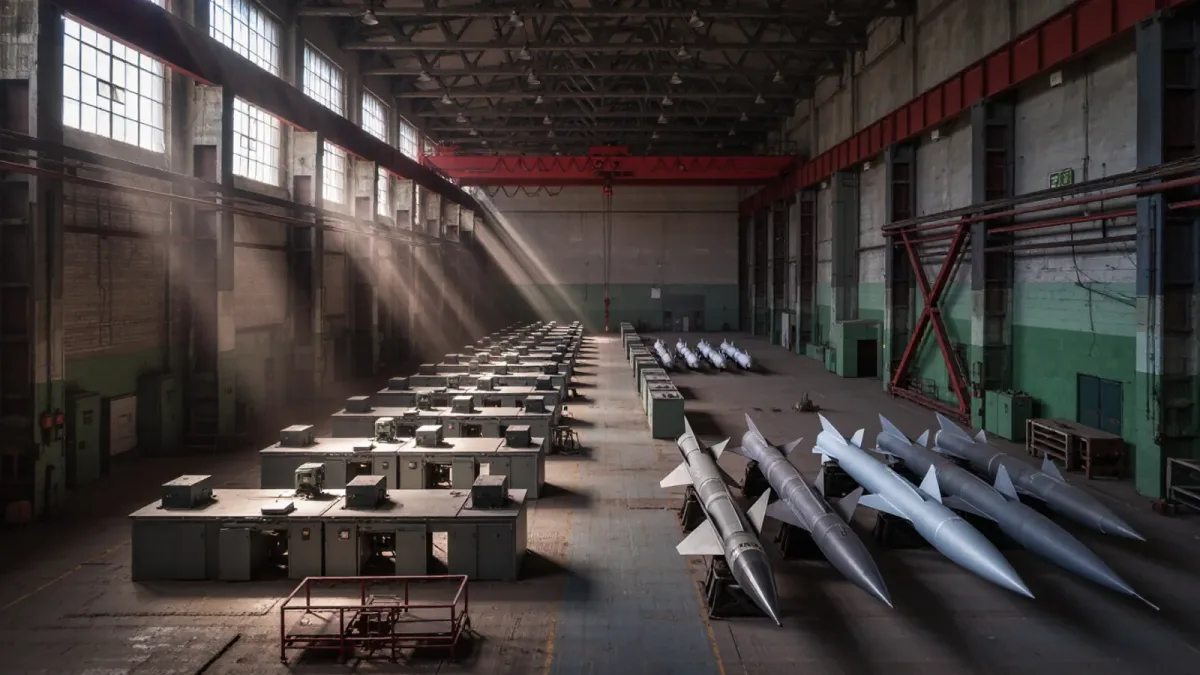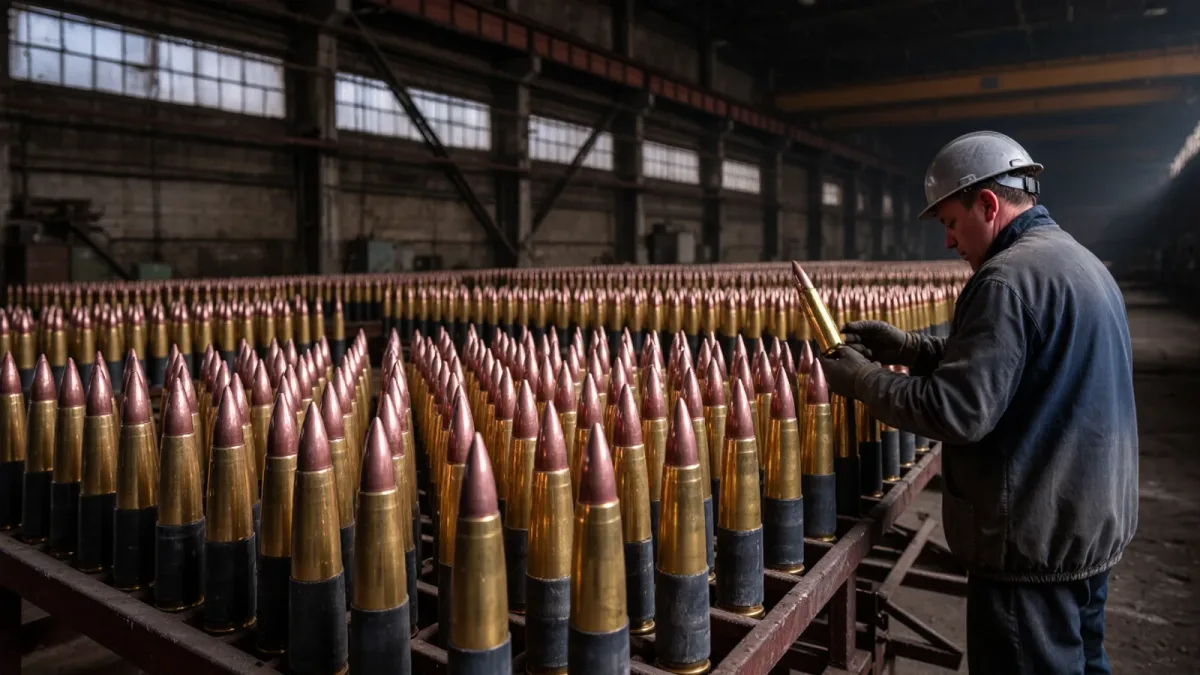
Before 2022 the US Army could produce roughly 14,400 rounds of 155 mm artillery ammunition per month, per the production figures defense officials cited to Congress, and two years of supporting Ukraine pushed that number to the center of American industrial-base policy. The department subsequently set escalating output goals — first 20,000 per month, then progressively higher targets reaching into six figures — and invested billions in the metal parts, energetics, and load-assemble-pack lines that make shells. Per DoD announcements through 2024 and 2025, the campaign has multiplied output several times over while exposing how much of the artillery base had been left to atrophy since the Cold War.
Why had artillery production shrunk in the first place?
Demobilization did the cutting. After 1991, with no land-war demand on the horizon, ammunition plants closed or converted, workforce depths were shed, and the artillery account competed against precision weapons that promised more effect per dollar. Precision munitions dominated the procurement books of the 1990s-2010s, and per the Army's own budget testimony of the era, conventional shell production ran at rates sized for training consumption, not sustained combat. The machinery that remained aged: much of it sat in government-owned, contractor-operated plants whose capital renewal depended on irregular investment cycles. Per industrial-base assessments published before 2022, energetics — the propellants and explosives at the shell's core — were among the most fragile single points in the entire defense production system, a warning that Ukraine's artillery war then tested in real time.
What did the expansion actually involve?
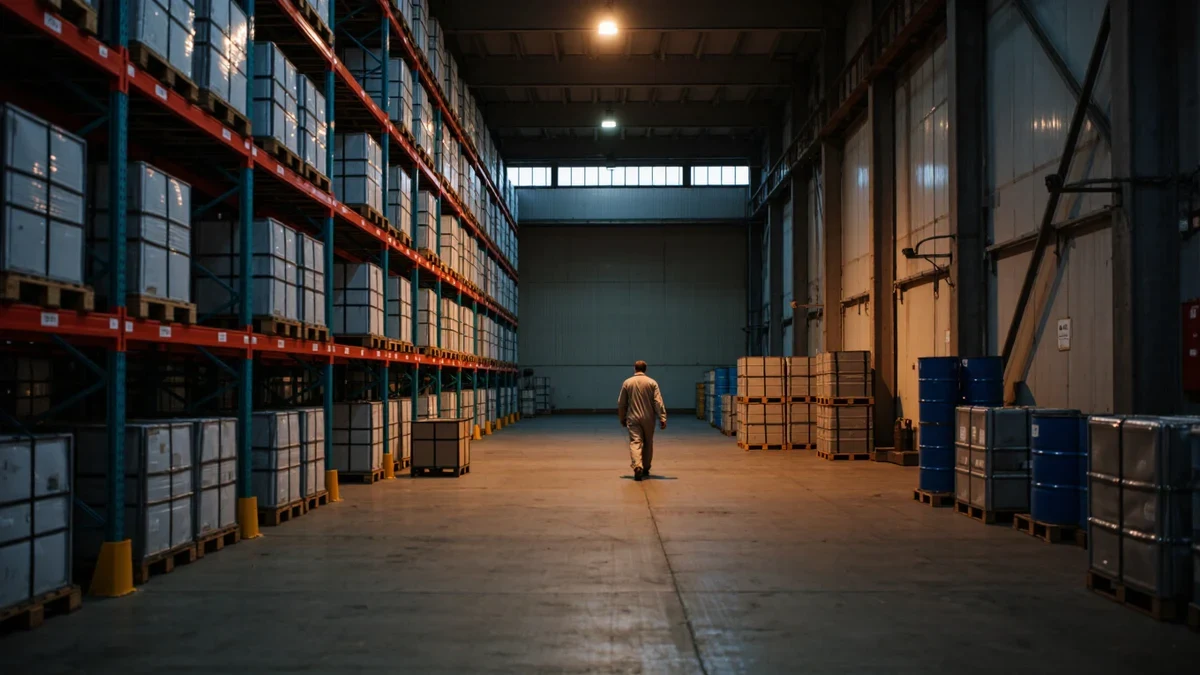
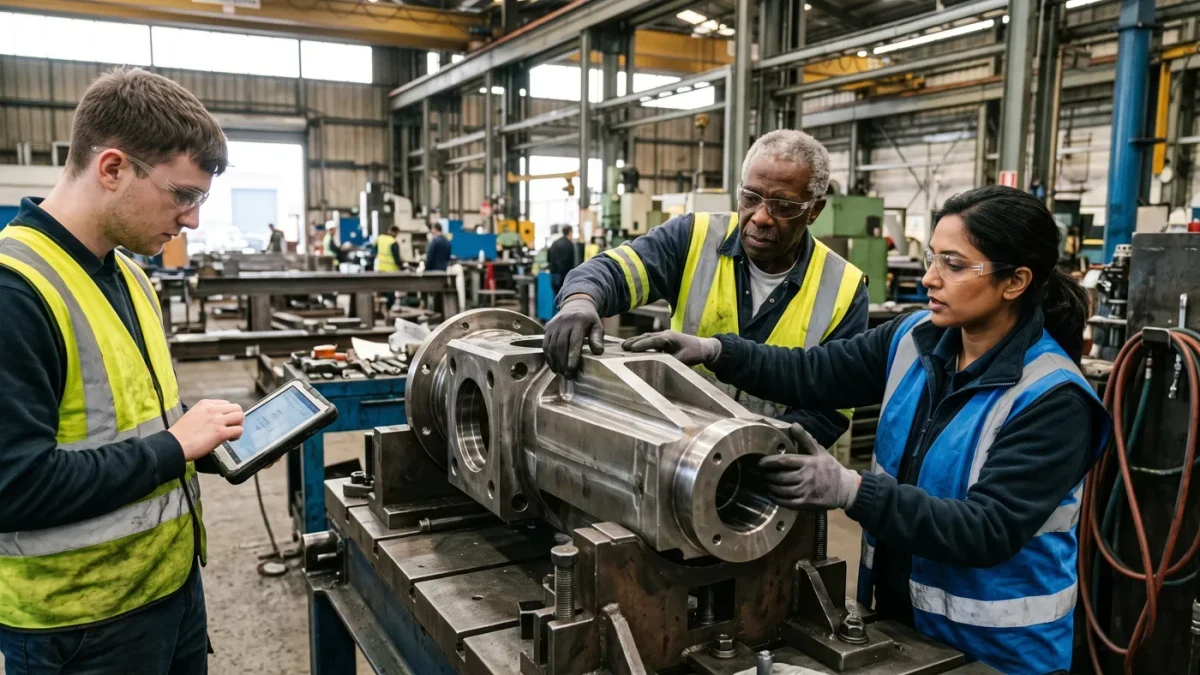
Three layers of the supply chain at once. Metal parts: per Army and company announcements, the historic Scranton, Pennsylvania load plant and its supplier network received major expansion awards, and new machining capacity was added in Texas and elsewhere to produce shell bodies at rates the legacy plants had never run. Energetics: the department invested in propellant and explosive production, the step industry executives and officials alike identified as the slowest to expand because formulation, qualification, and safety infrastructure cannot be rushed. Load-assemble-pack: the final filling and packing step gained new lines and new commercial entrants, per contract announcements that brought firms outside the traditional ammunition base into the work. Per DoD statements, the total artillery investment across these layers reached into the billions of dollars, spread across dozens of contracts rather than one program — a structure that makes the recovery slower to headline but harder to reverse.
How fast did output actually rise?
Faster than skeptics expected, slower than the first targets assumed. Per Army briefings to Congress, monthly output moved from the pre-war baseline of roughly 14,400 to exceed 40,000 within about two years, and the department's stated trajectory pointed toward rates two or three times higher as new lines qualified through 2025. The pattern across the timeline is consistent with how ammunition capacity behaves: metal-parts capacity responds within a year or two of investment; energetics and qualification-bound steps lag by years. Per the department's own framing in budget testimony, the binding constraint moved down the chain as each stage expanded — first machining, then energetics, then the pack lines — which is the classic signature of a production system growing against its narrowest stage rather than along a plan.
What does this mean for allied demand?
Allies are buying into the same base. Per State Department and DoD announcements, foreign military sales of 155 mm ammunition to Ukraine's backers and other partners ran through American plants, and European nations launched parallel expansions of their own shell production after 2022 — per European commission and national announcements, new and revived lines across the continent aimed at monthly rates in the tens of thousands. The two expansions interact: shared demand supports the case for new capacity on both continents, while allied purchases of US production add queue pressure that the department has managed through allocation. Per Army materials-obligation statements, domestic inventory drawdown for Ukraine transfers also created replacement demand, meaning the base serves three customers at once — the US force, allied sales, and the replenishment bill from stocks already shipped.
Is the expansion durable, or will it repeat the post-war collapse?
How does artillery output fit the wider munitions picture?
What did the Ukraine drawdown itself change?
The replenishment bill is a demand stream with its own physics. Per Pentagon drawdown announcements beginning in 2022, munitions transferred to Ukraine under presidential drawdown authority came from US stocks, and each tranche generated a replacement contract months later — per the department's Ukraine assistance fact sheets, artillery ammunition ranked at the top of the replacement list by dollar volume. The effect on the production base was twofold: replenishment orders gave the expanding lines a guaranteed order book independent of any decision about future aid, and per contracting notices, the multi-year 155 mm awards of 2023-2025 were sized explicitly to restore wartime stocks while feeding new consumption. Per Army statements on stockage objectives, the target inventory levels themselves were revised upward as the war demonstrated consumption rates no planning factor had assumed — which means the production base is now sized, per public goals, against a higher bar than the one the pre-2022 Army wrote.
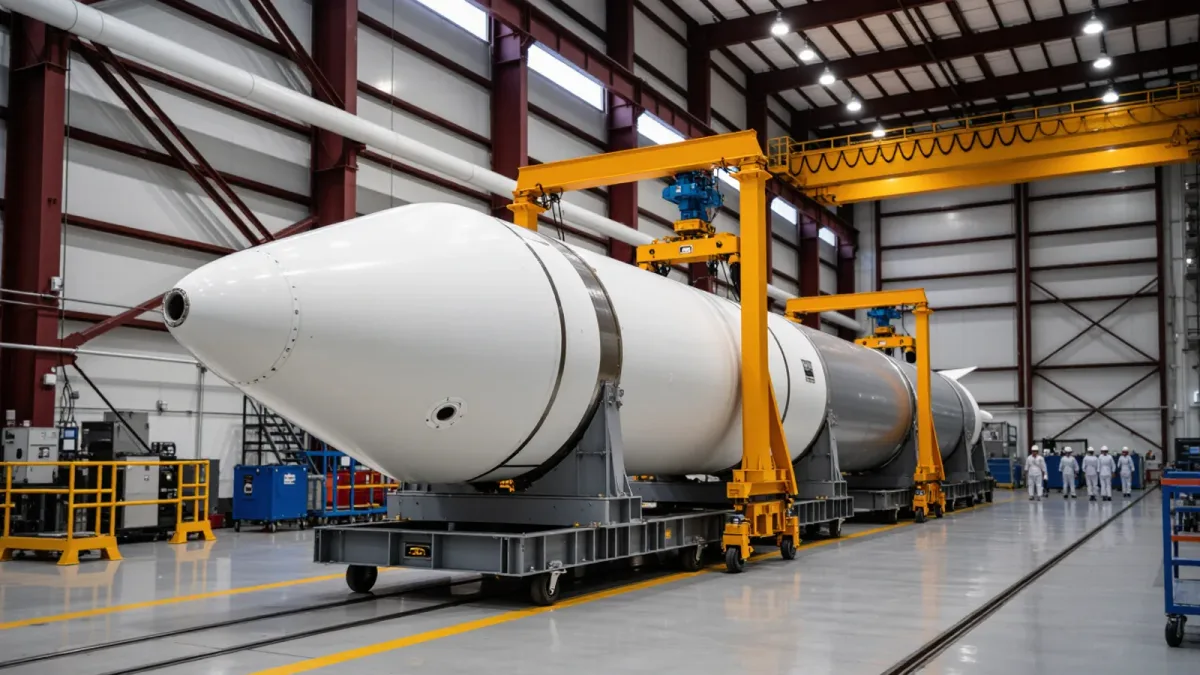
Shell lines are the visible edge of a broader munitions rebuild. Per DoD contract announcements through the 2020s, the department placed multi-year orders across rocket motors, guided-multiple-launch systems, and air-defense interceptors in the same period, and per the National Defense Industrial Strategy's framing, artillery is the case study for a policy applied across the munitions portfolio: minimum-rate floors, second-source qualification, and investment in the energetics tier that constrains everything above it. The interdependencies are concrete — per industry disclosures, some of the same propellant and energetics suppliers serve artillery and rocket programs alike, which is why artillery capacity decisions were sized with the rocket-motor queue in mind. For allied planners watching the American experiment, per NATO production conferences of 2024-2025, the transferable lesson is sequencing: buy metal capacity first, fund energetics longest, and treat qualification timelines as the master schedule rather than an afterthought.
The honest answer depends on demand durability that no one can yet certify. Per the investment structure itself, much of the new capacity sits in government-owned facilities or long-term contracts with minimum-rate guarantees — per DoD announcements, multi-year ammunition procurements were adopted precisely to hold the line against the classic boom-bust. Workforce is the softer variable: shell plants rehired thousands in communities that remember previous closures, and per company statements, retention has held while orders run. The Department of War's stated policy — per the National Defense Industrial Strategy's language on economic deterrence — treats sustainable munitions rates as a strategic requirement rather than a war contingency, and Congress has funded artillery lines in successive appropriations. The post-1990s collapse happened when demand disappeared and capacity carried no floor; this time the floor is partly built into the contracts.
What should industry watchers monitor?
Four markers track the campaign. Qualified output per month from Army briefings — the only number that settles debates about the rest. New plant qualification dates, because unopened lines contribute nothing regardless of contract value. Energetics capacity awards, the stage with the longest lead time and the clearest signal of long-horizon intent. And the shape of follow-on contracts: per procurement patterns of 2024-2025, multi-year and minimum-rate structures signal durability, while single-year buys suggest the department itself remains unsure of demand. On present trajectory per public statements, the artillery base the Army spent thirty years shrinking has been rebuilt most of the way to wartime scale in four — with the qualification and energetics tail still working through 2026 and beyond.