The Government Accountability Office resolves most federal bid protest disputes, and its fiscal 2023 report to Congress counted roughly 1,700 new protests, a 13 percent sustain rate on decisions on the merits, and some relief for 51 percent of protesters once agency corrective actions were included. Those three numbers describe the whole institution: fast timelines, low formal sustain rates, and a heavy reliance on agencies fixing their own mistakes once GAO gets involved.
Advanced Primitive publishes information, not legal advice. Protest decisions are case-specific and timeliness rules are strict, so counsel should be consulted before filing.
What is a GAO bid protest, and who can file one?
A bid protest is a formal challenge to how an agency awarded or plans to award a contract. GAO's authority comes from the Competition in Contracting Act of 1984, which made the office the principal forum for resolving disputes about federal solicitations. Any interested party — an offeror that would have a substantial chance of winning but for the challenged action — may file. In defense procurement that means losing primes, subcontractors excluded from unusual-and-compelling procurements in limited circumstances, and occasionally teams that were never shortlisted.
GAO is not a court. It recommends rather than compels, though agencies follow its recommendations in the overwhelming majority of cases, and per GAO's annual reports the compliance rate has run above 90 percent for years. The practical remedy a protester wins is usually a reopened competition or corrected evaluation, not an automatic award.
What are the deadlines that decide everything?
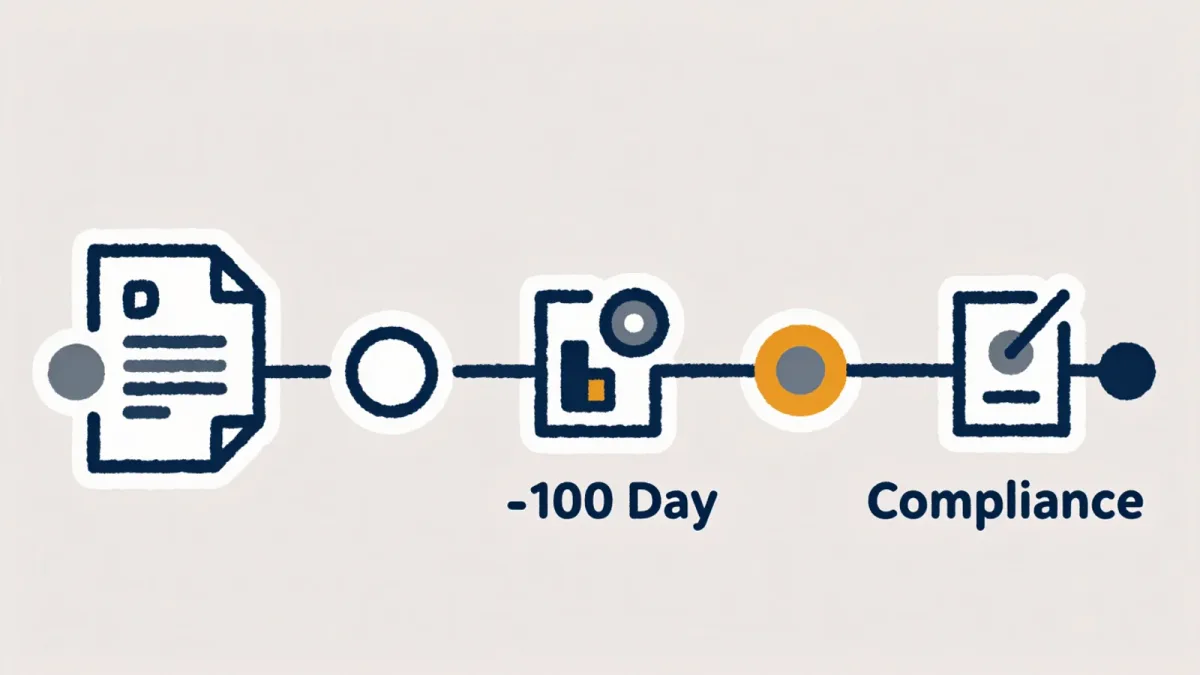
Timeliness is where most protests die. Per GAO's Bid Protest Regulations at 4 C.F.R. Part 21, a protest must generally be filed within ten calendar days of when the protester knew or should have known of the basis for protest, and no later than ten days after a required debriefing to get a contract award stayed pending the decision. GAO promises a decision within 100 calendar days of complete filing. Optional alternative dispute resolution can compress that to a report within about ten days of the ADR session.
- Ten days to file after learning the ground of protest
- Ten days after debriefing to secure an automatic award stay
- One hundred days to a decision on the record
- Two days for the agency report, with the protester getting about ten days to file comments
Missing a window by even one day usually ends the case. Per GAO's published outcome data, dismissals on procedural grounds account for a meaningful share of every year's docket, which is why experienced protesters file their strongest grounds first rather than saving arguments for later.
What are the odds, per GAO's own statistics?
The headline sustain rate looks small. In fiscal 2023, per GAO's annual report to Congress, only 13 percent of decisions on the merits were sustained, meaning GAO found the agency's action legally insufficient. The fuller picture is the effectiveness figure: 51 percent of protesters obtained some form of relief, because agencies frequently take corrective action — a voluntary re-evaluation, amended solicitation or new award decision — before GAO rules. Per GAO's multi-year statistics, well over half of protests close this way without a formal opinion.
Grounds cluster predictably. Per GAO's published decisions, the most common sustained arguments involve flawed evaluations, inadequate documentation of tradeoffs, unequal discussions, and unreasonable past-performance or price judgments. Organizational conflicts of interest and improperly restrictive specifications show up less often but carry a high sustain rate when raised with evidence.
What actually happens after a sustain?
A sustain means GAO found the agency's action inconsistent with procurement law or regulation. The recommended remedies are typically corrective: the agency may reopen the competition, amend the solicitation, re-evaluate proposals or make a new award decision. The awardee on the street loses no contract automatically — the protest ends and the agency decides next steps, which is why sustained protests frequently produce second competitions that the original protester wins. Per GAO practice, the agency must report within 60 days on what it did to comply with the recommendation.
Costs add a second consequence. Under the Competition in Contracting Act, a protester that prevails can recover its protest costs, and under the Equal Access to Justice Act it may recover attorney fees if the agency could not substantiate its position. GAO also has authority to recommend that an agency pay protest costs when it unreasonably delays taking corrective action, a sanction GAO has applied in published decisions.
Why do agencies take corrective action so often?
Corrective action is cheaper than losing. When a protester files, the agency must decide within 30 days whether to defend the award, take voluntary corrective action, or seek dismissal of the protest, and per GAO guidance a written request for ADR can head off a full merits decision. Program offices weigh the odds against schedule slip: a sustained protest forces the same re-evaluation anyway, plus a compliance report and possible cost claims. The result, visible in GAO's annual outcome tables, is that voluntary corrective action resolves more protests than any single decision category, and protesters routinely frame filings expecting that outcome.
The dynamic has a second-order effect on competition discipline. Contracting officers know that an undocumented tradeoff or a thinly supported evaluation judgment is an invitation to protest, so the filing threat shapes how source selections are documented even when no protest follows. Per GAO's published testimonies on acquisition outcomes, corrective action does add schedule time, but agencies generally treat that as the price of a defensible record.
What happens when a protest is denied?
A denial upholds the award, and the contract can proceed while any protest is pending only if the agency issues a written override of the automatic stay, which per GAO statistics happens in a minority of cases. Denied protesters have limited escalation paths: a case can go to the Court of Federal Claims under Tucker Act jurisdiction, but the standard of review there is deferential, and per published court statistics few bid cases reverse a completed award. Most denied protesters return to the next competition instead.
How does GAO differ from the agency and the court forums?
Three forums share protest jurisdiction: the agency's own protest system, GAO, and the Court of Federal Claims. GAO dominates defense disputes because of speed and the automatic stay, while agency-level protests are cheaper but lack independent review. Per GAO's annual data, the office handles on the order of 2,000 filings a year including task-order and multiple-award disputes, dwarfing the court docket. Time-and-materials and task-order protests have restricted grounds under 41 U.S.C. 4710, an often-missed constraint for service contractors.
Small businesses should note one more timer. Under SBA size-standard rules, a protester that wins a size protest can reset parts of the competition, and size protests run on their own parallel track at the Small Business Administration rather than GAO. Per SBA published timelines, the size determination comes first, and the merits protest clock can run while that track is pending, which is a sequencing trap for unrepresented offerors.
| Forum | Typical timeline | Key feature |
|---|---|---|
| Agency protest | Weeks to months | Low cost, no independent adjudicator |
| GAO | 100 days statutory | Automatic stay, published decisions |
| Court of Federal Claims | Months | Full litigation record, deferential review |
For defense suppliers the strategic calculus is short: if the evidence of a flawed evaluation exists in the debriefing record, the ten-day clock and the 100-day runway at GAO are usually the fastest route to a second chance, and the fiscal 2023 effectiveness data show that a well-documented protest ends in some relief half the time.