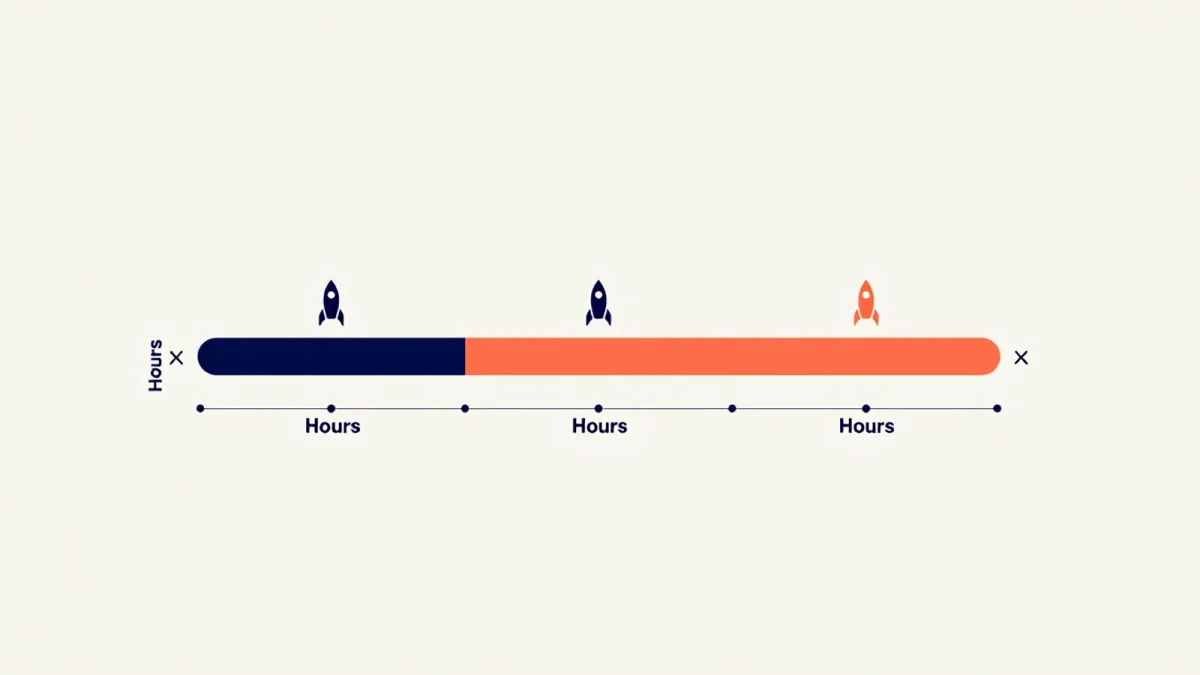
Responsive launch went from briefing-slide concept to demonstrated capability in 2023. In June of that year, the Space Force's TacRS-3 exercise called up a satellite and launched it on Virgin Orbit's air-launched rocket within 27 hours of notification, per Space Force announcements. Three months later, Victus Nox did it again from the ground side: the Space Systems Command-Firefly mission reached orbit in September 2023 after a call-up-to-launch time of 27 hours, inside a 60-hour end-to-end goal that included checkout and on-orbit activation. Those two data points, not white papers, are what turned tactically responsive space into a standing mission area.
The doctrine underneath them is simple: if an adversary can kill an orbiting capability, deterrence requires replacing it faster than an adversary can exploit the gap.
What is tactically responsive space?
Tactically responsive space is the practice of fielding and launching satellite capability on timescales relevant to a conflict: days or hours, not the two-to-five-year procurement cycle of a traditional national security space program. It covers three things: spacecraft already built and stored awaiting a call-up, launch vehicles on standby contract, and pre-negotiated command authorities that let a commander say go.
The Space Force organizes the work through Space Safari, the Space Systems Command office that runs tactically responsive space missions, and folds the capability into broader assured access to space doctrine. The premise, stated in service posture materials, is that proliferated and rapidly replaceable constellations deny an adversary the payoff of a first strike on US space assets.
How did the TacRS-3 exercise work?
TacRS-3, the third in the Tactically Responsive Space series, began with a simulated strategic notification and ended with a real launch. The payload, a small spacecraft built by Blue Canyon Technologies, sat ready while the government exercised the call-up chain: command approval, payload-to-vehicle integration check, range coordination and crew readiness. Virgin Orbit launched the spacecraft on a LauncherOne rocket dropped from a modified 747 on June 12, 2023, 27 hours after the call-up, per the Space Force.
The air-launch route mattered. LauncherOne needed no fixed pad, which stripped days of range and infrastructure work out of the timeline. The exercise validated the institutional half of responsive launch: signatures, safety reviews and integration checks compressed into hours because everyone had rehearsed them.
What made Victus Nox different?
Victus Nox, Latin for conquering the night, tested the same concept with a ground-launched vehicle and a compressed integration schedule. Space Systems Command bought the mission in 2022 with two partners: Firefly Aerospace providing the Alpha launch vehicle and Millennium Space Systems providing the spacecraft, with a requirement to launch on short notice after a call-up. The launch from Vandenberg Space Force Base came on September 14, 2023, and the team announced launch 27 hours after notification and full on-orbit operations inside the 60-hour window, per Space Systems Command.
The significance for industry was contractual, not just technical. Victus Nox demonstrated a standing commercial arrangement, payload in storage, booster on call, that any responsive space buyer can now reference. It also moved the art on license and range processes, which historically consumed more calendar time than the rockets did.
Where has responsive space gone since 2023?
The follow-on missions pushed from launch responsiveness toward on-orbit responsiveness. Victus Haze, contracted in 2024 with SpaceX and True Anomaly under Space Systems Command, pairs satellites in a tactical space scenario, testing rapid detection, maneuver and response on orbit rather than simply rapid launch, per Space Force announcements. Service posture statements through 2025 describe tactically responsive space as a recurring capability line in budget requests, with commercial reserve-style launch arrangements under study.
The doctrine has kept pace. Space Force doctrine publications now treat rapid reconstitution and proliferated architectures as complementary: dispersal raises the cost of attack, and responsive launch removes the permanence of any single kill.
What are the limits of responsive launch?
Three constraints bind. First, readiness costs money: a stored spacecraft and a standing booster are capital sitting idle, sustainable only at exercise scale, not fleet scale. Second, the bottleneck has shifted downstream: orbit is the easy part, and tasking a new satellite, integrating it into a ground network and getting it certified into the operational picture takes longer than the launch did. Third, responsive space needs responsive targets: a call-up authority that takes two days of staffing erases a 27-hour rocket.
Program offices have acknowledged each in turn, which is why the Victus series now spends as much effort on ground systems and authorities as on vehicles.
Why should buyers outside the Space Force care?
Because the model generalizes. An army that can call up imagery from a stored smallsat within a day has a fundamentally different tactical picture than one waiting on a queued national tasking system. Responsive launch also disciplines the industrial base: contracts like Victus Nox proved that commercial launch providers will hold hardware on standby, and that range and licensing can move at commercial speed when the government asks in advance. The 27-hour benchmark of 2023 is now the reference point every subsequent mission is measured against.
What does a responsive launch contract look like?
The Victus Nox arrangement became the template: a commercial firm contract that paid for a spacecraft, a launch vehicle and a standby relationship, rather than a development program. Millennium Space Systems delivered the spacecraft; Firefly Aerospace held the booster; the government exercised call-up authority when the exercise began, and the clock ran on the mission, not on contract milestones, per Space Systems Command statements. Follow-on studies described reserve-style arrangements in which multiple commercial providers hold launch capacity on call against a retainer, mirroring civil reserve air fleet logic. The contract design choices that matter are readiness compensation, meaning paying for hardware to sit ready, range and license pre-coordination, and data rights on the integration work that made the 27-hour timeline possible. For launch startups, responsive missions offer revenue without constellation-scale volume; for the government, they buy schedule insurance far below the cost of a lost capability.
Frequently Asked Questions
What was TacRS-3?
TacRS-3 was the Space Force's June 2023 tactically responsive launch exercise, in which a Blue Canyon Technologies spacecraft was launched on Virgin Orbit's air-launched LauncherOne rocket 27 hours after call-up notification, per Space Force announcements. It validated the command, integration and range processes that responsive launch depends on.
How fast did Victus Nox go from call to orbit?
Firefly Aerospace launched Victus Nox from Vandenberg Space Force Base on September 14, 2023, 27 hours after the launch call-up, with the Millennium Space Systems spacecraft completing on-orbit checkout within a 60-hour end-to-end window, per Space Systems Command. It was the first tactically responsive mission flown with a ground-launched commercial rocket under a standing contract.
Why does the Space Force want responsive launch?
Deterrence by denial. If adversaries know the United States can replace a lost satellite in days, attacking US space assets loses its payoff. Responsive launch complements proliferated constellations, which raise the cost of any single attack, and gives commanders a reconstitution option that does not depend on wartime launch queues.
What is Victus Haze?
Victus Haze is a follow-on tactically responsive space effort contracted in 2024 to SpaceX and True Anomaly, focused on rapid response on orbit: detecting a threat spacecraft, maneuvering to characterize it and generating response options under tactical timelines, per Space Force announcements. It extends the responsive concept beyond launch into space domain awareness operations.