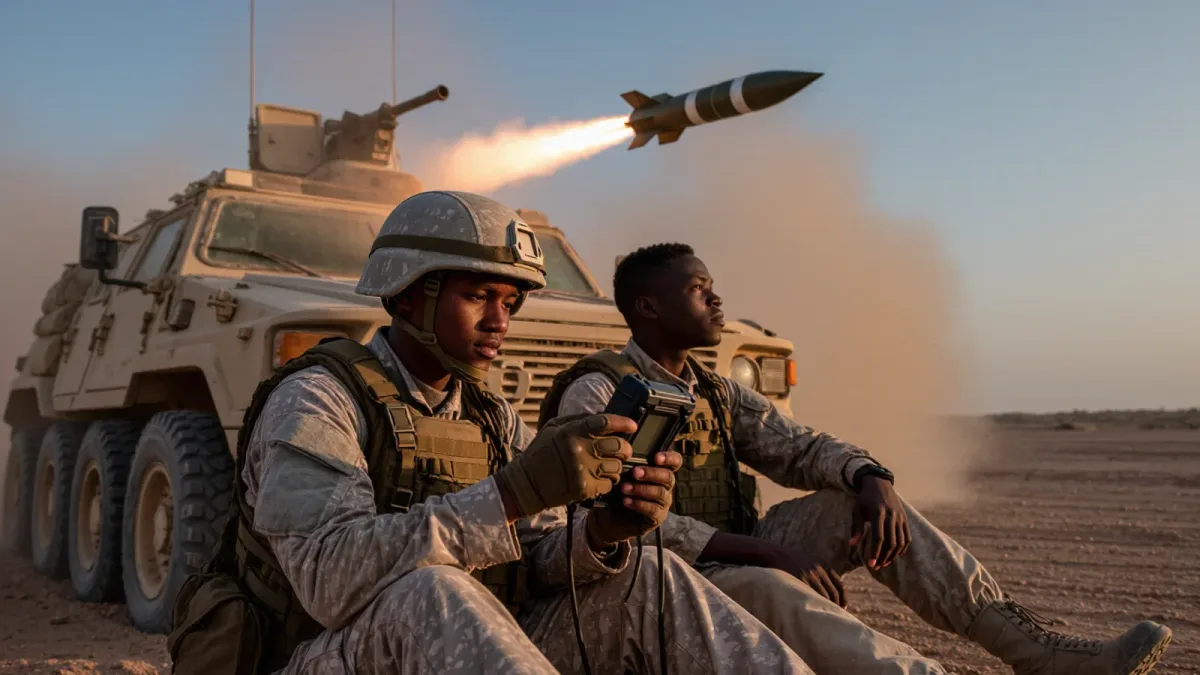
US policy requires that lethal force involving autonomous weapons apply appropriate levels of human judgment, and DoD Directive 3000.09, reissued on January 25, 2023, is the document that says so. Loitering munitions sit squarely inside that rule. An operator launches a Switchblade, watches its video feed and approves the attack before terminal flight. The Pentagon's line is not a ban on autonomy; it is a requirement that a human stay in the loop for lethal engagements, and it allows exceptions only through senior-level waivers.
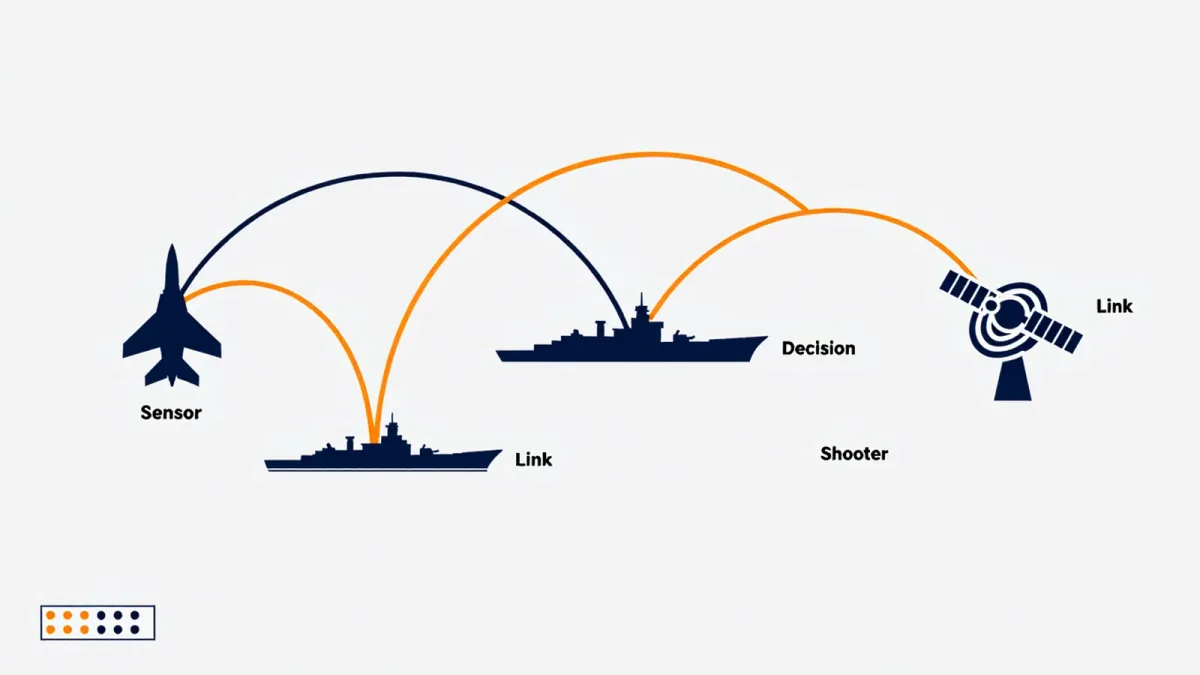
Understanding that policy, and how the leading systems actually operate, clarifies what the loitering-munition market is really selling: a human-approved kill chain compressed into one airframe.
What is a loitering munition?
A loitering munition is a small cruise missile that waits. It flies to a target area, circles while its sensor searches, then dives onto the target as its own warhead. Unlike a missile fired at a point, it can hold station until a target appears; unlike a drone, it does not return.
The category became one of the defining weapon classes of the war in Ukraine after February 2022, on both sides, in tandem with first-person-view racing drones improvised for the same role. The distinction for procurement audiences is that purpose-built loitering munitions carry qualified logistics, training and, in the US case, a defined human-control concept of operations.
How does human control work on the Switchblade?
AeroVironment's Switchblade 300 is a man-portable system: the tube-launched airframe weighs in the range of seven pounds with its launch system, per the company, and newer variants fly out to tens of kilometers with endurance the company lists above 20 minutes. The Switchblade 600 scales the concept to anti-armor work, with a range the company says exceeds 40 kilometers and a Javelin-class warhead, launched from a vehicle or tripod.
In both cases the operator in the loop is the product. The airframe streams video to a ground control unit, the operator designates or confirms the aim point, and the munition executes the terminal dive after human approval. AeroVironment has described the switch between loiter-and-abort and terminal attack as an operator decision, which is precisely the control construct Directive 3000.09 asks services to document. The United States sent Switchblade systems to Ukraine in 2022 as part of security assistance packages, per Pentagon announcements.
What does Directive 3000.09 actually require?
The directive, originally issued in 2012 and reissued on January 25, 2023, governs autonomy in weapon systems. Its core requirement: autonomous and semi-autonomous weapon systems that apply lethal or kinetic force must allow commanders and operators to exercise appropriate levels of human judgment over that force. Any exception, meaning an autonomous system that could apply lethal force without that judgment, requires review and senior waiver authority.
Two points matter for buyers. First, the rule is a governance framework, not a technology specification: it does not cap automation in navigation, sensors or flight control, which is why loitering munitions can be highly automated in flight yet compliant. Second, the directive orders testing and verification in realistic conditions, including contested electromagnetic environments, before fielding. That requirement shapes the program schedules every vendor in this market lives by.
How does the Russian Lancet compare on human control?
The Lancet, built by ZALA and associated with the Kalashnikov group, has been one of the most observed Russian systems in Ukraine since its appearance there in 2022. Open-source imagery and Ukrainian reporting show it used against artillery, air defenses and vehicles at ranges the manufacturer claims beyond 40 kilometers. Reports and footage indicate operator-guided terminal flight against many targets, but Russian use has also been described in open reporting as increasingly automated, with targeting aids and claims of operator-independent terminal modes that Western policy frameworks would not satisfy without waiver.
What Western analysts note is the asymmetry of friction: the Russian system trades the human-control guarantee for volume and cost, while US and allied systems keep the operator and accept a heavier logistics and spectrum footprint. That trade, not raw range figures, is the real design fork in this market.
What is the Replicator initiative changing?
Announced in August 2023 by Deputy Defense Secretary Kathleen Hicks, Replicator aims to field thousands of attritable autonomous systems across multiple vendors on a 18-to-24-month cadence, with the first tranche targeted by August 2025. Its selections included loitering and attritable air systems alongside maritime and ground platforms, per Defense Innovation Unit announcements.
Replicator does not amend Directive 3000.09; it accelerates fielding inside the existing policy. Each selected system still needs a human-control concept, test evidence and legal review before combat fielding. The practical effect for industry is that policy compliance has become a schedule item, priced and planned like any other milestone.
Where is the human-control line heading?
The pressure points are terminal autonomy against moving targets under jamming, and swarming, where one operator supervises several munitions. The directive permits both in principle, but each move away from direct operator control invites the waiver-and-review machinery. Expect the debate to concentrate on comms-denied terminal guidance: a munition that must finish its attack without a link cannot keep a human literally in the loop, so the question becomes how much pre-delegation the 2023 framework can absorb. Program offices are building toward supervisory control models, per public remarks by defense officials, where a single operator sets intent and approves target classes rather than individual shots.
For now the US position is stable and legible: automation everywhere in the loop except the release decision, and a waiver process for anything else. Vendors that can demonstrate compliance evidence quickly are selling to a policy environment that, unlike export regimes, is unlikely to tighten against them.
Frequently Asked Questions
Are loitering munitions banned under international law?
No. There is no international ban on loitering munitions. They are governed by the same international humanitarian law rules as other weapons: distinction, proportionality and precaution. The UN has discussed lethal autonomous weapons through the Convention on Certain Conventional Weapons process, but no binding instrument restricts human-supervised loitering munitions like the Switchblade as of the end of 2025.
What is the difference between Switchblade 300 and 600?
The Switchblade 300 is a man-portable munition for light targets, weighing roughly seven pounds per AeroVironment, with variants offering ranges up to tens of kilometers. The Switchblade 600 is a larger, vehicle or tripod-launched system with a Javelin-class warhead and a company-stated range beyond 40 kilometers, aimed at armor and reinforced targets. Both keep an operator approving the terminal attack over a live video link.
Does Directive 3000.09 ban autonomous weapons?
No. The reissued directive, dated January 25, 2023, does not ban autonomy. It requires that systems applying lethal force allow appropriate levels of human judgment by commanders and operators, and it channels anything else into a review-and-waiver process at senior levels. The 2023 update also added safeguards for non-lethal autonomy, where the opposite concern applies: making sure autonomy is used where required.
Can loitering munitions work when communications are jammed?
Partly. They can complete a pre-approved attack profile without a link, which is why terminal modes under jamming are a design priority. But launching at an operator-confirmed target, loitering with new targeting and aborting require connectivity. Ukraine-area operations since 2022 have pushed both sides toward jam-resistant terminal guidance and operator-supervised multi-aircraft control, per open-source reporting.