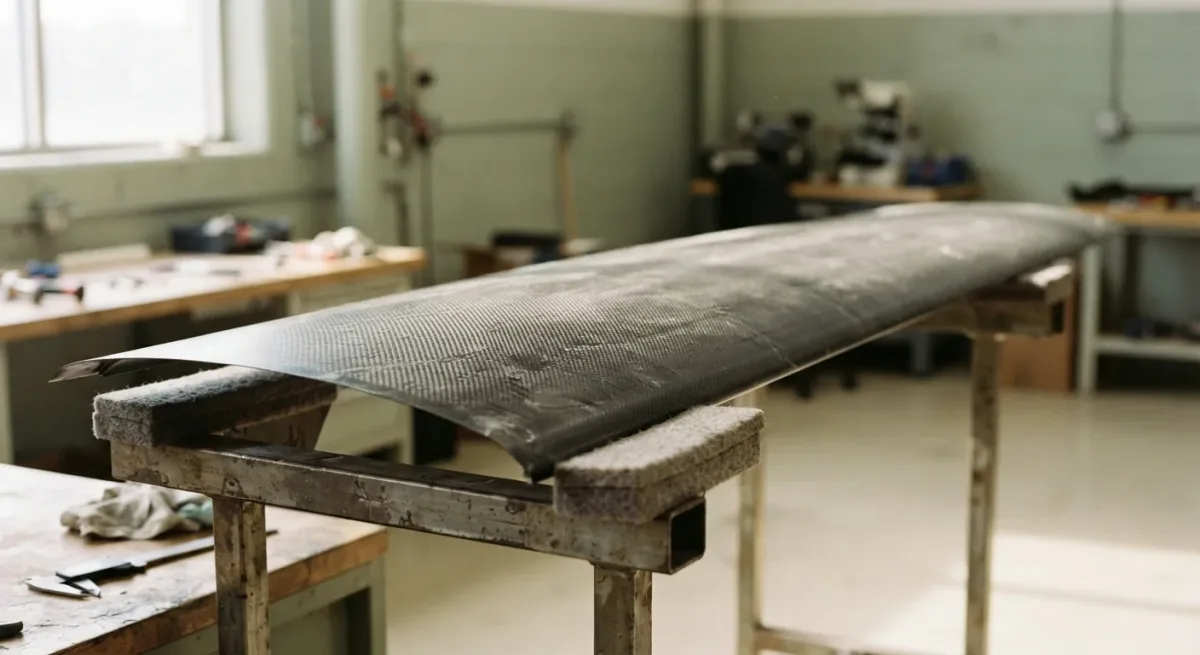
The B-21 Raider has been in flight test since November 10, 2023, when the first aircraft lifted off from Northrop Grumman's Palmdale, California facility, per an Air Force statement that day. A second aircraft joined the test campaign during 2024, per subsequent Air Force releases — meaning the bomber program is flying with production-representative hardware years before the B-2 reached the same point in its own development. The Air Force continues to state a mid-2020s fielding target and a fleet of at least 100 aircraft, per the service's budget justification books; no full-rate production decision has been announced as of this writing.
Advanced Primitive publishes open-source analysis from official documents and on-the-record statements only.
Why does flying early matter for this program?
Because the last time the Air Force fielded a new bomber, first flight came after a decade of program-defined turbulence, and the fleet shrank from 132 planned aircraft to 21. The B-21's first flight occurred with the program still inside the development phase, and the Air Force authorized low-rate initial production — LRIP, the limited production run that feeds operational testing — in December 2022, per the service's announcement at the time, an unusual pairing of production authority with a design that had not yet flown.
The stated reason, per Air Force program office briefings: the aircraft's open architecture and shared ground systems let production decisions ride on test evidence gathered in parallel rather than in sequence. That claim is the manufacturer's and the service's own framing of its own program — it is the source of its terms, not independent verification that concurrency will behave differently this time.
How does the test pace compare with the plan?
The Air Force has not published a flight-test schedule with dates, and the service has not said how many test aircraft will ultimately fly — both facts are stated as unknown because they are. What the record does show is shape: the first two aircraft are flying from Palmdale under an instrumented campaign managed by the Air Force Test Center, with Edwards Air Force Base named as the program's test hub in service releases.
The budget-line comparison is the more telling evidence. The B-21 procurement account grows across the Future Years Defense Program in the service's budget requests from FY2024 onward, per the justification books — a ramp the plan holds only if operational testing supports a production acceleration in the late 2020s. The B-2's history is the standing counterexample: concurrency there produced aircraft that required extensive rebuild work, a pattern GAO documented in its 1990s program reporting.
What is the open question?
Whether the open-architecture claim survives contact with test reality. Every bomber program since the B-1 has promised concurrency discipline and paid for at least part of it in retrofits. The B-21's procurement ramp assumes the answer is yes this time; the flight-test data that will decide it are not public, and the Air Force has not said when the full-rate decision is expected.
The house reading of the document trail: the schedule risk is no longer first flight — that milestone is behind them — but the unnamed gate where test evidence meets a production ramp already priced into the budget. That is the number to watch in the next budget request.
For more context, read Biden-Harris Administration Announces California’s Launch of First Phase of Federal Home Energy Rebate Programs to Help Lower Families’ Utility Bills.
For more context, read bitcoin.
For more context, read https.